 A family saga that spans the depths of love, loss, birth and death Derek Palacio’s The Mortifications is a beautifully heartbreaking novel.
The Encarnacion family once owned a tomato farm in Cuba during the 1980’s revolution, but Soledad, the family’s mother, one day decides that the revolution and her husband are not good for her two children, and so she decides to move to Hartford, Connecticut.
The Mortifications follows each of the four Encarnacion family members, Soledad, Uxbal and their twin children Ulises and Isabel. Torn apart in the throes of the revolution and separated by thousands of miles of sea and land, the children and Soledad begin a new life in Connecticut while Uxbal remains a mystery. Eventually the family comes to find each other again through strange coincidences, tragedy, and devotion.
Palacio does a magnificent job of telling a very heart wrenching story in a distant manner, as far removed from the pain as the characters themselves often are. Every line feels like poetry and the emotion of the text swarms above the words, yet the reader is often unable to touch it. This mode of delivery creates a certain ambience that makes the reader feel trapped, suffocated, desperate, which are the exact emotions that each of the characters experience as they attempt to forget, repair, and eventually move on in their lives.
A beautiful and eye opening expression of Cuban-American literature and the harsh realities of revolution, The Mortifications by Derek Palacio is a worthwhile read. Released by Tim Duggan Books in October 2016, The Mortifications is available for purchase at your local bookstore.
Read more fiction book reviews at Centered on Books.
FTC Disclaimer: This book was given to me in return for a fair and honest review of the text.
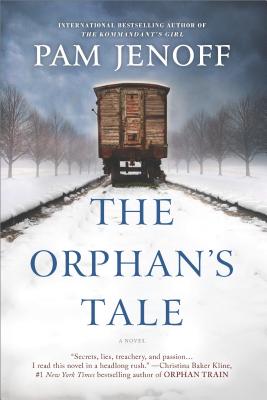 An enthralling and entrancing read, Pam Jenoff’s The Orphan’s Tale is a beautiful and heart wrenching book. Told from the perspective of the book’s two main characters, The Orphan’s Tale is a story of interconnected love, heartbreak, and sacrifice.
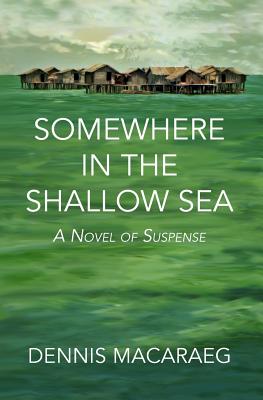 Somewhere in the Shallow Sea by Dennis Macaraeg promises suspense, thrill, and romance in its 220 pages. Macaraeg does deliver a plot that is steeped in these elements: a kidnapped friend, an unrequited love interest, and scientific experiment that could end up in the wrong hands.
 Kubrick’s Game by Derek Taylor Kent is exactly what it sounds like: a book about a game about Stanley Kubrick. From conspiracy theories to movie trivia, Kent brings it all together in this fun and thrilling novel.
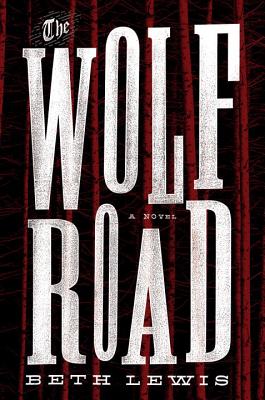 Terrifying, gripping, and raggedly beautiful, The Wolf Road by Beth Lewis is this year’s most thrilling post-apocalyptic novel. With a heroine as gruff and chilling as the book’s villain and a plot twisted and muddled with murder, lies, and disparagement, Lewis draws you in from page one.
 Human Acts by Han Kang is an eloquent and masterful investigation. It is an investigation into humanity, into the existence and nature of the soul, into the effects and implications of our memories. Originally written in Korean and published in 2014, translator Deborah Smith does a superb job of expressing these sentiments in her stunning yet detached translation of Human Acts.
 A book as tragic as it is beautiful, The Lesser Bohemians by Eimear McBride is one of the most well-crafted novels of the year. The Lesser Bohemians is a story of love and loss, of hatred, and of the human condition, of the extents of terror that accompany humanity, and of the lengths to which a person can be drawn before losing that humanity. McBride does all of this while captivating the reader with her mastery of language and its form.
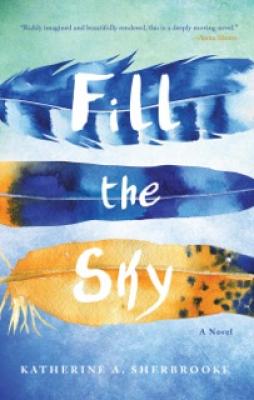 A story about the battle of fate versus volition, about western versus eastern medicine, and most importantly about the expected versus desired roles of a woman, Fill the Sky by Katherine A. Sherbrooke is an exploratory novel that is both moving and riveting.
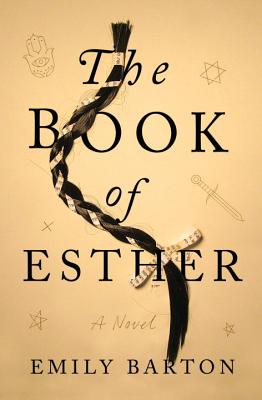 In an alternate vein of reality, at the dawn of World War 2, lives Esther bat Josephus, the daughter of the Khazar kagnate’s kender (the leading policy advisor). Esther has seen firsthand, the terror that the Germanii enemy has the potential to rain to on her people, and while her father and country seem to sit idle, Esther feels that she alone must take action in Emily Barton’s latest novel The Book of Esther.
 Why is it that the greatest suffering always involves someone or something that we love? Perhaps because the loss of, the imperfection of, the mere existence of pleasure invites pain. In The Pleasure You Suffer, authors inquire into this phenomenon of pleasure’s linkage to pain through short stories and poetry.
 Centered on Books