‘D.H. Lawrence The Dover Reader’

D.H. Lawrence The Dover ReaderDover Thrift released the newest collection of D.H. Lawrence’s most prominent work in January of 2015 entitled D.H. Lawrence The Dover Reader. The compilation includes his full length novel: Sons and Lovers as well as a variety of short stories, poems and a work of nonfiction entitled Psychoanalysis and the Unconscious.

Lawrence, known in his time for the perverse and, often, sexual nature of his writing incurred the descriptor of scandalous throughout his life. He is best known for his novel Lady Chatterley’s Lover, though his other works of fiction, poetry, and nonfiction have come to receive great acclaim as well.

In this Dover Thrift Edition of D.H. Lawrence’s work, The Prussian Officer, published in 1914, is a pointed example of the scandalous themes and ideas that led Lawrence’s work to be banned throughout the world. The short story focuses on a military captain who has sexual feelings for his orderly, and treats him monstrously out of jealousy for the orderly’s relationship with his girlfriend, as well as out of spite and anger for the captain’s own feelings. An exemplar of Lawrence’s work, the story ends in revenge, tragedy and irony.

In his poem Snake, published in 1920, Lawrence moves on to discuss social and religious ideas. Delving into matters of social class, Lawrence focuses on the lack of reverence those in the upper echelon of society have for those in the middle and low classes. Those below, though, tend to look upon those above like gods, and Snake is a stark outcry against this perpetuated a system. Lawrence further draws in religious imagery to illustrate the eternal battle between good and evil that pervades existence from the Bible to our current state.

Finally, Lawrence’s Psychoanalysis and the Unconscious, first published in 1921, is actually a critique of Freudian as well as contemporary scientific theory on the nature of sex. A fundamental work for understanding Lawrence’s philosophy and the backdrop for much of his fictional work, Psychoanalysis and the Unconscious is a perfect conclusion to the Dover Thrift Edition.

You can pick up a copy from your local bookstore today.

Read more fiction book reviews at Centered on Books.

FTC Disclaimer: This book was given to me in return for a fair and honest review of the text.

“The Room” by Jonas Karlson

The Room by Jonas KarlssonA gut bursting novella that reads like a tragicomic production, The Room by Jonas Karlsson is smart, hilarious and such a quick read that you’ll want to start it over again as soon as you hit the last sentence. The 186 page, 8 ½  x 6 ½ inch novelette is packed with irony and hilarity in its apt portrayal of the mundane and inane nature of office life as well as the many formulaic characters that reside there.

Björn has recently acquired a job working for the Authority, an organization with phantoms for leaders referred to only by their initials. These “leaders” send down numbered (never named) reports to the lowly office workers who in turn have no idea what those reports are about. Björn is hired as a sort of administrative assistant, and he takes his job extremely seriously. However, he is determined to move to the top, mostly at other people’s expense. His office mates are awkward, sometimes cruel and entirely suspicious of Björn, and he treats them no differently, though he often tries to say that he does. The unreliability of the narrator here is stark, though we can never be sure what the truth is behind Björn’s or his office mates’ distorted perceptions of reality, we can be sure that something is amiss.

To illuminate this point, Karlsson brings into the story “the room:” a small space in the office, right beside the bathroom where Björn gets most of his work done, but that those around him doubt the very veracity of. Björn must assert his rights to the room by proving that it aids him in his work, but even this does not keep his coworkers from thinking he is crazy.

Among the many themes Karlsson addresses, the idea of conformity and the erasure of individuality are paramount. Amidst all of Björn’s ridiculous antics and highbrow, self-serving thoughts and actions, there is the desire, the human need, to be a self and not just a member of the herd which is admirable in his character. Björn as well as his coworkers tend more to the side of despicable and annoying, yet each character holds a certain quality that is recognizable and relatable either within oneself or within another. These qualities might not be what we want to see in ourselves and others, but they are truths that are unavoidable.

At times highly frustrating and at other times laugh out loud funny, Jonas Karlsson’s The Room is a hilarious and light yet profound read that will keep you on your toes and make you think deeply about the state of human affairs in contemporary urban life.

The Room by Jonas Karlsson will be released by Hogarth on Tuesday, June 9, 2015. Preorder a copy from your local bookstore today.

Read more fiction book reviews at Centered on Books.

FTC Disclaimer: This book was given to me in return for a fair and honest review of the text.

“An Untamed State” by Roxane Gay

An Untamed State by Roxane GayAnother book about rape.

That’s what I thought when I first picked up An Untamed State by Roxane Gay. But I had read Bad Feminist and loved it, and I was dying to see what Gay could do with fiction. So, I bought the book, and I procrastinated.

There are so many books about rape, about broken bodies and broken women and the terror of a person’s dignity being ripped from her body and soul. There are too many books that take me too long to read because they’re just too hard to get through. Finally, An Untamed State found its way into my car on a camping trip, and I was compelled, if I wanted to read at all, to read the only book I had brought with me. And so I began, and once I did, I couldn’t put it down.

An Untamed State differs profoundly from so many of those other books I mentioned above that detail the destruction of the spirit and the grotesque actions taken against so many women and men. It differs because for the most part the book is told from the first person perspective of Mireille Jameson-Duval, a young wife and mother kidnapped in Haiti and held for a ransom her wealthy father is not wont to pay.

From the beginning, Mireille is a fighter, a resilient captive, something every woman who has ever been raped wishes she had been. In many ways, Mireille embodies this woman, this ideal survivor: someone who fights, someone who doesn’t let the most precious parts of herself be so easily taken, someone many women who experience rape aren’t even given the chance to be because of drugs, coercion, false security and bondage. For women everywhere who have experienced even a fraction of the pain that Mireille does in An Untamed State, the main character offers a sliver of redemption, a reason for the celebration of the strength of women despite their circumstances, despite what can be done to the body.

Though the book is riveting with action, what comes out most clearly are ideas of what it means to be raped, how it feels to be robbed of your dignity, and what the path to healing looks like. Gay, a survivor of rape herself, is able to capture these sentiments in a way that makes the novel less about the horrors that have happened to Mireille and more about Mireille, the person, the survivor, the woman. Unlike so many other books that merely describe graphic scenes with seemingly little purpose but to provide shock value and make the reader hate the criminal, An Untamed State focuses on what is happening on the inside for the survivor.

Mireille goes through feelings of guilt, self-hatred, inadequacy and hopelessness despite her strength. After her ordeal, she has an unending desire to be empty that manifests itself in an eating disorder, she is unable to communicate with her family in the same way, she is fearful and hateful towards nearly all men, and she can’t seem to find herself. She experiences selective memory and symptoms of PTSD, flying through flashbacks that are set off by things as seemingly inane as a scent. Eventually a therapist tells Mireille the truth about her road to recovery: “You will get better, but you will never be okay, not in the way you once were.”

This is the truth of rape, of trauma, of loss of control over your own body, this is the truth that Mireille, that Roxane Gay, that every woman and man that has ever experienced any ordeal even resembling that of Mireille’s must accept. The sense of power, of hope and beauty despite the horror and ugliness in the world is what raises this novel from the depths of what could’ve been tragic and grotesque to the height of inspiration. An Untamed State gives those whose bodies have been stolen, morphed and used the hope and realization that they are not shattered. They may be cracked, they may wear scars, whether physical or not, but they have the capacity to live if they can find the will and the strength and perhaps even the vulnerability to allow those around them to help.

An Untamed State by Roxane Gay is one of the most fantastic novels of the past few years, and it is by far the most inspiring novel I’ve read in a long time.

Published by Black Cat, you can purchase An Untamed State at your local bookstore.

Read more fiction book reviews at Centered on Books.

All the Light We Cannot See by Anthony Doerr

All the Light We Cannot See by Anthony DoerrAll the Light We Cannot See by Anthony Doerr is a poetically charged tale of morality and love in wartime, as well as an exploration into the value of life even in the darkest of times. Told in the present-tense with a switchback narrative that guides the reader between different stages of past and present, All the Light We Cannot See mainly follows two characters, Marie-Laure and Werner, in the mid to late 1940’s.

Marie-Laure is a young blind girl living in France at the beginning of World War Two, while Werner is a perfectly Aryan German youth. Worlds apart and yet closer to one another than even the reader at first realizes, Marie-Laure and Werner spend the pages of the novel navigating their youth, their familial struggles, and their passions in life in the midst of wartime. Though we at first meet both characters later in their lives, we eventually trace them back to their childhood: Marie-Laure with her father in Paris and Werner in a mining town orphanage in Germany. However, within mere pages we follow Marie-Laure back to where we met her at her Uncle’s home in Saint-Malo and Werner to Schulpforta, a school for Nazi youth and eventually into the ranks.

Marie-Laure despite her blindness is a master of navigation and has a penchant for sea creatures and reading. Werner, not at all aligned with Hitler’s plan for the Germany or the world, sees Nazism not only as an escape from the mine that stole his father’s life but also as a gateway into engineering and science: his two greatest passions. From the outset Marie-Laure is a strong-willed character with a purity unparalleled by nearly any other character. She is constantly worrying about others, trying to do the right thing, and urging those around her into happier states of being through her optimism and persistence.

Werner, on the other hand, finds himself constantly silenced by a fear to act out of the ordinary and to be punished for doing so. While Marie-Laure was nearly born an outcast, Werner, with his hair of snow and eyes of blue struggles to remain neutral and invisible among the crowd so that he can pursue his passions even if at the expense of others. He does his best to protect those around him, such as his younger sister Jutta and his friend Fredrick; however, he does so passively, never actually standing up for either of them or acting on their behalves. Though rattled with guilt for his inaction throughout the novel, it is not until Werner has aged into his teens and experienced the more palpable horrors of war that he begins to act on his desire to do good.

Questions of value both metaphoric and literal are continually raised in the novel as Doerr prompts the reader to think about what riches really mean. The riches of gemstones, of family, and of the preciousness of life are examined by nearly every character and understood in a different way by each. Despite risking his life for a rare blue diamond, Marie-Laure’s father at one point comments that “a diamond…is only a piece of carbon compressed in the bowels of the earth for eons and driven to the surface in a volcanic pipe.” Of all the riches in the world, which is worth living for, dying for, fighting for?

Doerr suggests that perhaps it is all the light that we cannot see which, though invisible, guides us through the toughest of times to find purpose, happiness and rare moments of perfected and rich bliss. “All of light is invisible” Doerr notes, and yet it is there, always there, manifesting itself in different forms: in reflection, in colors, in our imagination, in dreams. Marie-Laure, the one character who is literally without light throughout nearly the entire novel proves to be the heroine: untouched by the darkness that has surrounded her.

A beautifully woven tale about finding light even in the darkest of places, Anthony Doerr’s New York Times Best Seller and Pulitzer Prize winning novel All the Light We Cannot See is both inspiring and moving with a momentum that keeps you reading page after page.

Published by Scribner, a division of Simon & Schuster, Inc. All the Light We Cannot See is available at your local bookstore.

Read more fiction book reviews at Centered on Books.

Author Interview with Tammy Flanders Hetrick

Author Tammy Flanders Hetrick

Jessica Anderson Photography

In this interview with Tammy Flanders Hetrick, author of ‘Stella Rose’, issues of craft, friendship, parenthood and female strength are discussed.

Q: At first glance, Stella Rose appears to simply be a heartbreaking novel about death and loss, yet you are able to take a topic that is by no means light and imbue it with hope, purpose and a sense of inspiration. What prompted the actual plotline to develop as it did? Why this story?

A: Years ago, a dear friend of mine was battling leukemia – and she survived. During that time, I found a bruise on my arm. Bruising is sometimes a symptom of leukemia, and I thought to myself, what if? My son was already out of the house, but my daughter, Ariel, was entering her last year of high school. If something happened to me, my husband could take care of her, but I really wanted my best friend to be involved. She and Ariel always had a special bond. I often joked that between the two of us, we made the perfect mom for Ariel. The story arc formed in my mind in an instant – though the writing took several years.

Q: In a similar vein, messages of perseverance, courage and optimism pervade Stella Rose, despite the hardship and abuse that is abundant across its pages. Did you start out with these themes or with the characters, storyline, etc.?

A: I started with the characters and the story arc. Then I poured out the first messy draft during NANOWRIMO (National Novel Writing Month). That’s when the plotlines formed and various themes emerged. I describe myself as an intentional, devoted optimist, so it was inevitable that no matter how dark I would go with this story, my characters would find courage and perseverance – though usually the hard way.  So during the revisions, I mined these characters for traits that would see them through, even if they weren’t obvious or elegant.

Q: Friendship is an important theme in the book: even Stella Rose and Olivia at times appear to be friends even though they are mother and daughter. Can you talk more about what friendship means for you both in the context of the novel and in the world at large?

A: Friendship is foundational. As women, we have many relationships to manage: spouse, mother, daughter, employee, etc.  We love these people in our lives, but let’s face it, these relationships require energy. Friends? Endless energy source! I spend an hour with a dear friend, and I am recharged. I can return to these other relationships refreshed – stronger, better. So why do we deprioritize time with our friends? Why do we take care of everyone else, then squeeze our friends into tiny slots of time – if at all? Because we think friends are indulgences instead of the life’s blood they really are. Friendships make us better, and then we make better families and better communities. This is what I wanted to convey in Stella Rose, and it’s what I want to talk to women about every day.

Q: The book focuses specifically on women and their journeys through love, loss, joy and hardship. Can you speak to the importance of the strong feminine presence in the novel?

A: I have been blessed with strong women in my life who have expected no less than a strong presence from me, so it’s who I am. I couldn’t write a novel without a strong feminine presence, but even I could, I wouldn’t. We don’t have strong women in print, though I am heartened by YA series like the Hunger Games and Divergent. Additionally, I wanted to show strength in more ways than physical prowess. My characters’ strength comes in the form of fierce compassion, loyalty, and integrity, as well as how much they can endure and still show up for each other.

Q: The challenge of writing a character that doesn’t quite make a physical appearance in the book must have been vast. Did you always know you wanted to make Stella most palpable through her letters, or did that develop later?

A: As I was barreling through the story, I realized with a start that Stella was barely mentioned after the first sketchy chapter. I pondered ways to weave Stella into the story and then thought, what would I do? If I knew I was dying, would I just trust everything to turn out right? I had already written one letter by Stella thanking Abby for taking care of Olivia. Then it struck me: 12 letters and mementos which would say more about Stella than flashbacks and other devices. These letters became the glue that helped me hold the novel together when it became unwieldy. Then they became the glue that held the characters together.

Q: What is your greatest hope for Stella Rose? What, if anything, do you most hope readers take with them from their experience of reading?

A: My greatest hope is that Stella Rose finds its way to everyone who would be moved by its message of hope, love, and appreciation. I hope every reader takes away a renewed sense of devotion to their friends and family. Maybe it’s time to pick up the phone – or even better, pick up the pen!

Tammy Flanders Hetrick has been telling stories all her life, refining her skills at age ten through marathon tag-team storytelling with her best friend, honing her craft through decades of business writing, and ultimately finding joy in extracurricular creative writing. She has published short stories in Your Teen Magazine, Blue Ocean Institute’s Sea Stories, and Route 7 Literary Journal. In 2009 she was recognized with the Outdoor Industries Women’s Coalition’s Pioneering Woman Award for coaching and mentoring women in the workplace. Hetrick lives in Vermont with her husband of thirty years, their two cats, and a beagle/miniature bull mix. Her website is http://www.tammyflandershetrick.com/.

Ruby by Cynthia Bond

Ruby by Cynthia BondRuby by Cynthia Bond is a novel of love, liberty, and the maintaining of dignity in the face of hardship, exploitation and layers of distrust.

The story takes place in Liberty, Texas, a town blanketed in despair and shrouded in an evil that is perpetuated and reinvigorated with each new generation.  At the beginning of the novel, Ruby Bell has returned from New York where she went in search of the mother who abandoned her as a child. She has come back to Liberty to find the same dank, horror-filled must that she left behind; only now the tenebrous spirit of Liberty has ensnared her with new vigor.

Though the residents of Liberty reject Ruby and think of here as merely crazy, Ephram Jennings still remembers Ruby as the young, innocent child from his own past, and he takes it upon himself to show kindness and unconditional love to the now broken woman. In the midst of this process, Ephram undergoes his own transformation toward self-assertion, self-love and self-healing.

A novel about breaking free from bondage and finding liberty in love, each of the character’s stories are a haunting reminder of just how cruel the world can be. When we first meet Ruby and Ephram we know that something is off in the way that each of them acts and interacts within their world, but we aren’t given immediate access to the why of their situations. Why is Ruby lying naked in the forest? Why does Ephram, a middle-aged man, live with his sister Celia and call her mother? As the narrative unfolds, unimaginable horrors are revealed as well as character intersections and relationships that are entirely unforeseen.

There is a highly spiritual element to the novel both at the level of institutionalized religion as well as more nature based spirituality. Evoking Roman myths like that of Daphne and Apollo as well as spirit imbued animals, tarrens (ghost children) and the Judeo-Christian God, Bond weaves together these spiritual elements to create a world fraught with contradiction, terror, and oddly enough, inspiration.

Further, questions of sanity pervade the pages of the book. What does it mean to be sane? Who has the right to deem another person insane? To what lengths can a person be physically and emotionally driven before teetering over the edge of what is typically thought of as sane? These physical and emotional experiences are what serve to propel the novel backward and forward through time as the past horrors of Ruby, Ephram, Celia and nearly every other inhabitant of Liberty are revealed throughout the course of the novel. Ruby forces the refiguring and conceptualizing of what trauma, of what sanity and of what dignity really means.

Though at times Ruby is so graphic that it is difficult to want to turn the page and find out what happens next, Bond’s prose is so poetic and fluid that the rhythmic experience of words envelopes the reader in a mystical telling of the very real and imperfect world that we all live in.

Published by Hogarth Press in February 2015, Ruby is already a New York Times Bestseller and Oprah Book Club selection.

FTC Disclaimer: This book was given to me in return for a fair and honest review of the text.

Read more fiction book reviews at Centered on Books. 

“Stella Rose” by Tammy Flanders Hetrick

Stella Rose by Tammy Flanders HetrickStella Rose by Tammy Flanders Hetrick is a dark entanglement of reeling emotionality that throws the reader from the verge of tears to absolute hatred in the matter of mere paragraphs. Stella Rose is the mother of Olivia Weller and the best friend of narrator Abigail Solace St. Claire, and she has just died of Leukemia, leaving Olivia in the care of Abby for Olivia’s last year of high school.

Both Abby and Olivia are left to struggle not only with the death of someone they loved so much, but with the pressures of romantic love, friendship, betrayal and everything else that comes with being human. A large part of what keeps the momentum of the book going and what sets it apart from other books of a similar plot is the fact that it’s not simply a sob story about death or the loss of a loved one. Rather, Stella Rose is an exploration of living fully, not in the wake of death, but for the sake of living. There is no glossing over of difficulties, but there is also not a hanging on to the darkness that envelopes the book.

Stella is a presence in the book no doubt, but she is not an unfathomably depressing presence. Stella makes her way into the novel through the people who loved her in life and who still love her in death, as well as through the letters that she leaves for Abby and Stella. By the end of the novel, the reader has built as much empathy for Stella as for Olivia, Abby or any of the other characters in the novel in a way that makes the reader miss her all the more.

Through all of the ups and downs that Olivia and Abby experience together in their new relationship, nothing could prepare either of them, or the reader, for what Hetrick has in store for them. From insightful to terrifying and every emotion in between, Stella Rose deals with themes of abuse, privacy, passion and the power of friendship while providing strong messages on these topics for readers to take away with them. Hetrick pulls together these themes and weaves them into a story that leaves the reader feeling both stronger and more vulnerable by its completion.

There is something about Stella Rose, and it’s not the death of the eponymous character, that lifts the reader from the mundane of daily living to see the beauty in that provinciality, and that is a rare and exciting moment for any reader.

Stella Rose by Tammy Flanders Hetrick is scheduled to be released by She Writes Press on April 21, 2015. You can preorder the book at your local book store.

FTC Disclaimer:This book was given to me in return for a fair and honest review of the text.

“Twelve Thousand Mornings” by Mary Driver-Thiel

Twelve-Thousand-Mornings-Mary-Driver-ThielTwelve Thousand Mornings make up just enough days to round out about 32 years, which happens to be the amount of time that Anne Bennett has left to live, or so her dead lover tells her in a (maybe) dream.  Meant to be a sort of carpe diem, this is a much needed message for Anne since she has recently lost her husband, her fortune, and her dignity in the aftermath of a company scandal. Anne is forced to seek refuge at the home of the daughter whom she has not only neglected but almost entirely alienated from her life.

When we first meet Anne she is a nothing more than a contemptible, judgmental and entirely crude human being whose value system is scaled by fashion, weight, and beauty. Told in first person, the reader is privy to the criticisms Anne passes on everyone around her without ignominy. After seeing her sister for the first time in years, Anne can’t divert herself from thinking about how much weight her sister has gained and noticing it at times when it’s not even relevant in the context of their interaction. Nearly everything that goes on both inside of Anne’s mind and comes out of her mouth within the first 200 pages aids to accumulate in the sum of Anne’s despicability.

The most frustrating attribute that Anne possesses though is her acute awareness of her own behavior and the reasons behind why she acts the way that she does. Piece by piece Anne reveals the traumas of her past, but there are times where it feels as if the reader is being beaten over the head by Anne about her trauma. She mentions it again and again, to the point that its repetition almost detracts from its weight in the story. I often wanted to shout out: “I get it! You suffered! Stop being a horrible person!” But perhaps, such character construction is an example of author Mary Driver-Thiel is at her best.

I had to constantly question myself as to whether it was Anne, the text, or myself that I should be criticizing. I was annoyed with Anne for recognizing her issues and not acting on them. I was annoyed at Driver-Thiel for making Anne a character who recognized her issues and didn’t act on them, and I was annoyed at myself when I thought about issues in my own life that I’m aware of and don’t act on. At first I hated Anne, then I thought her self-knowledge was a character flaw, then I realized it was the self I saw in Anne that annoyed me. Driver-Thiel made Anne such a human character, such a flawed and thereby relatable human character that by the end of the book it’s hard to not love her and be happy for her despite her many detestable attributes.

Anne is a character who grows, develops and fully changes over the course of the novel, which is what the book is truly about. There is redemption, pain and reparations to be made, but really Driver-Thiel is making a statement about the life that stand before you. Whether it’s Twelve Thousand Mornings or thirty days, through Anne, Driver-Thiel begs readers to take their lives into their own hands and live as fully as possible. The idea of hope, the hope of change and the change that comes with self-asserted power culminate in an almost fairytale ending that somehow fits perfectly in the twisted, frustrating, and enraging novel.

Written as a sequel to Driver-Thiel’s first novel The World Undone, by personal experience, Twelve Thousand Mornings can easily be read as a standalone novel. However, after reading Twelve Thousand Mornings,  I am fully intrigued as to the point of view and character development that inhabits her first work.

Published by Pine Lake Press March 15, 2015, you can purchase Twelve Thousand Mornings at your local bookstore.

FTC Disclaimer: This book was given to me in return for a fair and honest review of the text.

Read more fiction book reviews at Centered on Books. 

“Black Sabbath: Symptom of the Universe” by Mick Wall

Black Sabbath biography by Mick WallBlack Sabbath: Symptom of the Universe (St. Martin’s Press) by Mick Wall is a fully comprehensive biography of not only the legendary self-same titled metal band but of each of the core band members of the group.

The 320 page book spans the entire career of the band and its diverging members up through their reunion tour in 2013. Perhaps the most interesting time periods portrayed, though, cover the lesser known years of the band’s youth before they were Black Sabbath. To learn that guitarist Tony Iommi bullied Ozzy Osbourne in primary school or that when Ozzy first joined the band he had a shaved head were interesting, odd facts that made the narrative more fully engaging, especially for a Sabbath fan who might know a good deal about the band to begin with. Though fans might be aware of the fact that Iommi lost the tips of two fingers in a factory accident, they are less likely to know that he made substitute fingers out of a melted down bottle so that he could continue to play guitar.

At first the reader is drawn into the emotional pull of the band’s inception and the excitement of their finally being recognized for their obscure and novel style of music. However, since the book covers such a large expanse of time, reading about the continual rise and fall of the band can become a bit burdensome and repetitive. This though, a fact of the band’s existence, was something that couldn’t be avoided by Wall.

Wall, a writer, editor, and press agent, writes Black Sabbath: Symptom of the Universe almost as if it were a novel. His descriptive language and storytelling style, though, does err to the side of grandiose and can be rather overbearing. There is a sense of hyperbolic animation that at times detracts from the pure sentiment that could have been conveyed in merely telling the story rather than interposing adjectival descriptions in a scene where the emotion and verve are obvious to the reader.  Wall does his best to tell the band’s history from as many viewpoints as possible, lending a level of intrigue to the text in the dissimilarities portrayed. Though he clearly shows bias in terms of which perspective he favors, he still strives to include multiple viewpoints that the reader is able to interpret on her own.

The story of Black Sabbath, of Ozzy Osbourne, of Ronnie James Dio, and of the numerous other band members who played a part in the history of both Black Sabbath’s success and demise is told in a complete and linear manner that leaves little left to be imagined.

Slated to be released by St. Martin’s Press April 14, 2015, you can preorder Black Sabbath: Symptom of the Universe by Mick Wall at your local bookstore.

FTC Disclaimer: This book was given to me by the publisher in return for a fair and honest review of the text.

Read more nonfiction book reviews at Centered on Books.

“Dead Wake: The Last Crossing of the Lusitania” by Erik Larson

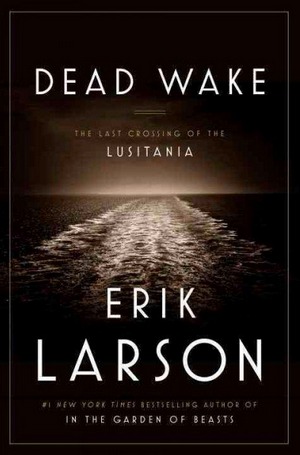
Dead Wake by Erik LarsonDead Wake: The Last Crossing of the Lusitania by Erik Larson tells the story of the famed Lusitania, the passenger vessel sunk by a German submarine on May 7, 1915. Aside from the tragedy and horror of the event, the ship’s demise became solidified in history because it became one of the turning points in America’s involvement in World War I. Larson, best-selling author of Devil in the White City and In the Garden of Beasts, is known for his unique ability to retell historical events with a literary quality paralleled only by novels of fiction.

Reading Dead Wake feels like reading a history textbook that’s far more interesting and accessible than your average 600+ page academic compilation of events. A large part of this intrigue is owed to Larson’s profile of individuals whose lives were bound up in the Lusitania’s last voyage. Larson zeros in on the Lusitania’s captain William Thomas Turner, the U-20 submarine’s captain who sunk the Lusitania Walther Schwieger, as well as a number of passengers aboard the vessel. While some of the information provided can falter to the side of dry or disinteresting, for the most part Larson provides a strong platform for the reader to build empathy and connection with the “characters.”

We meet Charles Lauriat, a bookseller and collector who was travelling across the Atlantic with a rare copy of Charles Dickens’ A Christmas Carol. Other notable figures included Theodate Pope, “the first female architect licensed in Connecticut,” through who Larson shows the gross injustices done to women in the early 1900’s. Perhaps the most memorable and intimate though is the portrait Larson paints of the then United States President Woodrow Wilson. Larson not only shows the figure known to the public, but delves into the intimate life of Wilson’s pining love for Edith Galt.

Larson’s sources ranged from letters to diaries to news reports and beyond, and by far the most engaging aspect of the novel is the number of quotes that he includes. Not only are these snippets of discourse and dialogue fascinating in and of themselves, but they are also a window into the hearts and nature of their speakers.  Admiral Scheer of the German fleet was quoted as saying:

“Does it really make any difference, purely from the human point of view, whether those thousands of men who drown wear naval uniforms or belong to a merchant ship bringing food and munitions to the enemy, thus prolonging the war and augmenting the number of women and children who suffer during the war?”

Juxtaposed by this statement is that of Austrian U-boat commander Georg von Trapp who said “we [U-boat soldiers] are like highway men, sneaking up on an unsuspecting ship in such a cowardly fashion.” von Trapp envied those in the trenches and aboard ships for their closeness and intimacy with war that he felt gave them the moral advantage of actin on rage, fear and out of self-defense.

This and other statements by German, British, American and other country’s prominent naval and political figures provide insight into the general attitude of each country’s militaristic force. These quotes and notes though are not meant to act as general blanket statements for whole nations. Larson points out “that while on distant patrol the [U-boat] captain received no orders from superiors” and was thereby empowered to sink any vessel he saw fit. Because of this, Larson points out that not all U-boats and not all captains were the same: “there were cruel boats and chivalrous boats, lazy boats and energetic boats.”

Schwieger’s boat was a notably cruel boat, though as Larson points out Schwieger claimed he did not know before launching his torpedo at the Lusitania which vessel he was attacking. Larson also notes that this claim was highly unlikely. However, true to his objective telling of historical facts, Larson makes no accusations or assumptions; rather he presents the facts for the reader to decide how to interpret them. That’s not to say that Larson’s tone doesn’t sometimes betray his own feelings toward a person, nation, etc. but it does reflect the author’s intent on telling an historical accurate account.

These concrete facts extend to the survivors’ accounts of the ship’s wreck as well, as Larson explores the realities of what it means to face death and come out on the other side alive. Many passengers noted their pervasive sense of calm during the whole ordeal, and a number commented on the beauty and serenity of the sky as they floated on their backs in the 55 degree water.  These passages are what imbues Larson’s novel with the sentiment and verdure of a truly human experience that lifts the “characters” from their places on the page and makes them even more tangible and relatable and empathetic way.

Larson’s historical accuracy as well as the coupling of his statistical reporting and human profiling makes for a thoroughly engaging novel that though it may at times teeter at the edge of tedium, comes out as a strong and informative piece from which readers have much to learn.

Dead Wake: The Last Crossing of the Lusitania was released by Crown Publishing on March 10, 2015 and can be found at your local bookstore.

FTC Disclaimer: This book was given to me by the publisher in return for a fair and honest review of the text.