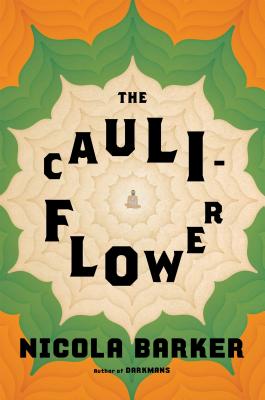
 The Cauliflower by Nicola Barker is a semi-biographical, spiritually investigative, and entirely comedic novel about the Hindu Swami Sri Ramakrishna, about religion in general, and about perspective.
The Cauliflower is told from a variety of perspectives and from a multitude of vantage points. Spanning a wide cast of characters, all who have some form of contact with Sri Ramakrishna, the book does not follow a conventional biographical telling, instead, the various narrators skip through years out of sequential order but in an order that reveals more about the characters themselves.
While The Cauliflower is a biographically fictional story of Sri Ramakrishna and his rise to “fame,” Barker also investigates interlaying themes that extend beyond the simple telling of this one particular story. The nature of reality of the ability to clearly define anything is a theme that recurs throughout The Cauliflower in a variety of ways. In fact, the reader is made to question what exactly this book is: is it a book, a biography, a newspaper report. At one point, Barker raises the question herself, “Is this book a farce, a comedy, a tragedy, or a melodrama?” Though she does not answer her own question, it appears by the end, that The Cauliflower, and by extension life, must be all three.
Another related theme is the meaning of veracity and certainty, particularly as it relates to religion and perspective. As mentioned above, The Cauliflower is told from different perspectives, but the reader can’t be certain who is telling the truth or what “truth” even means in the novel. Many of the characters disagree on certain events or even on descriptions of other characters; but further, the characters also disagree with themselves. Barker seems to beg the question, what is truth when we all are standing in, and coming from, different places – even if we are all seeing the same thing? This metaphor is extended to religion, and not only the Hindu religion that Sri Ramakrishna inhabits, but all religions.
Though The Cauliflower is a bit slow in the beginning because the reader needs to meet and become accustomed to not only the numerous characters and perspectives, but also the general layout of the book as rather disoriented, once it does pick up speed, it is hard to put down. Overall, this journalistic, meta-reality novel is a beautiful and comedic look into the intricacies and complication involved in living life, following religion, and finding peace with perspective.
The Cauliflower by Nicola Barker was released in 2016 by Henry Holt & Company and is available for purchase at your local bookstore.
Read more fiction book reviews at Centered on Books.
FTC Disclaimer: This book was given to me in return for a fair and honest review of the text.
 The Impossible Fortress by Jason Rekulak is a story of fourteen-year-old love in the late 1980’s: mostly love of girls and computers.
 A family saga that spans the depths of love, loss, birth and death Derek Palacio’s The Mortifications is a beautifully heartbreaking novel.
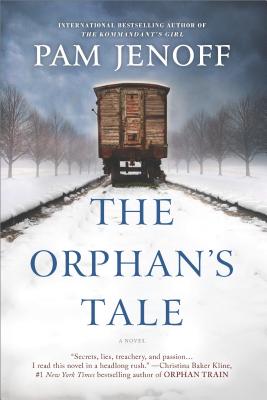 An enthralling and entrancing read, Pam Jenoff’s The Orphan’s Tale is a beautiful and heart wrenching book. Told from the perspective of the book’s two main characters, The Orphan’s Tale is a story of interconnected love, heartbreak, and sacrifice.
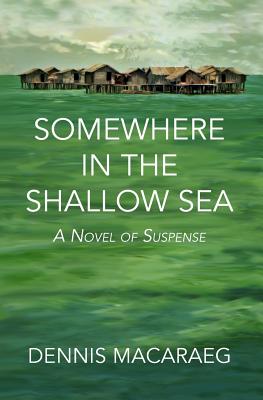 Somewhere in the Shallow Sea by Dennis Macaraeg promises suspense, thrill, and romance in its 220 pages. Macaraeg does deliver a plot that is steeped in these elements: a kidnapped friend, an unrequited love interest, and scientific experiment that could end up in the wrong hands.
 Kubrick’s Game by Derek Taylor Kent is exactly what it sounds like: a book about a game about Stanley Kubrick. From conspiracy theories to movie trivia, Kent brings it all together in this fun and thrilling novel.
 Human Acts by Han Kang is an eloquent and masterful investigation. It is an investigation into humanity, into the existence and nature of the soul, into the effects and implications of our memories. Originally written in Korean and published in 2014, translator Deborah Smith does a superb job of expressing these sentiments in her stunning yet detached translation of Human Acts.
 A book as tragic as it is beautiful, The Lesser Bohemians by Eimear McBride is one of the most well-crafted novels of the year. The Lesser Bohemians is a story of love and loss, of hatred, and of the human condition, of the extents of terror that accompany humanity, and of the lengths to which a person can be drawn before losing that humanity. McBride does all of this while captivating the reader with her mastery of language and its form.
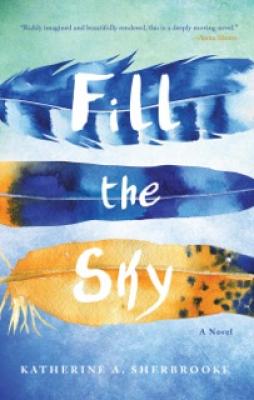 A story about the battle of fate versus volition, about western versus eastern medicine, and most importantly about the expected versus desired roles of a woman, Fill the Sky by Katherine A. Sherbrooke is an exploratory novel that is both moving and riveting.
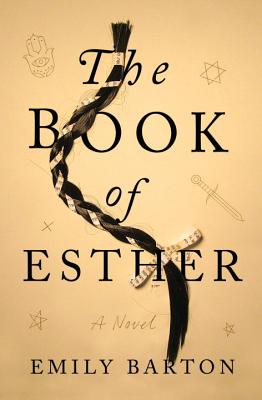 In an alternate vein of reality, at the dawn of World War 2, lives Esther bat Josephus, the daughter of the Khazar kagnate’s kender (the leading policy advisor). Esther has seen firsthand, the terror that the Germanii enemy has the potential to rain to on her people, and while her father and country seem to sit idle, Esther feels that she alone must take action in Emily Barton’s latest novel The Book of Esther.
 Centered on Books