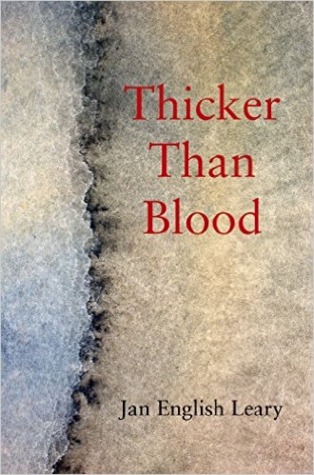
‘Thicker Than Blood’ by Jan English Leary

Thicker-Than-Blood-Jan-English-LearyWhat is a family defined by: blood, love, proximity? This is the central question of Jan English Leary’s first novel Thicker Than Blood.

The book mainly follows Andrea and her daughter Pearl from the time Andrea adopts Pearl through Pearl growing into young adulthood. Issues of race, discrimination, and acceptance also come to the forefront of the novel in record time as Andrea struggles with the difficulties of raising an African American daughter in Chicago, an already racially charged environment. In tandem with the above themes, those of expectation, self-worth and self-confidence also play a central role in the thematic make up of Thicker Than Blood.

At first the reader accompanies Andrea as she struggles to be a confident and successful single mother, but the novel quickly hops to other character’s heads giving differing perspectives on the difficult situations at hand.  We see what life is like from Pearl’s point of view, from Andrea’s boyfriend Mike’s point of view, from Andrea’s mother Nancy’s point of view, as well as from other minor characters. Though this sort of head hopping can often jar a novel and its reader out of the flow of the story, Leary does it in such a thorough and uncomplicated way that there are never any questions as to whose head we are in, or why we are there. Every character’s perspective adds weight and value to the central themes of the novel in ways that would be otherwise inaccessible.

We come to understand what the issues of family, race and self-confidence mean for Andrea, Pearl and Nancy as we discover secrets about them that even they don’t know about one another. Gaining access to the deepest darkest parts of their pasts, the reader is able to sympathize and interact with these characters in a way that the characters themselves are not able to do with one another. In turn, the characters are strengthened and we become more invested in their imperfect and disjointed lives.

A beautiful and moving piece that explores questions relevant to every human being, Thicker Than Blood is a momentous novel. Leary has done a brilliant job of gathering universal themes and holding them up for the reader to observe and judge for herself. An excellent first novel, Leary’s Thicker Than Blood will be released by Fomite on October 20, 2015.

Read more science fiction book reviews at Centered on Books.

FTC Disclaimer: This book was given to me in return for a fair and honest review of the text.

‘Armada’ by Ernest Cline

Armada-by-Ernest-ClineThe Armada is coming. An Armada of aliens that is – from a videogame, that main character Zack Lightman and his friends play nightly. Has Zack gone insane?

This is how Ernest Cline’s second novel, Armada begins as we delve into the very confused and tormented mind of eighteen-year-old Zack Lightman. The high school senior, like many high school seniors, is entirely unsure of what he wants to do with his future, and knows only what he loves. In Zack’s case, this is playing videogames, particularly Armada. In Armada Zack fights, along with his friends online, to save Earth from the Sobrukai, an alien clan of octopus-like creatures yearning to take over Earth and extinguish humanity.

When Zack looks out of the window of his classroom and sees a ship that looks exactly like a Sobrukai ship from Armada, he begins to wonder if he is losing his mind, like he suspects his late father did. From here the plot unravels into an intricate conspiracy theory about the intention behind numerous science fiction films, books and videogames, luring the reader into the book with a hook that makes you question your own reality.

The typical trope of “regular boy becomes hero” is what moves Armada forward, but Cline uses this trope in such a way that he imbues it with a fresh and unique aura. Though Zack’s story echoes so many other science fiction hero narratives, particularly that of Luke Skywalker, the setting and contemporary references make the plot so palpable that the reader can’t help but be drawn in. Cline is continually referencing not only popular videogames and science fiction characters that only the ultimate geek will pick up on, but he also weaves classic rock references into nearly every chapter calling out the old school rock nerds as well with his laugh out loud comments.

There are also certain points where the plot seems overly contrived, but once you step back and realize that all novels are in fact contrived and there’s sometimes no way around bridging the gaps in a story except by making certain things happen that need to happen, you can move past this hiccup. Plus, Cline’s characters give such weight to Armada, that you can easily overlook these seemingly forced spots and keep going with fervor.

Overall, Armada is by far one of the most engaging reads of 2015. The characters, plot, references and tone of Armada propel you into this near futuristic world with a gusto that results in absolute immersion. After the success of his first novel, Ready Player One, Cline has done it again, creating a fascinating world that seems so real, you will begin to question your own sanity.

Released by Crown Publishing on July 14, 2015, Armada is available at your local bookstore.

Read more science fiction book reviews at Centered on Books.

FTC Disclaimer: This book was given to me in return for a fair and honest review of the text.

‘A Girl Is a Half-Formed Thing’ by Eimear McBride

A Girl is a Half-formed Thing by Eimear McBrideEimear McBride’s debut novel A Girl Is a Half-formed Thing is a modern-day Joycean expedition into the disjointed thoughts of a haunted, unnamed girl. Following this unnamed narrator from birth until twenty years old, McBride’s novel takes on a prosody which mirrors the alacrity of events that take place. Told as a stream of consciousness, the narrator takes us through the horrors of her child and young adulthood all along addressing “you,” her brother, as if he were the recipient of her tale.

Within pages of the novel, we find that the narrator’s brother was born with a brain tumor and his sight, hearing, equilibrium and brain development have been severely affected by this past illness. The narrator’s mother is an abusive single parent whose love of religion and the ideas bound up in religiosity far outweigh her actual participation and investment in the ideals of the church. We meet other significant characters in the narrator’s life, all of whom negatively impact her and lead her further down a road toward corruption and dissociation with herself and her body.

A major theme in A Girl Is a Half-formed Thing is the disparate ideas of purity that surround the narrator. What purity means to those within the Christian faith, what it means to the narrator, to her mother, and to the world at large severely shadow the events of the novel. The narrator, though she seems to denounce Christianity, cannot help but feel the pull of its ideals that have been instilled in her since childhood. Constantly obsessing over purification and baptism, the narrator simultaneously seeks out disdainful actions and repels them at the same time, though she hardly ever escapes a negative situation with success.

Coupled with this idea of purity is the role of the body and the question of whether purity of body or mind is more important. There is constantly a disassociation of the self from the body, as the narrator begins to use sex and physical abuse as a form of consolation for her troubles. Echoed by the slow death of her brother’s body, the narrator too becomes more and more detached from the body which she subjects to abuse, often commenting on the emptiness inside of her that she seeks to fill.

The novel moves at a pace that often cascades so quickly, it’s easy to lose sight of exactly what’s happening as you get caught up in the often fragmented, sometimes half-formed, language that fills each page. The rapid cadence of A Girl Is a Half-formed Thing proves to propel the novel forward with a dire momentum that positions the reader constantly on an edge: just as the narrator is.

A Girl Is a Half-formed Thing is a terrifyingly beautiful look into the formation of a young girl and all that can and will go wrong in her life. The dual simplicity and complexity of McBride’s language mirrors the themes and ideas of the novel that, though they are often blatant, are deeply profound and driven by an emotionality that the reader can’t help but be absorbed by.

A Girl Is a Half-formed Thing was published by Hogarth in June of 2015.

Read more fiction book reviews at Centered on Books.

FTC Disclaimer: This book was given to me in return for a fair and honest review of the text.

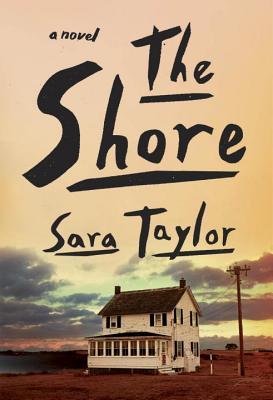
‘The Shore’ by Sara Taylor

The Shore by Sara TaylorThe Shore is a place of beauty and nightmare, of magic and perversity, of both horror and insight. In this collection of interconnected short stories, author Sara Taylor takes readers on a journey of genealogy that explores themes of family, the cyclical nature of violence, the importance of self-preservation and perseverance, as well as the complexity of what it means to love and be loved by others and by oneself.

Female characters are at the center of most of the stories, and the strength and vulnerability of the female condition is explored in depth. One of the most valuable aspects of the novel though is Taylor’s ability to shift her perspective from male to female, from past to present, from first to third person and back again. We hear from the raped and the rapist, from the abused and the abuser, from mother and child and from friends, lovers and cousins all to culminate in the telling of not only the individual stories, but the larger, over-arching themes that span the entirety of the novel.

In narrating The Shore in such a way, Taylor creates an air of empathy that would otherwise be vacant space. Because of the multiple perspectives offered, though, the reader is better able to gain access into the minds and spirits of characters whose connections to one another only ensure the reader’s own attachment to that character. Though this by no means absolves any of the characters of their often malevolent personas, and in some cases the reader is made to hate the already detestable characters even more so.

The Shore is unarguably a work of literary fiction; however, Taylor is still able to weave elements of magical realism, dystopian narrative and thriller inspired mystery into a number of her stories. Though Taylor is often successful in seamlessly shaping these deeper stories despite their more plot-driven impetus, the reader can at times get distracted from the value and significance of the story as she is drawn into the what rather than the who of the narrative.

Nonetheless, The Shore is an emotionally charged read that forces you to contemplate larger questions of violence, love and hatred while encouraging the growth, development and perseverance of the individual despite hardship, failure and horror.

Published by Hogarth, Sara Taylor’s The Shore was realeased May 26, 2015.

Pick up a copy at your local bookstore today.

Read more fiction book reviews at Centered on Books.

FTC Disclaimer: This book was given to me in return for a fair and honest review of the text.

‘The Book of Strange New Things’ by Michel Faber

The book of Strange New ThingsWhat makes us human: love, compassion, faith? What happens when we are stripped of human contact with the people we love most, when we are encouraged to flout compassion in favor of rationality, when faith is all that is left for us and we aren’t sure we even want or can muster an ounce of pure belief? These are only a few of the questions Michel Faber addresses in his latest novel The Book of Strange New Things. A literary adventure into the speculative world of aliens, religion, and relationships, Faber paints a reality peopled with the unexpected, the unsavory, and the utterly flawed.

Peter Leigh is a pastor recruited by the USIC, a government corporation that has recently taken over NASA as well as other large corporations and sectors, to act as a missionary on a newly colonized planet Oasis. Peter is forced to leave behind his wife, Bea, who the USIC will not allow to accompany him on the undertaking even though all of their missionary work has been done as a team in the past. In leaving Bea, Peter feels that he’s not only left the better part of himself behind, but that he is failing in his pastoral duties without Bea’s scrutiny and levelheadedness.

Upon entering the Oasan atmosphere, Peter befriends the USIC staff as well as the native Oasan people the latter of who hunger for his knowledge of Christianity. Apart from Peter’s day-to-day action, we are also privy to a series of letters, epistles as Peter calls them, between himself and Bea. At first they are affectionate and filled with the mundane conversation of everyday life that the couple were used to having prior to their separation. As the gap of time between their last moments together widens though, the physical gap of the distance between them becomes more palpable, and the metaphysical connection that they once thought so strong is deeply shaken. Peter becomes more distanced and distracted by his mission as Bea becomes wrapped up in the world around her which she describes to Peter as being in a steep decline.

Peter becomes a frustrating character that despite or perhaps in light of his understanding and calmness shifts into an almost vapid husband. Though he claims to love his wife, his letters to her lack the emotion he wishes to portray, and the words that come out on paper betray his idealistic notions of love amidst a world so far away from Bea’s problems. Similarly, it is hard for the reader to sympathize with Bea, since all we have of her in terms of contact are her letters to Peter. We know she is suffering, that things are going badly on Earth, and that she is not getting the emotional support that she needs from Peter, but we also see her lack of understanding for her husband’s issues on a planet that she can’t even conceive of. Both lovers are caught in their own worlds, unable to understand, sympathize or support one another in the way that they used to, and they are forced to question if their love can survive despite these obstacles.

Throughout the arc of Peter and Bea’s relationship, we see the strains and constraints that love is capable of, and perhaps the limits of its power. Peter’s fidelity to his wife comes into question as he begins to fantasize about other women in a St. Augustine-esque fashion, feeling immediate guilt for what he sees as the inherently male reactions to a woman’s body and sexuality.

A book that explores all angles of humanity in a way that forces you to question your own ethics, morals and understanding of the natural ways of the world, Michel Faber’s The Book of Strange New Things is an adventure into the depths of the human soul.

Released by Hogarth, you can find The Book of Strange New Things at your local bookstore.

Read more fiction book reviews at Centered on Books.

FTC Disclaimer: This book was given to me in return for a fair and honest review of the text.

‘The Invention of Wings’ by Sue Monk Kidd

The Invention of Wings by Sue Monk KiddBestselling author Sue Monk Kidd released her latest novel, The Invention of Wings, in January of last year.  A historical novel rooted in the story of Sarah and Angelina Grimke, the first female abolitionists and two of the first modern feminists, The Invention of Wings looks at issues of gender, race, and morality from a uniquely dual perspective.

The novel vacillates between being narrated by Sarah Grimke, a young southern belle, and Handful, a slave on the Grimke plantation. Both girls are subversive and oppose not only authority, but also convention, even at the young age of eleven when we first meet them. Kidd follows the girls from childhood into middle age, allowing for the reader to see and understand the situations occurring in and around their lives with a more vibrant and deep verve. There are certain stories and situations that are told both from Handful and Sarah’s point of view, while other events that are extremely important to Handful don’t even make it into Sarah’s narrative (and vice versa), because she is either unaware of them or can’t understand the impact of such events.

While both Handful and Sarah have a certain sisterly bond of love that they both acknowledge, there is a fissure between them that continues to grow as they age. Handful begins to see more and more that Sarah can never understand her position as a slave. Kidd juxtaposes the women’s rights movement with the abolition movement in so that each mirrors the other as a mode of imprisonment. However, Sarah’s issues, though vital in their own right, are often shadowed by the horrors of Handful’s life.

Sarah can at times be an overbearing and frustrating character, especially when she is placed next to Handful, whose greatest trouble can’t even come close to comparing to Sarah’s. In a certain way, The Invention of Wings, shows that everyone’s own biggest issue is as important to them as the next person’s own biggest issue no matter the gap between those issues. Sarah’s dreams and desires cannot be discounted by any means, but in comparison to Handful’s simple wishes for freedom, it’s difficult to have sympathy for the often whining, young southern princess.

Nonetheless, The Invention of Wings is full of strong female characters, Sarah included, who both take a stand against their oppressors and who offer inspiration by virtue of their will, courage, and perseverance.

Published by Penguin Books in January 2014, The Invention of Wings is available at your local bookstore.

Read more fiction book reviews at Centered on Books.

FTC Disclaimer: This book was given to me in return for a fair and honest review of the text.

‘Ana of California’ by Andi Teran

Ana of California by Andi TeranAna of California by Andi Teran tells the tale of Ana Cortez, a young Latina living in Los Angeles, who when we meet her, is without family, friends or any prospects for her future beyond what she sees as impending doom. Ana has been tossed from foster home to group home, each time leaving behind her indelible mark of persistence and sass. We meet Ana as she is given a final chance to free herself from the emotionally and often physically abusive system that she keeps getting cycled back into. Ana is offered an internship to be a farmhand at Garber Farms where she will earn school credit while building her credentials to apply for emancipation.

Ana is the quintessential young female heroine: strong willed, intelligent, quirky and compassionate. Rye, Ana’s best friend, is an exemplar model of another feminine strength and human imperfection: she is into high-fashion, questions her sexuality, and often makes poor choices that are all too easily made by a teenager. Then you’ve got the Garber siblings, Ana’s foster parents who have their own twisted pasts and dark secrets. Each character holds a torch for something in their pasts which informs their present selves and which they feel like defines them in some unforgiveable and unmalleable way.

One of the most beautiful messages of the book is that your past will always be with you no matter how much you wish it away, and that’s not such a bad thing. Though insecurities are harbored and negative experiences are settled deep in the psyche of nearly every character, in the end each seems to shed a part of that past in accepting the past and revealing it to their loved ones.

Not at all a fairy tale model of happily ever after Ana of California holds a certain sense of hope for readers coming from all different backgrounds and experiences, and offers a glimpse into the possibility of living life uninhibited by one’s past.

Set for publication by Penguin Books on June 30, 2015, you can preorder a copy of Ana of California from your local bookstore.

Read more fiction book reviews at Centered on Books.

FTC Disclaimer: This book was given to me in return for a fair and honest review of the text.

“The Room” by Jonas Karlson

The Room by Jonas KarlssonA gut bursting novella that reads like a tragicomic production, The Room by Jonas Karlsson is smart, hilarious and such a quick read that you’ll want to start it over again as soon as you hit the last sentence. The 186 page, 8 ½  x 6 ½ inch novelette is packed with irony and hilarity in its apt portrayal of the mundane and inane nature of office life as well as the many formulaic characters that reside there.

Björn has recently acquired a job working for the Authority, an organization with phantoms for leaders referred to only by their initials. These “leaders” send down numbered (never named) reports to the lowly office workers who in turn have no idea what those reports are about. Björn is hired as a sort of administrative assistant, and he takes his job extremely seriously. However, he is determined to move to the top, mostly at other people’s expense. His office mates are awkward, sometimes cruel and entirely suspicious of Björn, and he treats them no differently, though he often tries to say that he does. The unreliability of the narrator here is stark, though we can never be sure what the truth is behind Björn’s or his office mates’ distorted perceptions of reality, we can be sure that something is amiss.

To illuminate this point, Karlsson brings into the story “the room:” a small space in the office, right beside the bathroom where Björn gets most of his work done, but that those around him doubt the very veracity of. Björn must assert his rights to the room by proving that it aids him in his work, but even this does not keep his coworkers from thinking he is crazy.

Among the many themes Karlsson addresses, the idea of conformity and the erasure of individuality are paramount. Amidst all of Björn’s ridiculous antics and highbrow, self-serving thoughts and actions, there is the desire, the human need, to be a self and not just a member of the herd which is admirable in his character. Björn as well as his coworkers tend more to the side of despicable and annoying, yet each character holds a certain quality that is recognizable and relatable either within oneself or within another. These qualities might not be what we want to see in ourselves and others, but they are truths that are unavoidable.

At times highly frustrating and at other times laugh out loud funny, Jonas Karlsson’s The Room is a hilarious and light yet profound read that will keep you on your toes and make you think deeply about the state of human affairs in contemporary urban life.

The Room by Jonas Karlsson will be released by Hogarth on Tuesday, June 9, 2015. Preorder a copy from your local bookstore today.

Read more fiction book reviews at Centered on Books.

FTC Disclaimer: This book was given to me in return for a fair and honest review of the text.

“An Untamed State” by Roxane Gay

An Untamed State by Roxane GayAnother book about rape.

That’s what I thought when I first picked up An Untamed State by Roxane Gay. But I had read Bad Feminist and loved it, and I was dying to see what Gay could do with fiction. So, I bought the book, and I procrastinated.

There are so many books about rape, about broken bodies and broken women and the terror of a person’s dignity being ripped from her body and soul. There are too many books that take me too long to read because they’re just too hard to get through. Finally, An Untamed State found its way into my car on a camping trip, and I was compelled, if I wanted to read at all, to read the only book I had brought with me. And so I began, and once I did, I couldn’t put it down.

An Untamed State differs profoundly from so many of those other books I mentioned above that detail the destruction of the spirit and the grotesque actions taken against so many women and men. It differs because for the most part the book is told from the first person perspective of Mireille Jameson-Duval, a young wife and mother kidnapped in Haiti and held for a ransom her wealthy father is not wont to pay.

From the beginning, Mireille is a fighter, a resilient captive, something every woman who has ever been raped wishes she had been. In many ways, Mireille embodies this woman, this ideal survivor: someone who fights, someone who doesn’t let the most precious parts of herself be so easily taken, someone many women who experience rape aren’t even given the chance to be because of drugs, coercion, false security and bondage. For women everywhere who have experienced even a fraction of the pain that Mireille does in An Untamed State, the main character offers a sliver of redemption, a reason for the celebration of the strength of women despite their circumstances, despite what can be done to the body.

Though the book is riveting with action, what comes out most clearly are ideas of what it means to be raped, how it feels to be robbed of your dignity, and what the path to healing looks like. Gay, a survivor of rape herself, is able to capture these sentiments in a way that makes the novel less about the horrors that have happened to Mireille and more about Mireille, the person, the survivor, the woman. Unlike so many other books that merely describe graphic scenes with seemingly little purpose but to provide shock value and make the reader hate the criminal, An Untamed State focuses on what is happening on the inside for the survivor.

Mireille goes through feelings of guilt, self-hatred, inadequacy and hopelessness despite her strength. After her ordeal, she has an unending desire to be empty that manifests itself in an eating disorder, she is unable to communicate with her family in the same way, she is fearful and hateful towards nearly all men, and she can’t seem to find herself. She experiences selective memory and symptoms of PTSD, flying through flashbacks that are set off by things as seemingly inane as a scent. Eventually a therapist tells Mireille the truth about her road to recovery: “You will get better, but you will never be okay, not in the way you once were.”

This is the truth of rape, of trauma, of loss of control over your own body, this is the truth that Mireille, that Roxane Gay, that every woman and man that has ever experienced any ordeal even resembling that of Mireille’s must accept. The sense of power, of hope and beauty despite the horror and ugliness in the world is what raises this novel from the depths of what could’ve been tragic and grotesque to the height of inspiration. An Untamed State gives those whose bodies have been stolen, morphed and used the hope and realization that they are not shattered. They may be cracked, they may wear scars, whether physical or not, but they have the capacity to live if they can find the will and the strength and perhaps even the vulnerability to allow those around them to help.

An Untamed State by Roxane Gay is one of the most fantastic novels of the past few years, and it is by far the most inspiring novel I’ve read in a long time.

Published by Black Cat, you can purchase An Untamed State at your local bookstore.

Read more fiction book reviews at Centered on Books.

Author Interview with Tammy Flanders Hetrick

Author Tammy Flanders Hetrick

Jessica Anderson Photography

In this interview with Tammy Flanders Hetrick, author of ‘Stella Rose’, issues of craft, friendship, parenthood and female strength are discussed.

Q: At first glance, Stella Rose appears to simply be a heartbreaking novel about death and loss, yet you are able to take a topic that is by no means light and imbue it with hope, purpose and a sense of inspiration. What prompted the actual plotline to develop as it did? Why this story?

A: Years ago, a dear friend of mine was battling leukemia – and she survived. During that time, I found a bruise on my arm. Bruising is sometimes a symptom of leukemia, and I thought to myself, what if? My son was already out of the house, but my daughter, Ariel, was entering her last year of high school. If something happened to me, my husband could take care of her, but I really wanted my best friend to be involved. She and Ariel always had a special bond. I often joked that between the two of us, we made the perfect mom for Ariel. The story arc formed in my mind in an instant – though the writing took several years.

Q: In a similar vein, messages of perseverance, courage and optimism pervade Stella Rose, despite the hardship and abuse that is abundant across its pages. Did you start out with these themes or with the characters, storyline, etc.?

A: I started with the characters and the story arc. Then I poured out the first messy draft during NANOWRIMO (National Novel Writing Month). That’s when the plotlines formed and various themes emerged. I describe myself as an intentional, devoted optimist, so it was inevitable that no matter how dark I would go with this story, my characters would find courage and perseverance – though usually the hard way.  So during the revisions, I mined these characters for traits that would see them through, even if they weren’t obvious or elegant.

Q: Friendship is an important theme in the book: even Stella Rose and Olivia at times appear to be friends even though they are mother and daughter. Can you talk more about what friendship means for you both in the context of the novel and in the world at large?

A: Friendship is foundational. As women, we have many relationships to manage: spouse, mother, daughter, employee, etc.  We love these people in our lives, but let’s face it, these relationships require energy. Friends? Endless energy source! I spend an hour with a dear friend, and I am recharged. I can return to these other relationships refreshed – stronger, better. So why do we deprioritize time with our friends? Why do we take care of everyone else, then squeeze our friends into tiny slots of time – if at all? Because we think friends are indulgences instead of the life’s blood they really are. Friendships make us better, and then we make better families and better communities. This is what I wanted to convey in Stella Rose, and it’s what I want to talk to women about every day.

Q: The book focuses specifically on women and their journeys through love, loss, joy and hardship. Can you speak to the importance of the strong feminine presence in the novel?

A: I have been blessed with strong women in my life who have expected no less than a strong presence from me, so it’s who I am. I couldn’t write a novel without a strong feminine presence, but even I could, I wouldn’t. We don’t have strong women in print, though I am heartened by YA series like the Hunger Games and Divergent. Additionally, I wanted to show strength in more ways than physical prowess. My characters’ strength comes in the form of fierce compassion, loyalty, and integrity, as well as how much they can endure and still show up for each other.

Q: The challenge of writing a character that doesn’t quite make a physical appearance in the book must have been vast. Did you always know you wanted to make Stella most palpable through her letters, or did that develop later?

A: As I was barreling through the story, I realized with a start that Stella was barely mentioned after the first sketchy chapter. I pondered ways to weave Stella into the story and then thought, what would I do? If I knew I was dying, would I just trust everything to turn out right? I had already written one letter by Stella thanking Abby for taking care of Olivia. Then it struck me: 12 letters and mementos which would say more about Stella than flashbacks and other devices. These letters became the glue that helped me hold the novel together when it became unwieldy. Then they became the glue that held the characters together.

Q: What is your greatest hope for Stella Rose? What, if anything, do you most hope readers take with them from their experience of reading?

A: My greatest hope is that Stella Rose finds its way to everyone who would be moved by its message of hope, love, and appreciation. I hope every reader takes away a renewed sense of devotion to their friends and family. Maybe it’s time to pick up the phone – or even better, pick up the pen!

Tammy Flanders Hetrick has been telling stories all her life, refining her skills at age ten through marathon tag-team storytelling with her best friend, honing her craft through decades of business writing, and ultimately finding joy in extracurricular creative writing. She has published short stories in Your Teen Magazine, Blue Ocean Institute’s Sea Stories, and Route 7 Literary Journal. In 2009 she was recognized with the Outdoor Industries Women’s Coalition’s Pioneering Woman Award for coaching and mentoring women in the workplace. Hetrick lives in Vermont with her husband of thirty years, their two cats, and a beagle/miniature bull mix. Her website is http://www.tammyflandershetrick.com/.