 What could a book about gangs, murder, drugs, and rape possible shed new light on in 2017? Besides death, heartbreak, and inequality, it seems like modern day gangster novels don’t tend to give much more. Lola, by Melissa Scrivner Love, though is a whole new kind of gangster novel.
A book in a league all its own, Lola, the main character of the title novel is a character of a similar caliber. An underground gang leader, Lola heads the Crenshaw Six, a small gang in East L.A. that focuses mostly on drug trade and tends to lay pretty low. Until, the Crenshaw Six get a job that could change their entire trajectory and all of its members’ destinies, especially Lola’s.
The neighborhood of Huntington Park thinks that Garcia, Lola’s boyfriend, is the leader of the Crenshaw Six, and Lola struggles constantly to deal with both the perks and the frustration of leading a gang from behind the scenes. Lola is unintimidating, she can easily make her way into important places without being suspect, she can sit down with a man and make him feel like he’s in power simply by virtue of being a woman. It’s part of how Lola has made her way so high into the gang, but it’s also something that infuriates her. She wants to have an equal: someone who not only she sees that way, but that sees her as an equal as well. That seems an impossible feat when every other leader is a man and that somehow makes them more than her.
In fact, Lola itself is a feminist calling to reevaluate the way women are perceived in society: weak, small, and incapable of little else than cleaning floors. Lola does her best to defy these stereotypes while also constantly finding herself bogged down by them. Every time she cooks meal, cleans a floor, feels compassion, she chides the thought that she’s only doing it because she’s a woman, not because she’s a person. For every woman who finds serious issue with the gender norms of our time, Lola is a hero of sorts.
What makes Lola so magical and the reader feel so connected to her, despite her tendencies to cut off fingers and shoot people in the head, is that she leads from a moral compass, even if slightly skewed. She’s a feminist, she cares for the innocent people around her and for those who are loyal. She is disdainful of drug addicts, but adoring of children. Most of Lola’s morals make up the remaining themes and messages of Lola the book. Issues of race, inequality, injustices, parenting, and the meaning of love are just a few of the deeper themes that run through the pages of Lola.
Love’s only slip up comes in the form of her point of view. Mainly the book is told in a close third person point of view with Lola leading the way but the narration coming from an unknown third party. However, there are times where head hopping can throw the reader for a loop. Suddenly we are inside of another character’s head who we’ve potentially never even met, feeling what he feels and understanding his motives in a way we probably shouldn’t. Usually Love sticks with Lola and makes it clear that even evaluations of other characters are Lola’s, and that makes those evaluations even more valuable and interesting. Nevertheless, the slip ups can be a bit distracting for readings watching closely.
Overall, Lola is a fantastic and riveting book that will keep you reading all the way to the end. Just the right mixture of violence and terror, Lola is not overly graphic and though violent, it is never gratuitous.
Lola by Melissa Scrivner Love is slated for release by Crown Publishing on March 21, 2017. You can preorder a copy from your local bookstore today.
Read more fiction book reviews at Centered on Books.
FTC Disclaimer: This book was given to me in return for a fair and honest review of the text.
 Mexico by Josh Barkan is a series of epic, terrifying accounts of the lives of Mexico’s citizens. Told in a series of short stories, Mexico follows a host of different narrators, from gangsters to victims. The stories all revolve around crime, usually involving drugs, extortion, and often murder. What strangely ties all of the stories together though, beyond their setting, is their endings. Each narrative closes with a message of hope, or at least a glimmer of it, despite the tragedy that ensued for the pages of that story.
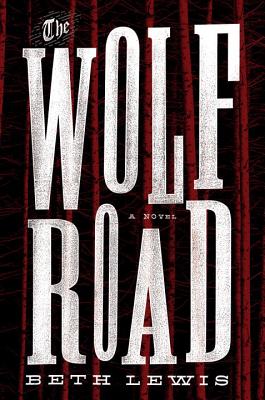 Terrifying, gripping, and raggedly beautiful, The Wolf Road by Beth Lewis is this year’s most thrilling post-apocalyptic novel. With a heroine as gruff and chilling as the book’s villain and a plot twisted and muddled with murder, lies, and disparagement, Lewis draws you in from page one.
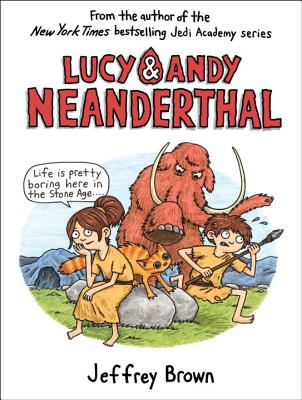 Meet Lucy and Andy Neanderthal, the main characters of Jeffrey Brown’s most recent episodic graphic novel Lucy & Andy Neanderthal. The book is a series of adventures that Lucy and Andy embark upon together from hunting mammoth to sewing clothing. Lucy is a misunderstood artistic genius, while Andy is your typical annoying little brother.
 A modern retelling of William Shakespeare’s The Merchant of Venice finds the perfect balance of traditional and contemporary in Howard Jacobson’s Shylock Is My Name.
 The Little Paris Bookshop by Nina George is an enchanting tale of love, loss and living through them both. Much more than just a sappy love story though, The Little Paris Bookshop looks into the very soul beneath human action and into the internal passions that drive us all.
 The history of autism is a winding road of pain, love and inspiration that is told beautifully in John Donvan and Caren Zucker’s In A Different Key. Tracing the history of autism from the first diagnoses to the most recent form of advocacy, the neurodiversity movement, Donvan and Zucker capture perfectly the spectrum of autism as a biological factor in a person’s life as well as an historical arc.
 Centered on Books