 What does it mean to be an adult? What does it take to be a parent, a husband, a wife? Where is the line between being flawed and being a bad person? Above all of the questions, though, hovers the central tension in author Eliza Kennedy’s debut novel I Take You: what is the value of marriage and monogamy?
I Take You is a novel about a woman in her twenties, Lily Wilder, who is about to marry Will, a man she has known for six months and who proposed to Lily after only weeks of knowing her. Not only that, but Lily is a pathological liar, cheater, drug abuser, and borderline alcoholic – none of which her fiancé Will knows about.
Throughout I Take You, Lily is at constant war with herself as to whether she should marry Will or not. Should she quit her gallivanting and devote herself to a single man? Is that what she wants? Is she even capable of being faithful?
Surrounded by a hoard of divorced mothers and a libertine father, Lily has a hard time discerning what is right and wrong in the world of love and marriage. How much can you ever know a person before marrying them anyway? How can you ever truly know it’s the “right” person or that the relationship will last forever? What if that person is the right person for that moment in time, but you change and evolve in different ways that make you incompatible later?
While these are valid questions to raise, they become slightly less valuable in the face of Will and Lily’s rather overzealous engagement: there’s no way they can know each other by the point of their marriage. Nonetheless, they are important questions to be asked, because in the end, what does it mean to be in love? How does love then become qualified for marriage? Is a strong feeling the same as love; is it just passion, or something else entirely?
In Lily’s particular case, she is chronically unfaithful to her fiancé, and the reader wonders what this has to say about Lily. She is fully aware of her actions, of the pain she’s sure her actions will cause, and yet she doesn’t change. Is she incapable of change? Does she simply choose not to change, and does this selfishness make her a bad person?
The book spirals into wild developments that change the entire nature of the arguments presented and delve into deeper, harder, and more terrifying questions about love, marriage, and monogamy. Kennedy does a great job of tying up her ends without a total “happily ever after” or doomsday ending.
I Take You, is a book about so many different things, but when it comes down to it, it’s really about being human, about experiencing the human condition of loving and being loved, and about both living in the present moment and being aware that a future exists where your present actions will have an impact.
Published by Broadway Books in 016, I Take You is available for purchase at your local bookstore.
Read more fiction book reviews at Centered on Books.
FTC Disclaimer: This book was given to me in return for a fair and honest review of the text.
 Ruler of Hearts by Jason Kerzinski is a poetically driven collection of works that glimpses the lives of those in the French Quarter of New Orleans with a searing depth.
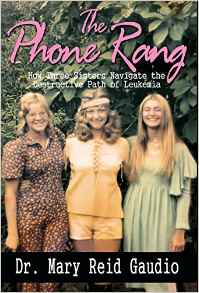 The Phone Rang by Mary Reid Gaudio is the story of three sisters as they stand together to fight the battle against their sister Ann’s Leukemia. Autobiographical, historical and full of moral insight, The Phone Rang touches on multiple aspects of both the sisters’ lives and Leukemia as a destructive disease.
 A modern retelling of William Shakespeare’s The Merchant of Venice finds the perfect balance of traditional and contemporary in Howard Jacobson’s Shylock Is My Name.
 The Little Paris Bookshop by Nina George is an enchanting tale of love, loss and living through them both. Much more than just a sappy love story though, The Little Paris Bookshop looks into the very soul beneath human action and into the internal passions that drive us all.
 War is a terrible and terrifying experience no matter the situation, but take crime, drugs, manipulation and scandal and you have a whole new world of terrible and terrifying. That is the exact picture of the war in Afghanistan that John Renehan paints in his novel The Valley. Renehan, a former field officer in Iraq, writes The Valley from an intimate vantage point, though he is clear in stating that he has never visited the places he mentions in the novel and that he depended more on research than on personal experience when it came to the setting.
 The history of autism is a winding road of pain, love and inspiration that is told beautifully in John Donvan and Caren Zucker’s In A Different Key. Tracing the history of autism from the first diagnoses to the most recent form of advocacy, the neurodiversity movement, Donvan and Zucker capture perfectly the spectrum of autism as a biological factor in a person’s life as well as an historical arc.
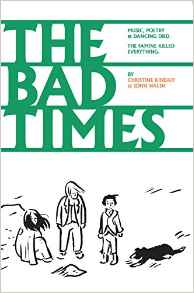 The Bad Times by Christine Kinealy and John Walsh is a graphic novel that tells the story of how “music, poetry and dancing died,” during The Great Famine in Ireland. Despite this statement though, through its very existence, The Bad Times stands as a testament to the resilience and revival of Irish culture after such devastation.
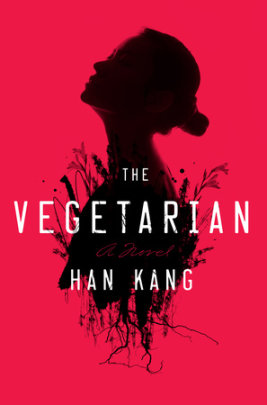 What is the difference between living and enduring? What is life when it is controlled by someone external to yourself? What is reality and how do we know that the place our physical being resides in is it? Among many other esoteric questions, Han Kang tackles these in her novel The Vegetarian. Addressing issues of abuse and the effects of trauma on the human psyche, Kang provides a unique glimpse into the convergence between sanity and insanity.
 Centered on Books