
“Black Sabbath: Symptom of the Universe” by Mick Wall

Black Sabbath biography by Mick WallBlack Sabbath: Symptom of the Universe (St. Martin’s Press) by Mick Wall is a fully comprehensive biography of not only the legendary self-same titled metal band but of each of the core band members of the group.

The 320 page book spans the entire career of the band and its diverging members up through their reunion tour in 2013. Perhaps the most interesting time periods portrayed, though, cover the lesser known years of the band’s youth before they were Black Sabbath. To learn that guitarist Tony Iommi bullied Ozzy Osbourne in primary school or that when Ozzy first joined the band he had a shaved head were interesting, odd facts that made the narrative more fully engaging, especially for a Sabbath fan who might know a good deal about the band to begin with. Though fans might be aware of the fact that Iommi lost the tips of two fingers in a factory accident, they are less likely to know that he made substitute fingers out of a melted down bottle so that he could continue to play guitar.

At first the reader is drawn into the emotional pull of the band’s inception and the excitement of their finally being recognized for their obscure and novel style of music. However, since the book covers such a large expanse of time, reading about the continual rise and fall of the band can become a bit burdensome and repetitive. This though, a fact of the band’s existence, was something that couldn’t be avoided by Wall.

Wall, a writer, editor, and press agent, writes Black Sabbath: Symptom of the Universe almost as if it were a novel. His descriptive language and storytelling style, though, does err to the side of grandiose and can be rather overbearing. There is a sense of hyperbolic animation that at times detracts from the pure sentiment that could have been conveyed in merely telling the story rather than interposing adjectival descriptions in a scene where the emotion and verve are obvious to the reader.  Wall does his best to tell the band’s history from as many viewpoints as possible, lending a level of intrigue to the text in the dissimilarities portrayed. Though he clearly shows bias in terms of which perspective he favors, he still strives to include multiple viewpoints that the reader is able to interpret on her own.

The story of Black Sabbath, of Ozzy Osbourne, of Ronnie James Dio, and of the numerous other band members who played a part in the history of both Black Sabbath’s success and demise is told in a complete and linear manner that leaves little left to be imagined.

Slated to be released by St. Martin’s Press April 14, 2015, you can preorder Black Sabbath: Symptom of the Universe by Mick Wall at your local bookstore.

FTC Disclaimer: This book was given to me by the publisher in return for a fair and honest review of the text.

Read more nonfiction book reviews at Centered on Books.

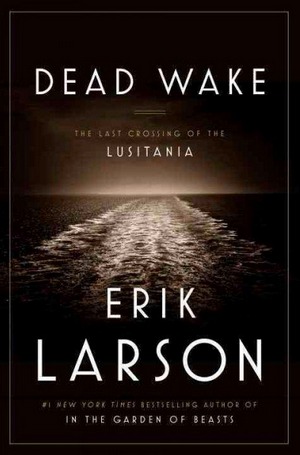
“Dead Wake: The Last Crossing of the Lusitania” by Erik Larson

Dead Wake by Erik LarsonDead Wake: The Last Crossing of the Lusitania by Erik Larson tells the story of the famed Lusitania, the passenger vessel sunk by a German submarine on May 7, 1915. Aside from the tragedy and horror of the event, the ship’s demise became solidified in history because it became one of the turning points in America’s involvement in World War I. Larson, best-selling author of Devil in the White City and In the Garden of Beasts, is known for his unique ability to retell historical events with a literary quality paralleled only by novels of fiction.

Reading Dead Wake feels like reading a history textbook that’s far more interesting and accessible than your average 600+ page academic compilation of events. A large part of this intrigue is owed to Larson’s profile of individuals whose lives were bound up in the Lusitania’s last voyage. Larson zeros in on the Lusitania’s captain William Thomas Turner, the U-20 submarine’s captain who sunk the Lusitania Walther Schwieger, as well as a number of passengers aboard the vessel. While some of the information provided can falter to the side of dry or disinteresting, for the most part Larson provides a strong platform for the reader to build empathy and connection with the “characters.”

We meet Charles Lauriat, a bookseller and collector who was travelling across the Atlantic with a rare copy of Charles Dickens’ A Christmas Carol. Other notable figures included Theodate Pope, “the first female architect licensed in Connecticut,” through who Larson shows the gross injustices done to women in the early 1900’s. Perhaps the most memorable and intimate though is the portrait Larson paints of the then United States President Woodrow Wilson. Larson not only shows the figure known to the public, but delves into the intimate life of Wilson’s pining love for Edith Galt.

Larson’s sources ranged from letters to diaries to news reports and beyond, and by far the most engaging aspect of the novel is the number of quotes that he includes. Not only are these snippets of discourse and dialogue fascinating in and of themselves, but they are also a window into the hearts and nature of their speakers.  Admiral Scheer of the German fleet was quoted as saying:

“Does it really make any difference, purely from the human point of view, whether those thousands of men who drown wear naval uniforms or belong to a merchant ship bringing food and munitions to the enemy, thus prolonging the war and augmenting the number of women and children who suffer during the war?”

Juxtaposed by this statement is that of Austrian U-boat commander Georg von Trapp who said “we [U-boat soldiers] are like highway men, sneaking up on an unsuspecting ship in such a cowardly fashion.” von Trapp envied those in the trenches and aboard ships for their closeness and intimacy with war that he felt gave them the moral advantage of actin on rage, fear and out of self-defense.

This and other statements by German, British, American and other country’s prominent naval and political figures provide insight into the general attitude of each country’s militaristic force. These quotes and notes though are not meant to act as general blanket statements for whole nations. Larson points out “that while on distant patrol the [U-boat] captain received no orders from superiors” and was thereby empowered to sink any vessel he saw fit. Because of this, Larson points out that not all U-boats and not all captains were the same: “there were cruel boats and chivalrous boats, lazy boats and energetic boats.”

Schwieger’s boat was a notably cruel boat, though as Larson points out Schwieger claimed he did not know before launching his torpedo at the Lusitania which vessel he was attacking. Larson also notes that this claim was highly unlikely. However, true to his objective telling of historical facts, Larson makes no accusations or assumptions; rather he presents the facts for the reader to decide how to interpret them. That’s not to say that Larson’s tone doesn’t sometimes betray his own feelings toward a person, nation, etc. but it does reflect the author’s intent on telling an historical accurate account.

These concrete facts extend to the survivors’ accounts of the ship’s wreck as well, as Larson explores the realities of what it means to face death and come out on the other side alive. Many passengers noted their pervasive sense of calm during the whole ordeal, and a number commented on the beauty and serenity of the sky as they floated on their backs in the 55 degree water.  These passages are what imbues Larson’s novel with the sentiment and verdure of a truly human experience that lifts the “characters” from their places on the page and makes them even more tangible and relatable and empathetic way.

Larson’s historical accuracy as well as the coupling of his statistical reporting and human profiling makes for a thoroughly engaging novel that though it may at times teeter at the edge of tedium, comes out as a strong and informative piece from which readers have much to learn.

Dead Wake: The Last Crossing of the Lusitania was released by Crown Publishing on March 10, 2015 and can be found at your local bookstore.

FTC Disclaimer: This book was given to me by the publisher in return for a fair and honest review of the text.
“The Buried Giant” by Kazuo Ishiguro

The Buried Giant by Kazuo IshiguroThe Buried Giant (Knopf )by Kazuo Ishiguro is the author’s most recent success in breaking literary boundaries while creating a story that is entirely enthralling. On the most mundane of levels The Buried Giant topples normative conceptions of genre as it spans the worlds of fantasy despite being very clearly a book of literary fiction. In a recent conversation with Erica Krouse hosted by the Lighthouse Writer’s Workshop in Denver, Colorado, Ishiguro addressed this topic by noting that a shift is underway in the literary community, and authors, especially of the younger Harry Potter generation, are becoming less and less tied to traditional conceptions of genre. Ishiguro sees this as a positive shift and noted in the interview with Krouse that he was happy to be contributing to such a movement. He openly admitted, though, that 15 years ago or less he might not have had the gall to choose the setting that he did for The Buried Giant.

The Buried Giant takes place in a post Arthurian Briton that is riddled with ogres, pixies and dragons. The novel follows the adventure of an older married couple Axl and Beatrice as they set out from their home to discover the mysteries of their forgotten past. The couple, though later in their years, is not suffering from Alzheimer’s or some other such disease; rather, there is a collective sense of forgetting that has fallen upon the whole of Briton. This fog, in sense, is what prevents nearly all of Ishiguro’s characters from keeping a hold on even near distant memories.

This shared sense of remembering, Ishiguro noted to Krouse, is at the heart of his latest exploration on the topic of memory. A good portion of Ishiguro’s books relate to memory and how memory affects a person’s understanding of her current situation and serves as the” lens for [her] relationships.” Ishiguro’s previous literary examinations of memory though have always been about the singular recollections of the narrator or main character. As a central theme to his writing, Ishiguro wanted to explore collective memory, especially as it relates to a whole nation, to love, and to the union of marriage. One of the most central themes of the book, one that Beatrice raises again and again, is the question of whether in forgetting the shared memories of two people’s pasts they can still claim to be in love.

Aside from the issues of love and memory, Ishiguro weaves through tales of battle and introduces other rather frightening characters, many of whom remain nameless. The most interesting aspect of these settings and characters is that they could essentially be left behind if Ishiguro had decided to set the book in any other place or time. If the reader were to lift out the themes, threads and issues that the book delves into, it is easy to see that the fantastical setting of The Buried Giant is secondary to the story being told beneath that surface.

This seems to make perfect sense when one considers that the most difficult aspect of writing for Ishiguro is setting, as he stated at the Lighthouse Writer’s Workshop event. He often conceives of an idea for a novel and struggles with where to place that idea in space and time. The flexibility he allows himself and the difficulty he has in coming to a conclusion is perhaps how and why Ishiguro is able to span so many genres with his writing. His previous book Never Let Me Go is a speculative literary fiction novel, while Remains of the Day is a rather romantic tragedy and a comedy of manners. Now, with a fantasy book under his belt, Ishiguro has most definitely traversed a wide range of the literary plain.

The Buried Giant, is by far one of the most engaging and fast paced of Ishiguro’s novels, and despite its 317 page girth, the book is, by experience, readable in a single day.

Purchase The Buried Giant at your local bookstore.

Read more fiction book reviews at Centered on Books.

“At The Water’s Edge” by Sara Gruen

At the Water's Edge by Sara GruenAt the Water’s Edge by bestselling author of Water For Elephants Sara Gruen is a novel of romance, adventure, and history. The book takes place in the midst of World War Two in Philadelphia and then in Scotland as a high society love triangle comprised of the narrator Maddie, her husband Ellis, and their mutual best friend Hank head on in search of the Loch Ness monster.

Ellis and Hank both have purported ailments that have kept them from enlisting in the war: Ellis is color blind and Hank is flat footed. The two men are so shamed by their inability to enlist that they decide to head to Scotland to find and film the Loch Ness monster and prove themselves heroic. Maddie is forced to come along since she has nothing in Philadelphia but a mother-in-law who wants to dissolve her son’s marriage and a father who wants nothing to do with her.

So, the three head to Scotland and check into a local inn where we meet more of the novel’s characters including Anna, Meg, and Angus. From here the story spins into tangents of monster hunting, Maddie’s slow acclamation to life outside of her china walls, and a love affair that develops only very late in the novel. Ellis and Hank, though most especially Ellis, turn out to be entirely dreadful human beings who are not only careless, but conniving, evil, and abusive. Much of the novel is spent describing the ways in which Ellis talks down to Maddie, tries to physically abuse her and emotionally berates her for what he sees as her imperfections. Frustratingly, Maddie does nothing to stand up for herself, and though this is a period piece set in a time when men did have the power to commit their wives to mental institutions, it is entirely maddening to watch Ellis dominate his wife and for Maddie to fall into patterns that reassure Ellis’ behavior.

There is definitely an air of melodrama in the book as well with Maddie constantly fainting, becoming woozy, or needing a man to save her from distress. There are few strong female characters at all in fact. Meg still pines over her boyfriend after he beats her nearly dead for wearing a pair of silk stockings that he assumes Meg slept with someone to obtain, while all of the women passively wait to be married and disappear into their respective husbands. Once again, the time period of the piece must be taken into account when trying to understand Gruen’s intention drawing such characters, but it is no less defeating for readers.

It is difficult to be surrounded by a hoard of characters for which the reader develops little sympathy because of their obnoxious behavior. The plot and all of the tangential subplots, however, are arresting and intriguing in a way that allows the reader to overlook potential frustrations in the novel’s characters. Being primarily plot driven, At the Water’s Edge will most definitely prove to be another blockbuster once a film is made.

At the Water’s Edge is slated for release from Random House Publishing on March 31, 2015. You can preorder a copy of the book here.

Read more fiction book reviews at Centered on Books.

FTC Disclaimer: This book was given to me in return for a fair and honest review of the text.

“Hausfrau” by Jill Alexander Essbaum

Hausfrau by Jill Alexander EssbaumHausfrau by Jill Alexander Essbaum at first appears to be the somewhat typical story of an unsatisfied housewife searching for meaning in her life and filling the void that has become her world with copious amounts of sex. Quite rapidly, though, the novel reveals itself as something much more discerning and intuitive.

Anna is the wife of Bruno: a woman with no driver’s license and no bank account, a self-proclaimed outcast American living in Switzerland. She has three children, one of whom she loves more than the rest, and another who holds for her the most painful part of her past.

Anna is constantly trying to convince herself of her own happiness and to make sense of her past decisions, as if granting herself pardon from her mistakes will erase them or make them easier to bear. It is obvious, though, that all of Anna’s internal warmongering, is nothing but a distraction from the fact that she cannot forgive herself or understand how and why her life has turned out the way that it has.

When we first meet Anna she has begun to see a therapist, Doktor Messerli a devout psychoanalyst, who serves no better purpose than to further reinforce Anna’s own submissive and subsumed nature. Ironically, Anna is not even truthful to her doctor, and we are compelled to stand in Anna’s lies as Messerli, often in a macabrely ironic way, tries to interpret Anna’s life with only half the details. Meanwhile, Anna goes about her life trying to divine significance, find the ability to feel, and understand her purpose in a world that has gone utterly gray.

Essbaum’s simplistic and yet deeply nuanced language lays the basis for the multitudinous layers running through the novel. Sentences are often short and terse, matter of fact and bitingly honest, while the metaphors of Hausfrau run in effulgence. Not only does the language surrounding Anna and her relationships directly correlate to those very relationships, but things as simple as the fact that Anna lives on a dead end speak volumes to the physical events in the book.

While the most potent drama of Hausfrau lies within Anna, there is an equally balanced physical component to the novel as Essbaum perfectly marries both internal and external conflict. We travel through Anna’s past, as well as her day to day life as she rides the train to her German language classes, has steamy sex with men in sheds, and confronts her husband and mother and law on a day to day basis.

Essbaum develops characters so tangible and situations so terrible it’s hard to accept that they are fiction. Even the worst of characters is so distinct and despicable that you want to know more about them. We move through the novel with Anna and feel her anguish, her pain, her annoyance with herself and we though we recognize that she is a woman utterly depressed and entirely lost we feel the sanity in all of her seemingly insane actions. A novel that at certain points will make you scream “no” and while at others it will burrow you deeper into your couch with “yes,” Hausfrau hits on every emotion in the human spectrum with a sheer brilliant aptitude.

Hausfrau by Jill Alexander Essbaum was released by Random House today and is available for purchase at your local bookstore.

Read more fiction book reviews at Centered on Books.

FTC Disclaimer: This book was given to be my NetGalley in return for a fair and honest review of the text.

“Bad Feminist” by Roxane Gay

Bad Feminist by Roxane GayBad Feminist by Roxane Gay is a collection of essays that explores topics of race, gender, politics, feminism and the ambiguities inherent in the world despite these categorizations. Perhaps most importantly, though, Bad Feminist is the amassed thoughts of one self-proclaimed “bad feminist:” an influential and conscientious woman provoking her readers to think differently about any number of uncomfortable subject matters.

Gay talks about what many people ignore, bury, or flat out deny in a way that is not only engaging but also relatable. She discusses and problematizes issues surrounding rape, what it means to be overweight, and women’s reproductive rights all while tying in examples from her personal life as well as from popular culture. Gay also addresses the preconceived notions of feminism and disputes the long standing idea that all women who are feminists are militant man haters.

Despite the fact that some of Gay’s attributes may seem to conflict with common conceptions of feminism, she still loves the color pink, dreams of love, and freely admits that she “enjoy[s] fairy tales.” This does not mean that she is ignorant to the complicated issues bound up in the traditional fairy tale model. The overly confident Prince Charming and the often complicit and inert female characters are still problematic, and Gay recognizes and addresses these issues in her own work.

Gay explains how in her novel An Untamed State, she endeavors to tell the typical fairy tale story in reverse, going from a state of happiness to a state of terror, to some sort of return. Gay has “no problem with darkness, sorrow, pain, or unhappiness,” but she strives to “complicate these themes…[to] achieve a more complete, complex understanding of happiness ” even in a story involving kidnapping, rape and the shaking of human morality.

Perhaps the most rattling of Gay’s musings revolves around sexual violence. Gay acknowledges that “we talk about rape, but” she notes “we don’t carefully talk about rape.” Rape victims are often further victimized by others besides the perpetrator, terms like “rape culture” are thrown around carelessly, and society engages in humor associated with rape and sexual violence. Gay confesses, that she is exhausted even talking about the topic. However, she “consider[s] her responsibility as a writer…to critique rape culture intelligently and illuminate the realities of sexual violence without exploiting the subject.”

In moments of raw humanity, Gay questions whether she is in fact “contributing to the cultural numbness” that allows, invites and encourages the ignorant ideologies about race, women, rape and other topics to flourish. But as Gay notes, she “would rather be a bad feminist, than no feminist at all.” Taking action is vital, but Gay suggest that accepting ambiguity and allowing for imperfections in one’s self and in one’s culture is perhaps even more vital. With Bad Feminist, Gay makes clear that nothing is clean cut, few things are unambiguous, and everything is complicated.

Read more nonfiction book reviews at Centered on Books,

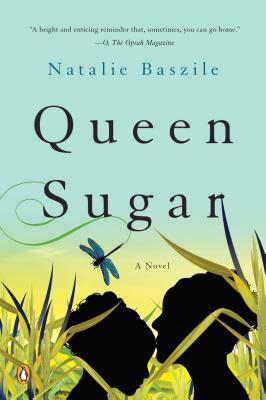
“Queen Sugar” by Natalie Baszile

Queen Sugar by Natalie BaszileQueen Sugar by Natalie Baszile may tell a story of familiar themes, but the upfront way that Baszile addresses issues of family, race, social class, faith and more makes for a vital and moving novel that works on levels so much deeper than plot.

Speaking of plot: when we meet Charley Bordelon, the primary narrator of Queen Sugar, we learn that she has recently inherited an 800 acre sugarcane farm that she had no idea even existed until her father’s will named her its owner. Now Charley and her daughter Micah are travelling from the home they’ve always known in Los Angeles to the farmlands of Louisiana to harvest sugarcane. Charley and eleven-year-old Micah getting to Louisiana without strangling each other by way of typical mother-daughter effrontery is only the beginning of a long struggle that both women will endure throughout the course of the novel.

Not only is Charley a city girl trying to take up a farmer’s role, but she is also a woman in a man’s world and perhaps most at the forefront of Charley’s mind and the novel, she is an African American in a still racist state. This is a place where black and white, male and female, poor and rich are major distinctions for the Californian mother and daughter. Hence, recurring themes of incessant and seemingly inherent masochism, racism and social class issues play deep seeded roles in the novel as Charley navigates her way through the very new territory of Louisiana’s Deep South.

Throw into the mix Ralph Angel, Charley’s drug abusing half-brother who seems to be good at only one thing: messing up every opportunity given to him, and you’ve got the perfect fixings for a catastrophe. Ralph Angel though is one of the most intriguing and tragic characters of the novel. His story, that of a struggling African American who never makes it out of the drudgery he’s born into, is one of the most important Baszile intends to tell.

Queen Sugar is a stark and often affronting novel that cuts no corners and leaves no silences when it comes to taking a stand. That’s not to say that ambiguities aren’t recognized in the systems and norms that Bazsile confronts; rather, the issues themselves are brought to light in ways that complicate and force those who stand on either side to think differently about the matters at hand. Baszile challenges issues of race, gender and class that still plague us today with characters so alive and endearing it’s easy to think about what they would do or say in situations outside the pages of the text.

A richly complex novel burgeoning with social import and so beautifully composed you’ll feel you are walking in the Louisiana cane field with Charley, Queen Sugar is both tragic and uplifting in just the same way life itself can often be.

Published by Penguin Books in January 2015, you can find Queen Sugar at your local bookstore.

Read more fiction book reviews at Centered on Books.

FTC Disclaimer: I received this book from NetGalley for a fair and honest review of the text.

Contact Centered on Books

Have a written a book that you would like reviewed? Do you have questions or comments about a book review you’ve read at Centered on Books? Reach out and contact Jaclyn Bauer for more information.

← Back

Thank you for your response. ✨

“The Dream Lover: A Novel of George Sand” by Elizabeth Berg

The Dream Lover: A Novel of George SandThe Dream Lover by bestselling author Elizabeth Berg is the fictionalized historical account of George Sand: one of the most influential and subversive female writers in France during the 19th century. Sand, born Amantine-Lucile-Aurore Dupin, not only published novels and articles at a time when women were primarily confined to household living, but she did so in plain view of the public, often cross dressing as a man, smoking cigars and engaging in open love affairs with some of the most prominent artists of her time. In her own novel, Berg  both draws from historical records and adds some of her own flair as she traces Sand’s life from early childhood until past her own death.

Sand traverses the years of her own life as the book’s narrator offering us only her single perspective. In this way, Berg often leaves conspicuously gaping holes in the thoughts and actions of Sand’s friends, family and lovers. As readers, all we have is Sand’s word that the events she recounts have happened in the way that she claims they have happened, but there are always parts of the story that seem missing. There are always things that we as readers are compelled to fill in, imagine, and understand, things that the character Sand perhaps does not want to fully admit to herself more than anyone else.

In this way, Berg points directly to an issue that she encountered during her research of Sand’s life. In Sand’s own autobiography, as well as in the historical records detailing the writer’s life, Berg notes there are major discrepancies in terms of dates, names and places associated with the famed writer. Berg took these discrepancies and did what she could with them: told them from a point of view. A point of view that Berg explains in the afterward of The Dream Lover, is not rooted in pure fact; rather, it is a mix of the real and imagined truths that she unearthed while steeped in her research.  This marriage of fact and fiction as form is echoed in Sand’s narration, as we often wonder how much of what she is telling us in imagined in a certain ways and stretched from the hard facts to suit her wildly imaginative and romantic mindset.

These discrepancies also mirror the ambivalences inherent in Sand’s own persona. Though Sand’s activities and lifestyle were controversial to say the least, there was evidence in her own writing, as well as testaments from her friends, that credited her with having a love for domesticity and for her children. Further, Sand, despite her fun-loving nature and energetic attitude, was known to suffer from depression and a pervasive sense of restlessness, which Berg translates seamlessly into her text. Berg aptly captures all of the contradictory elements of Sand’s nature and portrays her as a woman with ambition, doubt and talent, as a woman of love, hatred and anger.

Through and through, The Dream Lover reads at a fast-paced gallop, leaping through time and space to tell the most apt parts of this heroine’s life, all while mixing love, passion and longing in just the right amounts.

Set to be published by Random House in April 2015, The Dream Lover: A Novel of George Sand is available for pre-order from your local bookstore.

Read more fiction book reviews at Centered on Books.

FTC Disclaimer: I received this book from NetGalley for a fair and honest review of the text.
“The Martian” by Andy Weir

The Martian, written by Andy Weir.

The Martian by Andy Weir.

The title, the cover, the very concept of The Martian gives the illusion that its pages will be peopled with green aliens, intergalactic war, and other typical science-fiction paraphernalia. Andy Weir, though, writes The Martian not as some wild and fancifully romantic sci-fi novel, but as an engineer would write a book: entirely precise, absolutely plausible, and with zero fluff tolerated. And so it is that Weir sets the stage for his main character Mark Watney’s abandonment on Mars.

The novel begins in the aftermath of a freak accident that both nearly kills astronaut Watney, and proves to save his life. Watney comes to consciousness, and reflecting on his situation opens the book with the infamous first words: “I’m pretty much fucked.” Now it’s up to Watney to survive what would appear to be a death sentence with only his engineering and botany skills to help. As the novel progresses though, we see that it is also his positivity and perseverance that pull him along. These attributes, coupled with his very base human urges and desires, are what make Watney a character you find yourself rooting for more and more.

Watney is not the only character whose mind we are granted access to though. NASA Mission Director Venkat Kapoor, satellite engineer Mindy Park, and even members of Watney’s crew make their way into the novel to break up the journal entries that lead us into Watney’s character.

Watney’s account, most especially, tends to be pretty dense with technical content allowing for people like me (non-engineering minded readers) to occasionally gloss the text, glass over, or lose a visual of what’s going on. As a technical writer and editor, I’m familiar with reading just this kind of content, and I am equally familiar with employing all of the above techniques to get through it. However, for the average person who hasn’t taken a chemistry class in 10 plus years, Watney’s technicality and specificity can be a bit burdensome. For those like my scientifically minded engineering colleagues, the book is not only a breeze, but an accomplishment among a genre often riddled with improbabilities and unrealistic scenarios.

One of the most engaging aspects about The Martian, is Weir’s deep knowledge and wild imagination that he in turn imparts upon Watney and the book’s other characters. Whether you understand every concept or action, the book refuses to tip to the side of boring or burdensome as it might threaten to for some readers.

It might help that the characters are so endearing and engaging despite their, at times, despicable demeanors. Though raw and unkempt, Weir’s characters are all too human and thereby more relatable than the sometimes contrived characters of genre fiction novels. Weir isn’t trying to do anything with these characters except to make them who they are, and he does a superb job of compelling readers to find sympathy for and relate to even the most obnoxious of characters.

Most importantly, Weir’s cast speaks directly to the themes and intentions underlying his book. As he notes in the afterword, Weir’s goal is to show that humanity is not doomed to complacency or selfishness. When Watney gets trapped on Mars, every person at NASA, in China, and on earth is not only rooting for him, but pooling their collective resources to get him home. Weir invokes a sense of comradery among the human race, which (whether it is true of the humanity outside of his novel or not) invokes the ideal that humans have “a fundamental desire to help one another.” Though Weir may arguably be romanticizing this theme to a certain degree, it is definitely a quality that we busy, bustling, self-absorbed humans could use a reminder about once in a while.

The perfect marriage of technical and narrative writing, The Martian makes a perfect read for say a book club where you have engineers and book nerds in one place.

Though recently acquired by Broadway Books and Crown Publishing, divisions of Random House LLC, Weir is the poster child for self-publishing success. Originally released as an e-book in 2011 and sold for 99 cents, Weir’s novel was not only picked up by a major publisher, but a movie is already in the works. Staring Matt Damon, Jeff Daniels, and Chiwetel Ejiofor, the film is slated for release in September 2015. Even though Weir assisted in writing the screenplay, read The Martian before you see the film so that you can experience Weir’s unique writing style, enrapturing characters, and insanely plausible scenarios just as they are meant to be experienced.

If this book review peaked your interest, pick up a copy of The Martian at your local book store.

Read more science fiction book reviews at Centered on Books.