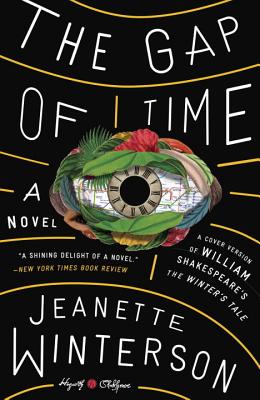
 Shakespeare is arguably one of the greatest literary figures of all time. In saying this, who could ever retell his stories with, at the very least, an equal caliber? Jeanette Winterson does just this in her latest novel The Gap of Time.
Based on William Shakespeare’s The Winter’s Tale, The Gap of Time picks up all of the characters in the play and sets them down in the modern day to explore both the themes presented in the original and more. Winterson takes the gap of time that occurs in the original play of some sixteen years, and extrapolates on the significance, terror, and beauty of time and its passage.
The story is one of an abandoned child lost and found. It is a story of a power-hungry and jealous father who must come to terms with the limits of his ego in order to find happiness. It is a story of two children grown to adolescence: young lovers connected in a way that they could never dream of. It is a story of old and new love, of the importance of understanding your own self-worth and fighting for the truth, even when it’s hard to hear. Most of all, it is a story of redemption, forgiveness, and renewal.
The poetical appeal of Shakespeare’s language is retained and modernized in The Gap of Time, and most especially through Winterson’s lush descriptions of time itself. Time is something that “holds the world still” that follows “you like a shadow,” and sometimes “[t]his is time. You are here. This caught moment opening into a lifetime.” What is perhaps the most magical and insightful aspect of The Gap of Time is Winterson’s treatment of time as a dynamic and fluid player in all our lives. Instead of viewing time from a single perspective, Winterson drives at it from all possible vantage points, and forces the reader to inquire into the many significances that time brings to life.
Though nearly all of the characters in The Gap of Time are much more accessible than Shakespeare’s in The Winter’s Tale, Winterson stays trues to the motivation behind most while also intermixing even more threads of love, lust, gender, sexuality, and humanity.
The Gap of Time is an absolute must read whether you are familiar with The Winter’s Tale or not. While coming to the novel with The Winter’s Tale as a background proves for a more thorough and insightful read, Winterson gives a full recap of the play in the book’s beginning, and the novel itself can stand alone just as strongly.
Published by Hogarth in June of 2016, The Gap of Time is available for purchase at your local bookstore.
Read more fiction book reviews at Centered on Books.
FTC Disclaimer: This book was given to me in return for a fair and honest review of the text.
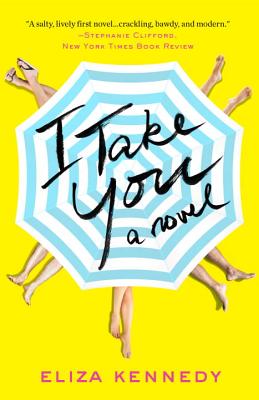 What does it mean to be an adult? What does it take to be a parent, a husband, a wife? Where is the line between being flawed and being a bad person? Above all of the questions, though, hovers the central tension in author Eliza Kennedy’s debut novel I Take You: what is the value of marriage and monogamy?
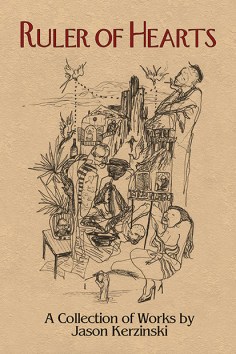 Ruler of Hearts by Jason Kerzinski is a poetically driven collection of works that glimpses the lives of those in the French Quarter of New Orleans with a searing depth.
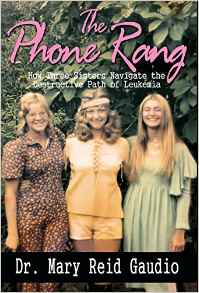 The Phone Rang by Mary Reid Gaudio is the story of three sisters as they stand together to fight the battle against their sister Ann’s Leukemia. Autobiographical, historical and full of moral insight, The Phone Rang touches on multiple aspects of both the sisters’ lives and Leukemia as a destructive disease.
 A modern retelling of William Shakespeare’s The Merchant of Venice finds the perfect balance of traditional and contemporary in Howard Jacobson’s Shylock Is My Name.
 The Little Paris Bookshop by Nina George is an enchanting tale of love, loss and living through them both. Much more than just a sappy love story though, The Little Paris Bookshop looks into the very soul beneath human action and into the internal passions that drive us all.
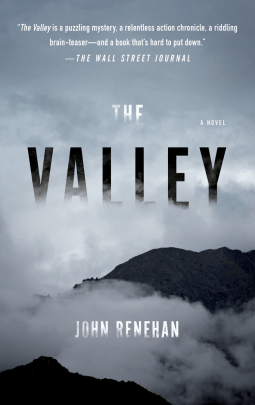 War is a terrible and terrifying experience no matter the situation, but take crime, drugs, manipulation and scandal and you have a whole new world of terrible and terrifying. That is the exact picture of the war in Afghanistan that John Renehan paints in his novel The Valley. Renehan, a former field officer in Iraq, writes The Valley from an intimate vantage point, though he is clear in stating that he has never visited the places he mentions in the novel and that he depended more on research than on personal experience when it came to the setting.
 The history of autism is a winding road of pain, love and inspiration that is told beautifully in John Donvan and Caren Zucker’s In A Different Key. Tracing the history of autism from the first diagnoses to the most recent form of advocacy, the neurodiversity movement, Donvan and Zucker capture perfectly the spectrum of autism as a biological factor in a person’s life as well as an historical arc.
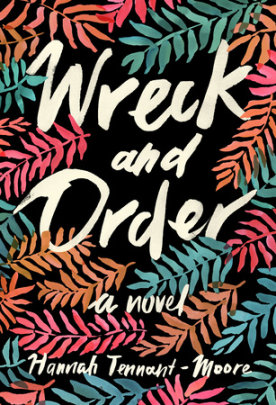 Wreck and Order is the story of a self-proclaimed damaged woman piecing her life together in what ways she finds she can. The main character Elsie is a depressive thirty-something with a dead-end job writing obituaries for a newspaper. She lives off of her father’s generosity and thrives off of her abusive relationships with both herself and her significant others.
 Centered on Books