 In the Ozarks of Missouri, a community of early 19th century settlers face the challenges of an ever-changing America in Steve Wiegenstein’s latest novel, The Language of Trees.
Daybreak is a utopian society that has thrived for 30 years until it is suddenly shaken by the outside world. Now, it’s up to the founders’ children to not only maintain their community, but to thrive within it when the world seems set against them. It is a post-Civil War America, and Daybreak has met with little trouble since the war until a group of loggers move in nearby and offer to buy a large chunk of the community’s land. With the loggers come love interests, the ideals of capitalism, and the threat of what selfishness can do to a community.
Each of the characters takes a turn to show the reader Daybreak from her eyes, even characters that at first seem to be villains. Wiegenstein, though, does a fantastic job of staying in a single character’s head at any one time. Through all of these different perspectives, Wiegenstein is able to truly build the idea of community within the reader’s mind. The reader becomes acquainted with each character so fully that even those who are less honorable are still able to be sympathized with by the reader.
Melding history with fiction, allure, and mystery, Wiegenstein paints a beautiful and romantic picture of 19th century America: a world where even in hardship, a community can stick together.
The Language of Trees is the third in Wiegenstein’s Daybreak saga. With the next generation of characters leading the way, though, The Language of Trees is just as strong on its own as it is within the series.
Slated for release by Blank Slate Press on September 26, 2017, you can preorder a copy of The Language of Trees by Steve Wiegenstein at your local bookstore.
Read more fiction book reviews at Centered on Books.
FTC Disclaimer: This book was given to me in return for a fair and honest review of the text.
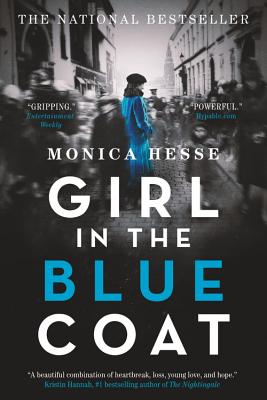 Girl in the Blue Coat by Monica Hesse is a novel steeped in history, passion, and emotion. A coming of age book that tells the story of the main character, seventeen-year-old Hanneke’s experiences in Amsterdam during World War II. Hanneke is an angry citizen of Amsterdam during the German occupation in 1943, angered not only by the Germans’ presence, but mostly because her boyfriend died during the war and she feels responsible. Now, Hanneke works in dealings on the black market, delivering goods like coffee, chocolate, and cigarettes to her fellow citizens.
 To the Stars Through Difficulties by Romalyn Tilghman is an uplifting story about the strength of collectivity, especially the collective power of women.
 History has always been predominantly about “his” story, not hers. Sam Maggs attempts to change all of that with her latest novel Wonder Women: 25 Innovators, Inventors, and Trailblazers Who Changed History. Wonder Women is just what it sounds like, a history book about women. Maggs, though, does not fill Wonder Women with dull facts, a myriad of dates, or a droning tone that could put any reader to sleep. Instead, she provides short snippets of each featured woman that are fun, conversational in tone, and accessible to any age group.
 Centered on Books