All the Light We Cannot See by Anthony Doerr

All the Light We Cannot See by Anthony DoerrAll the Light We Cannot See by Anthony Doerr is a poetically charged tale of morality and love in wartime, as well as an exploration into the value of life even in the darkest of times. Told in the present-tense with a switchback narrative that guides the reader between different stages of past and present, All the Light We Cannot See mainly follows two characters, Marie-Laure and Werner, in the mid to late 1940’s.

Marie-Laure is a young blind girl living in France at the beginning of World War Two, while Werner is a perfectly Aryan German youth. Worlds apart and yet closer to one another than even the reader at first realizes, Marie-Laure and Werner spend the pages of the novel navigating their youth, their familial struggles, and their passions in life in the midst of wartime. Though we at first meet both characters later in their lives, we eventually trace them back to their childhood: Marie-Laure with her father in Paris and Werner in a mining town orphanage in Germany. However, within mere pages we follow Marie-Laure back to where we met her at her Uncle’s home in Saint-Malo and Werner to Schulpforta, a school for Nazi youth and eventually into the ranks.

Marie-Laure despite her blindness is a master of navigation and has a penchant for sea creatures and reading. Werner, not at all aligned with Hitler’s plan for the Germany or the world, sees Nazism not only as an escape from the mine that stole his father’s life but also as a gateway into engineering and science: his two greatest passions. From the outset Marie-Laure is a strong-willed character with a purity unparalleled by nearly any other character. She is constantly worrying about others, trying to do the right thing, and urging those around her into happier states of being through her optimism and persistence.

Werner, on the other hand, finds himself constantly silenced by a fear to act out of the ordinary and to be punished for doing so. While Marie-Laure was nearly born an outcast, Werner, with his hair of snow and eyes of blue struggles to remain neutral and invisible among the crowd so that he can pursue his passions even if at the expense of others. He does his best to protect those around him, such as his younger sister Jutta and his friend Fredrick; however, he does so passively, never actually standing up for either of them or acting on their behalves. Though rattled with guilt for his inaction throughout the novel, it is not until Werner has aged into his teens and experienced the more palpable horrors of war that he begins to act on his desire to do good.

Questions of value both metaphoric and literal are continually raised in the novel as Doerr prompts the reader to think about what riches really mean. The riches of gemstones, of family, and of the preciousness of life are examined by nearly every character and understood in a different way by each. Despite risking his life for a rare blue diamond, Marie-Laure’s father at one point comments that “a diamond…is only a piece of carbon compressed in the bowels of the earth for eons and driven to the surface in a volcanic pipe.” Of all the riches in the world, which is worth living for, dying for, fighting for?

Doerr suggests that perhaps it is all the light that we cannot see which, though invisible, guides us through the toughest of times to find purpose, happiness and rare moments of perfected and rich bliss. “All of light is invisible” Doerr notes, and yet it is there, always there, manifesting itself in different forms: in reflection, in colors, in our imagination, in dreams. Marie-Laure, the one character who is literally without light throughout nearly the entire novel proves to be the heroine: untouched by the darkness that has surrounded her.

A beautifully woven tale about finding light even in the darkest of places, Anthony Doerr’s New York Times Best Seller and Pulitzer Prize winning novel All the Light We Cannot See is both inspiring and moving with a momentum that keeps you reading page after page.

Published by Scribner, a division of Simon & Schuster, Inc. All the Light We Cannot See is available at your local bookstore.

Read more fiction book reviews at Centered on Books.

Ruby by Cynthia Bond

Ruby by Cynthia BondRuby by Cynthia Bond is a novel of love, liberty, and the maintaining of dignity in the face of hardship, exploitation and layers of distrust.

The story takes place in Liberty, Texas, a town blanketed in despair and shrouded in an evil that is perpetuated and reinvigorated with each new generation.  At the beginning of the novel, Ruby Bell has returned from New York where she went in search of the mother who abandoned her as a child. She has come back to Liberty to find the same dank, horror-filled must that she left behind; only now the tenebrous spirit of Liberty has ensnared her with new vigor.

Though the residents of Liberty reject Ruby and think of here as merely crazy, Ephram Jennings still remembers Ruby as the young, innocent child from his own past, and he takes it upon himself to show kindness and unconditional love to the now broken woman. In the midst of this process, Ephram undergoes his own transformation toward self-assertion, self-love and self-healing.

A novel about breaking free from bondage and finding liberty in love, each of the character’s stories are a haunting reminder of just how cruel the world can be. When we first meet Ruby and Ephram we know that something is off in the way that each of them acts and interacts within their world, but we aren’t given immediate access to the why of their situations. Why is Ruby lying naked in the forest? Why does Ephram, a middle-aged man, live with his sister Celia and call her mother? As the narrative unfolds, unimaginable horrors are revealed as well as character intersections and relationships that are entirely unforeseen.

There is a highly spiritual element to the novel both at the level of institutionalized religion as well as more nature based spirituality. Evoking Roman myths like that of Daphne and Apollo as well as spirit imbued animals, tarrens (ghost children) and the Judeo-Christian God, Bond weaves together these spiritual elements to create a world fraught with contradiction, terror, and oddly enough, inspiration.

Further, questions of sanity pervade the pages of the book. What does it mean to be sane? Who has the right to deem another person insane? To what lengths can a person be physically and emotionally driven before teetering over the edge of what is typically thought of as sane? These physical and emotional experiences are what serve to propel the novel backward and forward through time as the past horrors of Ruby, Ephram, Celia and nearly every other inhabitant of Liberty are revealed throughout the course of the novel. Ruby forces the refiguring and conceptualizing of what trauma, of what sanity and of what dignity really means.

Though at times Ruby is so graphic that it is difficult to want to turn the page and find out what happens next, Bond’s prose is so poetic and fluid that the rhythmic experience of words envelopes the reader in a mystical telling of the very real and imperfect world that we all live in.

Published by Hogarth Press in February 2015, Ruby is already a New York Times Bestseller and Oprah Book Club selection.

FTC Disclaimer: This book was given to me in return for a fair and honest review of the text.

Read more fiction book reviews at Centered on Books. 

“The Buried Giant” by Kazuo Ishiguro

The Buried Giant by Kazuo IshiguroThe Buried Giant (Knopf )by Kazuo Ishiguro is the author’s most recent success in breaking literary boundaries while creating a story that is entirely enthralling. On the most mundane of levels The Buried Giant topples normative conceptions of genre as it spans the worlds of fantasy despite being very clearly a book of literary fiction. In a recent conversation with Erica Krouse hosted by the Lighthouse Writer’s Workshop in Denver, Colorado, Ishiguro addressed this topic by noting that a shift is underway in the literary community, and authors, especially of the younger Harry Potter generation, are becoming less and less tied to traditional conceptions of genre. Ishiguro sees this as a positive shift and noted in the interview with Krouse that he was happy to be contributing to such a movement. He openly admitted, though, that 15 years ago or less he might not have had the gall to choose the setting that he did for The Buried Giant.

The Buried Giant takes place in a post Arthurian Briton that is riddled with ogres, pixies and dragons. The novel follows the adventure of an older married couple Axl and Beatrice as they set out from their home to discover the mysteries of their forgotten past. The couple, though later in their years, is not suffering from Alzheimer’s or some other such disease; rather, there is a collective sense of forgetting that has fallen upon the whole of Briton. This fog, in sense, is what prevents nearly all of Ishiguro’s characters from keeping a hold on even near distant memories.

This shared sense of remembering, Ishiguro noted to Krouse, is at the heart of his latest exploration on the topic of memory. A good portion of Ishiguro’s books relate to memory and how memory affects a person’s understanding of her current situation and serves as the” lens for [her] relationships.” Ishiguro’s previous literary examinations of memory though have always been about the singular recollections of the narrator or main character. As a central theme to his writing, Ishiguro wanted to explore collective memory, especially as it relates to a whole nation, to love, and to the union of marriage. One of the most central themes of the book, one that Beatrice raises again and again, is the question of whether in forgetting the shared memories of two people’s pasts they can still claim to be in love.

Aside from the issues of love and memory, Ishiguro weaves through tales of battle and introduces other rather frightening characters, many of whom remain nameless. The most interesting aspect of these settings and characters is that they could essentially be left behind if Ishiguro had decided to set the book in any other place or time. If the reader were to lift out the themes, threads and issues that the book delves into, it is easy to see that the fantastical setting of The Buried Giant is secondary to the story being told beneath that surface.

This seems to make perfect sense when one considers that the most difficult aspect of writing for Ishiguro is setting, as he stated at the Lighthouse Writer’s Workshop event. He often conceives of an idea for a novel and struggles with where to place that idea in space and time. The flexibility he allows himself and the difficulty he has in coming to a conclusion is perhaps how and why Ishiguro is able to span so many genres with his writing. His previous book Never Let Me Go is a speculative literary fiction novel, while Remains of the Day is a rather romantic tragedy and a comedy of manners. Now, with a fantasy book under his belt, Ishiguro has most definitely traversed a wide range of the literary plain.

The Buried Giant, is by far one of the most engaging and fast paced of Ishiguro’s novels, and despite its 317 page girth, the book is, by experience, readable in a single day.

Purchase The Buried Giant at your local bookstore.

Read more fiction book reviews at Centered on Books.

“Khirbet Khizeh” by S. Yizhar

Khirbet Khizeh Book ReviewKhirbet Khizeh is S. Yizhar’s fictionalized account of life as a soldier in the Israeli army during the 1948-49 war, and was published shortly after the war’s end. In this new translation by Nicholas de Lange and Yaacob Dweck, Khirbet Khizeh takes on a renewed poetic significance, instilling the novellas enduring relevance for contemporary culture.

The narrator starts his account by noting that the event he is about to describe “happened a long time ago, but it has haunted [him] ever since.” He talks of the passage of time and his once hopeful idea that such a passage might have healed his sorrow and despair. However, it appears that nothing of the sort has come to pass. He takes readers back to the beginning, back to his own mindset before he was deeply disturbed by his and his cavalry’s actions.

It is a “splendid winter morning” the day that the troop “cheerfully making [its] way” across the countryside. As they are travelling, they come across the village of Khirbet Khizeh which they are told, by radio, that they must attack in order to dispossess the Arab’s who live there of their land. The infantry must, however, wait for the command do so. And so they wait. They grow restless, sleepy, and confrontational with one another as time seems to interminably pass for them. The narrator feels the pressure of wanting to act, for as he notes, in idleness “thoughts would stealthy creep in.” And “when the thoughts came, troubles began;” nobody want thinking soldiers, so “better not to start thinking” he resolves.

The indifference, lack of concern and general passivity of the soldiers continues as they talk and laugh of slaughtering a donkey for the fun of seeing just how long it would keep munching on grass after being shot three times. “What incredible vitality” the wireless operator observes. This scene foreshadows the stance of observance that the soldiers, and most especially Yizhar’s protagonist, takes on as the novella progresses.

Finally the group is “rescued from [their] distress” and given the green light to open fire on Khirbet Khizeh. The attack begins, and the rest of the piece details the narrator’s indecisions, frustrations and doubts concerning the rights of the Jews and the rationality of their actions. He develops a sudden sense of compassion for his enemy: mostly graying men, steadfast women and crying children – none of whom retaliate as they are herded from their homes. The narrator recognizes this change of heart in himself, but notes that at the time he “didn’t want to stand out from the others in anyway,” and so he tries his best to keep quiet.

He is, however, eventually compelled to speak out to his commander Moishe, that “it’s not right” for the Jews to displace the Arabs when they are so defenseless and passive. Moishe though is entirely indifferent and points out that if the Jews were in the Arab’s position right now, the Jews would be dead. He warns Yizhar’s narrator that if they don’t take care of the Arabs now, the group will present bigger issues for the Jews in the future. The narrator continues to argue with himself, but ultimately decides “this is war!” Though he does not by any means fully convince himself that his actions are just, he has at least subsumed his outward expression of guilt and questioning beneath the guise of wartime allowances.

As David Shulman notes in the afterword though, Yizhar’s expression of “all is well in war” gains greater irony in the fact that not much has changed in Israel now that the war is over. People are still being displaced, people are still hating and killing one another, and yet the excuse of war can no longer be used.  Though it might appear that the novel bends on a moralistic theme, Shulman notes that Yizhar’s narrative hinges more on choice than on morality. Perhaps these choices are necessarily tethered to morality as they are intimately bound to the notion of peer pressure both in the form of people and ideologies.

The text spans a mere 144 pages, and Yizhar propels readers directly into both the internal and external action of the novella, keeping them there throughout. Usually with translated text, there is a profound sense of loss and sadness surrounding the physical words on the page because they are merely representations of the original words used in the native language. De Lange and Dweck, however, capture with verve the poetic essence of the text beautifully and aptly. Yizhar’s very Dickens-like sentences build into paragraphs that wind around your heart, pulling you forward into the action, the distress, and the ambivalence that characterizes his work.

This new translation by Nicholas de Lange and Yaacob Dweck was re-released by Farrar, Straus and Giroux in December of 2014 and can be found at your local bookstore.

Read more fiction book reviews at Centered on Books.

FTC Disclaimer: I received this book from NetGalley for a fair and honest review of the text.

“Etta and Otto and Russell and James” by Emma Hooper

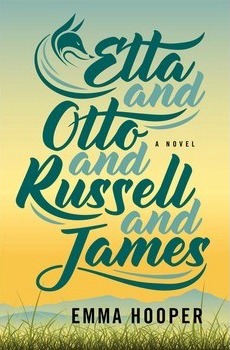
Etta and Otto and Russell and James Book Review.Etta and Otto and Russell and James is an adventure into heartache and love, into loss and fulfillment, and into the inevitability of time’s passing. Written by Emma Hooper, the novel spans a wide range of human experience to encapsulate the profound joys and sadness that are found in simply living.

Etta has decided to leave the farm where she lives with her husband Otto in order to see the ocean, an element of nature that in all of her 83 years she has never experienced. She leaves Otto a letter detailing where she has gone, and asks him not to worry, as she will do her best to remember to return.

Within pages, the reader experiences the gyration between past and present that serves as the textual framework for Hooper’s novel. The author develops her characters in a backward, inside twisted arch that allows for greater understanding and empathy on the part of the reader. Hooper guides us through the intricacies of each character’s past, so that we can become acquainted with the patterns and traumas that have shaped the elderly trio we meet in the novel’s beginning. This trio is completed by Russell, the Vogel’s neighbor and childhood friend.

Though the novel at first seems straightforward and thoroughly candid, we soon find that there is a magical realism that permeates the pages of Etta and Otto and Russell and James. This magic presents itself at different points in the novel as talking coyotes and flying children among other things. These elements perfectly capture the arch of aging as they are transformed from childhood imaginings to the beginning stages of dementia. At times these magical elements can become confusing or distracting, especially when it’s not entirely clear what purpose they are serving. However, as mentioned above, the allusions that these fantastical elements make lie perfectly with the novels themes and threads. To thoroughly enjoy the novel, readers must recognize that not every moment will be methodically fleshed out or explained.

After all, the fissures that Hooper creates in the narrative are what give the text its richness and depth. Her minimalistic style mirrors the letters Etta received from Otto during the war: full of holes. Holes that characters attempt to fill ceaselessly, holes that Etta feels she must go to the ocean to fill, literal holes in memory, and metaphorical holes in hearts. The book is littered with these voids that call to be filled, some of which can never be filled, and some of which characters are too afraid to even attempt filling.

Etta and Otto and Russell and James is a story about letting go; a story about cutting ties with all of the things that don’t serve you (including feelings of guilt), about living each moment fully, and about embracing everything around you with love. Though at times heart wrenching, the novel encourages readers to treasure and recognize the meaningful experiences that make up a life, even if those memories and experiences might be slightly, or profoundly, tragic.

Published by Simon and Schuster, Etta and Otto and Russell and James was released January 2015 and can be found at your local bookstore.

Read more fiction book reviews by Centered on Books.

FTC Disclaimer: I received this book from NetGalley for a fair and honest review of the text.

‘Principles of Navigation’ by Lynn Sloan

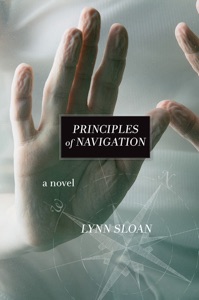
Principles of Navigation by Lynn SloanA story of love, hatred, selfishness, faith and most importantly, the dualities bound up in being human, Lynn Sloan’s captivating first novel Principles of Navigation is a psychologically tormenting exploration of the human condition. Alice Becotte wants a child more than, and at the cost of, anything else in her life or anyone else’s. Her husband, Rolly, an artist and university professor at a local Indiana college, is much more concerned with creating art and living by the ways of passion than he is with having children or settling into a traditional idea of family life.

At first, the novel focuses primarily on the struggles of Alice and Rolly’s marriage as well as the difficulties bound up in their seemingly incompatible relationship and tumultuous love for one another. However, as it progresses, Sloan veers readers off their perceived course toward plot bumps of infidelity, loss and more internal struggles.

At fundamental odds with one another, Alice and Rolly vacillate between affection, annoyance, and adoration for one another – as will you, the reader. Throughout the book, you will both love and hate each character a hundred times over and more. Sloan threatens to break readers to pity, to disdain and to compassion as each character showcases the spectrum of his or her duality. Nobody is a reliable narrator, and (or perhaps because) nobody is a static character. This is what makes Sloan’s novel so fascinating and gripping. Just as in life, no one person is the protagonist or antagonist – each character becomes another’s antagonist, or their own, as they navigate the waters of life’s imperfections and unfairness, as well as the consequences of their own actions.

There is nothing about Principles of Navigation that segregates it to one particular genre, nor does it target one group of readers. The book raises questions that are essential to every reader’s life: questions of humanity, love and growing older. Questions that will propel you from page one to the end of the novel without a backward glance as you are ripped through the pages of Alice and Rolly’s tumultuous lives.

Sloan, already a success in the field of short story writing and photography has broken into the novel industry with a strength and vivacity that will be sure to propel her into the ranks of great American novelists. Published by Fomite Press, Principles of Navigation is scheduled to be released February 15, 2015.

Read more fiction book reviews at Centered on Books.

Disclaimer: I received an advanced copy of this book for a fair and honest review of the text.

‘The Amazing Adventures of Kavalier and Clay’ by Michael Chabon

Pulitzer Prize Winning One Book One Chicago Michael Chabon novel is reviewed by Centered On Books.

The Amazing Adventures of Kavalier and Clay by Michael Chabon.

While Michael Chabon’s The Amazing Adventures of Kavalier & Clay is the story of two comic book writers living in New York City in the early 1930s, it is, at the same time, an exploration of the universal condition of being human, of the unique condition of being Jewish during World War II, and of the incessant quest for self- discovery that traverses all and every plane of human existence.

At the beginning of the novel we meet Josef Kavalier, a young Jewish boy who has just escaped, rather epically, from Prague. With the help of a golem and at the expense of what small means his family could gather, Josef has made it out of Nazi-occupied Europe to New York to live with his cousin Sammy Klayman and his aunt Ethel. Sammy, a nineteen-year-old aspiring artist working as an illustrator for Empire Novelty, discovers within the first few hours of meeting Josef that his cousin is a superb artist far beyond Sammy’s own talents, and he immediately dreams up the possibility of starting a comic book series with Josef. The cousins pitch the idea to Sammy’s boss and in the Golden Age of comic books, the money-hungry mongrel Sheldon Anapol can do anything but turn the boys down.

Joe, having left behind his family in Prague, feels a looming sense of guilt in the wake of his freedom and seemingly unmerited job. In order to offset this agony, Joe centers all of his art on anti-Nazi themes and supplements his war efforts by fighting, or attempting to fight, any German he can find in New York City – and he happens to find quite a few. A reticent and stubbornly introverted young man, Joe cannot seem to express his own self-torment, his love or any part of his emotional self.

While Joe is fighting the internal battles of guilt and shame over his external situation, Sammy is fighting a battle with similar sentiments but in terms of his art, and most especially his sexuality. He is lonely, fatherless, and oddly uninterested in forming romantic relationships with any woman he meets. Constantly questioning his own feelings towards others, in particular his jealousy toward Josef’s girlfriend (but not Josef himself), Sammy is at odds with his sexual orientation in a time and place when such thoughts were so taboo, Sammy can’t even identify that this is his struggle.

The young men negotiate the difficulties that accompany success, love, failure and loss; they confront the harsh realities of imperfection, of ageing and of the restrictions and expanse of their own morality as they grow in their artistry, their familial ties and their humanity.

The novel holds the space between literary, historical and surrealistic fiction at times spotlighting on Joe and Sammy’s comic book characters and at other times featuring historical figures such as Salvador Dali. Chabon’s artistry with words (just sample this: “The cold jerked his chest like a wire snare. It fell on him like a safe. It lapped eagerly at his unprotected feet and licked at his kneecaps.” [430]) is equally matched by the novel’s moral direction and inherently philosophical bend. Themes emerge throughout the novel, are picked up, threaded through other themes and woven together in a seamless tale that never quite goes where you are expecting it to. Themes of self-expression, self-discovery, escapism (in all positive and negative senses of the word) and most thoroughly self-liberation, are only a few of the threads Chabon draws upon.

If you’re in any way shy or reserved, don’t read this book in a café or any other public place: expect multiple jaw dropping moments, laugh-out-loud scenes and characters you will fall so in love with that you will forget you are reading anything but the story of your own life in the guise of previously unfamiliar names, places and expressions you’ll soon forget you didn’t know before.

Though, as with any great novel (and this is sure to join the ranks of the American classics), the first 130 or so pages aren’t as fast paced as the rest, the benefit of patience (if you happen to be impatient) is well worth the wait: once you hit page 145 the book will haunt you every moment it’s not in your hands with its covers spread.

Published by Random House in 2012, you can find Michael Chabon’s The Amazing Adventures of Kavalier & Clay at your local bookstore.

Read more fiction book reviews at Centered on Books.