‘Lost Birds’ by Birute Putrius

lost-birds-putriusLost Birds by Birute Putrius is very much a story of loss, change and the ability to adapt to both. Following a slew of displaced persons from Lithuania, Lost Birds tells the tale of what it means to feel an outsider in your home, your country and your overall life.

Putrius, a displaced person (DP) herself, relays the story from multiple perspectives so that the reader can see what it means to be a DP from all angles. Each chapter is told from a different viewpoint, and Putrius follows each of her characters from childhood into middle age. With this timelines, the reader grows up with the characters beginning from the moment they set foot in America.

Although at first the novel focuses primarily on what it means to leave your homeland and feel a foreigner in a new unknown place, the book quickly takes on even more issues that are pertinent not only to DPs, but to the human condition itself. Themes of acceptance, unrequited love, mental illness and spirituality all play a lead role at one point or another in the novel. Characters find and lose themselves as the years pass, and in the end, Putrius seems to be telling us that perhaps there’s no other way to live than to lose and find yourself over and over again.

Each character is interesting and engaging in her own way; however, the multiple changes in perspective and point of view can sometimes give the novel a bit of a disjointed feel, as if each chapter is its own short story, complete in itself. This aspect doesn’t detract from the overall emotionality of the novel or its arc, but it does call itself out often enough to distract the reader now and again.

Despite the intermittent disconnect between chapters, Lost Birds is a thrilling book that discusses issues not only relevant to displaced people of any kind, but to the condition of being human.

Published by Birchwood Press in December of 2015, Lost Birds is available at your local bookstore.

Read more fiction book reviews at Centered on Books.

FTC Disclaimer: This book was given to me in return for a fair and honest review of the text.
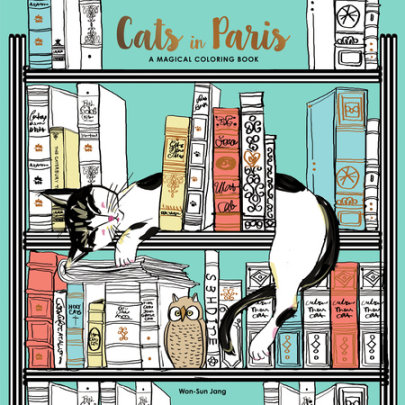
‘Cats in Paris: A Magical Coloring Book’ by Won-Sun Jang

cats-in-paris-jangTake a step through the threshold of human reality into a magical world filled with Cats in Paris. The coloring book Cats in Paris, designed and illustrated by Won-Sun Jang, is a delightful and endearing collection of drawings that are fit together as a sort of fragmented narrative.

Adult coloring books are storming book, art and drugstores all over as a catalyst for relaxation and leisure. Jang’s particular coloring book, though, follows an unnamed cat through the streets of Paris. Colorists are brought everywhere from the Eiffel Tower to the Shakespeare and Company Bookshop, to a place called home.

The pictures themselves are geared toward the rebel colorist who aspires to color outside of the lines. Many of Jang’s illustrations are filled with unclosed lines and wide open spaces that leave a lot to the imagination of the colorist.

Cats in Paris: A Magical Coloring Book is the perfect gift for any cat lover or admirer of Parisian culture, or for yourself to just sit, relax, and let your imagination wander.

FTC Disclaimer: This book was given to me in return for a fair and honest review of the text.

“NeuroTribes” by Steve Silberman

neurotribes-silbermanNeuroTribes by Steve Silberman is the pinnacle of understanding of autism as it’s developed from its initial coining, to autism in the current age. Silberman goes not only into historical depth concerning autism and its development over the course of its clinical existence, but he also incorporates anecdotal and first hand experiences of both parents of autistic children and autistic people themselves.

Silberman starts by tracing back the history of autism to its founders, namely child psychologist Leo Kanner and clinician Hans Asberger. From here Silberman discusses the man instantiations that autism took on a clinical level throughout the years, from those believing it was only a childhood “disease” to those who believed autism could be “cured” through punishment based therapies and even more horrifying methods.

Weaving in anecdotal stories of parents struggling to find services for their children, Silberman eventually turns the book almost completely on its head by putting the bulk of the focus on autistic people and their experiences, contributions and methods of dealing with “typical” society.

All along, Silberman advocates for the importance and necessity of having diverse thinkers in our culture: i.e. “neurodiversity.” Pointing to notable figures in the past who were likely to have been autistic (had the term been around at the time), such as Henry Cavendish, Silberman makes the argument that without these thinkers we would be far behind in the realm of science and philosophy.

Overall, NeuroTribes is both an inspirational and terrifying look into how views of autism have developed and evolved over time, and how autistic people have gained greater recognition as humans with a different way of thinking and nothing more.

Published by Avery in 2015, NeuroTribes is available at your local bookstore.

Read more nonfiction book reviews at Centered on Books.

FTC Disclaimer: This book was given to me in return for a fair and honest review of the text.


‘2 A.M. at the Cat’s Pajamas’ by Marie-Helene Bertino

2am-at-the-cats-pajamas-bertino2 A.M. at The Cat’s Pajamas by Marie-Helene Bertino is the tragi-comedy of 2015. With pages full of characters that not only pull on the core of your heart, but annoy and baffle you to no end, Bertino does an excellent job of capturing what it is to be human: imperfect, beautiful, ugly and loved.
The cast of characters that make their appearance in 2 A.M. at The Cat’s Pajamas ranges from nine-year-old Madeline, a motherless vagabond with an abusive father, to her teacher the love-lust Sarina, to the gruff owner of the night club The Cat’s Pajamas, Lorca, who is about to lose his club because of violated city ordinances. These are only a few of the featured characters into whose heads we are allowed access, among others are Pedro the dog, Madeline’s father, Madeline’s pseudo caretaker, and Madeline’s principle.

At first, Bertino’s head hopping is a bit jarring, and makes 2 A.M. at The Cat’s Pajamas hard to fully delve into. It takes a bit of time to become acclimated to not only Bertino’s style of jumping from character to character, but also to the characters themselves; since, in all the jumping, readers aren’t able to get to know the characters as well so quickly. However, once you settle into Bertino’s style, the novel careens off at high-speed, and each section is a drum roll for a new character that you can’t wait to hear about. You begin to fall in love with Sarina and Madeline, with Lorca and his son, while chastising them for their impatience or ignorance or lack of action, while at the same time realizing these are many of the actions that we all tend toward for a majority of our lives, especially when it concerns anything important.

Bertino captures the human essence in this way. She shows it in the way that everyone is a little bit self-doubting no matter how talented or hard working they are, in the way that we can’t help but love the people we love even if they treat us poorly and especially if we are children, in the way that love is unexpected and shows up just when you need it most but when you are expecting it least, in the way that we often treat the ones we love with harshness out of love, out of protection. Bertino reminds us that no one is perfect but that we can all be loved and love ourselves if we just let go a little bit. Even the most terrible characters in the novel you can’t help but love by the end and find empathy for them in their plights.

A sort of backwards fairytale that doesn’t necessarily have a happy ending, but ends more happily than it begins, 2 A.M. at The Cat’s Pajamas is beautiful and hilarious examination of the human condition placed in a ridiculously believable setting that makes it all the more real and magical at the same time.

Published by Broadway Books and released in 2015, 2 A.M. At the Cat’s Pajama’s is available for purchase at your local bookstore.

Read more fiction book reviews at Centered on Books.

FTC Disclaimer: This book was given to me in return for a fair and honest review of the text.

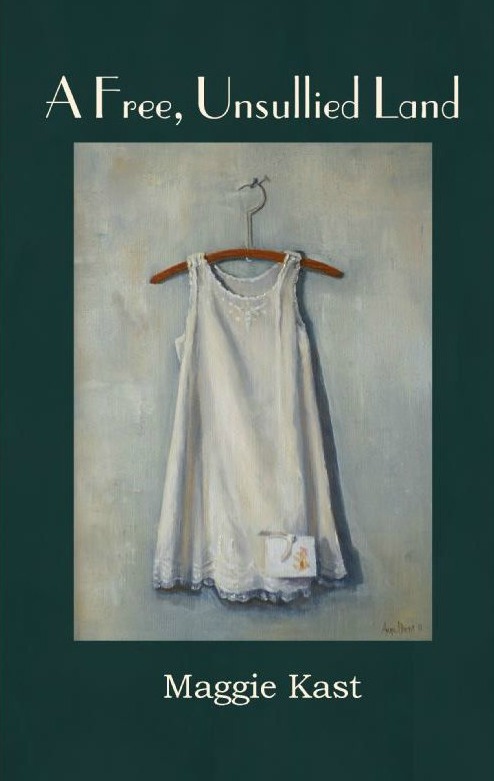
A Free, Unsullied Land by Maggie Kast

A-Free-Unsullied-LandIn a A Free, Unsullied Land, Maggie Kast tells Henriette Greenberg’s coming of age tale as she grows up in prohibition era Chicago. Henriette is a troubled nineteen year old girl when the reader meets her, and as a sheltered teenager, she is wooed by stories of the greater world that she has yet to experience. She has just enrolled at The University of Chicago and is about to set out on an adventure to live her own life and to separate herself from the dysfunctional household from which she comes.

Henriette though, like most teenagers, is plagued by a myriad of thoughts, issues and desires that often throw her off her course or make it challenging for her to actually find her course. Her interests range from psychoanalysis to anthropology, from communism to civil rights. However, her emotional and relational sense of self is shadowed by a secret of her past that mars her relationships, especially with men, propelling them into states of utter dysfunction.

The reader learns within the first hundred pages that Henriette has an unresolved sexual experience that she does not fully remember, nor does she fully understand how to process it even years later. Though the reveal seems to come rather late in the novel, it is easy to pick up on the clues Henriette leaves prior to the reveal, and the reader knows from the outset that she has a troubled past in relation to sexuality.

Henriette can often seem like a self-entitled, privileged moaner, and this at first makes it hard to always sympathize with or understand her in regards to her motives. However, as the novel progresses and we not only learn more about Henriette, but she learns more about herself, it becomes apparent that Henriette is simply a teenager. As she grows, she becomes less spastic and more rational, less demanding and more understanding of the world around her and the other people in it.

What Kast does a phenomenal job of is showing Henriette’s transformation from a sheltered and privileged seventeen year old girl to a young adult living on her own and dealing with her own problems not only with the outside world, but with herself. The arc of Henriette’s development from a damaged self into a stronger, more assertive and resilient woman makes her, in the end, a relatable and noteworthy character. The troubles that she goes through and the deluded way in which she often handles her problems in her youth are not only recognized, but remedied in that recognition. Henriette sees her own foolishness and is simultaneously able to understand and accept herself and her past in a way that she can’t at the outset of the novel.

A tale of growing up, of dealing with pain and of learning to love the self that other’s can’t always see, A Free, Unsullied Land  also drips with relevant historical underpinnings and shows readers a glimpse of what life must have been like in the 1920s and 30s.

A Free, Unsullied Land was released by Fomite Press on November 1, 2015. Don’t miss the launch of the novel at Women and Children First on Friday, November 13.

Read more fiction book reviews at Centered on Books.

FTC Disclaimer: This book was given to me in return for a fair and honest review of the text.

‘The Underground Girls of Kabul’ by Jenny Nordberg

The Underground Girls of Kabul“What woman hasn’t wondered how life would have been different if she were born a boy?”

One Afghan woman asked author Jenny Nordberg this very question while Nordberg was writing The Underground Girls of Kabul, an anthropological, historical and heart-wrenching book that catches a glimpse of what it is like to be a woman in Afghanistan.

In The Underground Girls of Kabul, Nordberg seeks to shed light on the practice of bacha posh – a seemingly unconventional, though widespread tradition of dressing young girls as boys. Various families in Afghanistan partake in bacha posh for any variety of reasons, one of the most common being the mystical view that dressing a daughter as a son will ensure that the family’s next child will in fact be a real boy. In Afghanistan, having a son is a mother’s most important job, while having girls can diminish a woman’s worth in regards to her husband, her family, and her culture. Therefore, some other families practice bacha posh in order to gain social and societal acceptance from their neighbors, co-workers, and family if they do not have a son. It is more acceptable to have a fake son then to have no son at all, even if it is common knowledge that the son is in fact a girl. However, more progressive parents urge, encourage, and provide the opportunity for their daughters to live as boys so that their daughters can see the other side of life in Afghanistan.

Though the women Nordberg interviews and spotlights in The Underground Girls of Kabul often comment on the improvement of life since the fall of the Taliban, rights for women are still a large issue in Afghanistan. Through misappropriation of religious texts, mainly for the purpose of reverting to radical Islamic views after foreign occupation, women have been further and further subverted in the ordering of the social, economic, and humanistic ladders of Afghanistan. In many families, women are still thought of as being owned by their fathers and are essentially sold to their husbands once they hit puberty. Though women are allowed to be educated and run for parliamentary roles, many are not given the resources to do so, and in the corrupt politics of the society, their education and career is often diverted by lack of encouragement and outright violence.

The practice of bacha posh helps young girls to reach beyond these limitations and share in the experiences that men in Afghanistan are encouraged to have. Though the tradition subverts the patriarchal order in some senses, there is the overwhelming and overt reality that bacha posh also supports the Afghan patriarchy. As Nordberg points out in The Underground Girls of Kabul, ideas of female subversion need to shift before any greater cultural, political, or social change will take place. However, this is difficult given both the seclusion of women and the negative and restricting beliefs that are perpetuated about, and even among, them.

Though bacha posh may not be a perfect answer to the greater issues at hand, Nordberg recognizes that it might be the only answer for the greater majority of women right now. Things are in fact changing, and there is the hope that in the near future such gender discrimination will diminish enough to blot out the practice of bacha posh entirely. As it stands right now though, bacha posh helps to answer for many girls in Afghanistan the question of what it is like to be a boy and what it is like to experience freedom.

However, Nordberg so aptly point out, issues of gender equality extend outside of Afghanistan to women everywhere, because really, “what woman hasn’t wondered how life would have been different if she were born a boy?”

The Underground Girls of Kabul was released by Broadway Books and is available at your local bookstore.

Read more nonfiction book reviews at Centered on Books.

FTC Disclaimer: This book was given to me in return for a fair and honest review of the text.

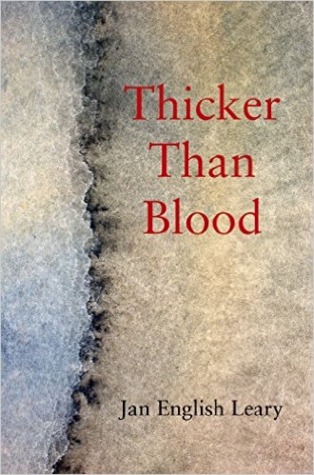
‘Thicker Than Blood’ by Jan English Leary

Thicker-Than-Blood-Jan-English-LearyWhat is a family defined by: blood, love, proximity? This is the central question of Jan English Leary’s first novel Thicker Than Blood.

The book mainly follows Andrea and her daughter Pearl from the time Andrea adopts Pearl through Pearl growing into young adulthood. Issues of race, discrimination, and acceptance also come to the forefront of the novel in record time as Andrea struggles with the difficulties of raising an African American daughter in Chicago, an already racially charged environment. In tandem with the above themes, those of expectation, self-worth and self-confidence also play a central role in the thematic make up of Thicker Than Blood.

At first the reader accompanies Andrea as she struggles to be a confident and successful single mother, but the novel quickly hops to other character’s heads giving differing perspectives on the difficult situations at hand.  We see what life is like from Pearl’s point of view, from Andrea’s boyfriend Mike’s point of view, from Andrea’s mother Nancy’s point of view, as well as from other minor characters. Though this sort of head hopping can often jar a novel and its reader out of the flow of the story, Leary does it in such a thorough and uncomplicated way that there are never any questions as to whose head we are in, or why we are there. Every character’s perspective adds weight and value to the central themes of the novel in ways that would be otherwise inaccessible.

We come to understand what the issues of family, race and self-confidence mean for Andrea, Pearl and Nancy as we discover secrets about them that even they don’t know about one another. Gaining access to the deepest darkest parts of their pasts, the reader is able to sympathize and interact with these characters in a way that the characters themselves are not able to do with one another. In turn, the characters are strengthened and we become more invested in their imperfect and disjointed lives.

A beautiful and moving piece that explores questions relevant to every human being, Thicker Than Blood is a momentous novel. Leary has done a brilliant job of gathering universal themes and holding them up for the reader to observe and judge for herself. An excellent first novel, Leary’s Thicker Than Blood will be released by Fomite on October 20, 2015.

Read more science fiction book reviews at Centered on Books.

FTC Disclaimer: This book was given to me in return for a fair and honest review of the text.

‘Armada’ by Ernest Cline

Armada-by-Ernest-ClineThe Armada is coming. An Armada of aliens that is – from a videogame, that main character Zack Lightman and his friends play nightly. Has Zack gone insane?

This is how Ernest Cline’s second novel, Armada begins as we delve into the very confused and tormented mind of eighteen-year-old Zack Lightman. The high school senior, like many high school seniors, is entirely unsure of what he wants to do with his future, and knows only what he loves. In Zack’s case, this is playing videogames, particularly Armada. In Armada Zack fights, along with his friends online, to save Earth from the Sobrukai, an alien clan of octopus-like creatures yearning to take over Earth and extinguish humanity.

When Zack looks out of the window of his classroom and sees a ship that looks exactly like a Sobrukai ship from Armada, he begins to wonder if he is losing his mind, like he suspects his late father did. From here the plot unravels into an intricate conspiracy theory about the intention behind numerous science fiction films, books and videogames, luring the reader into the book with a hook that makes you question your own reality.

The typical trope of “regular boy becomes hero” is what moves Armada forward, but Cline uses this trope in such a way that he imbues it with a fresh and unique aura. Though Zack’s story echoes so many other science fiction hero narratives, particularly that of Luke Skywalker, the setting and contemporary references make the plot so palpable that the reader can’t help but be drawn in. Cline is continually referencing not only popular videogames and science fiction characters that only the ultimate geek will pick up on, but he also weaves classic rock references into nearly every chapter calling out the old school rock nerds as well with his laugh out loud comments.

There are also certain points where the plot seems overly contrived, but once you step back and realize that all novels are in fact contrived and there’s sometimes no way around bridging the gaps in a story except by making certain things happen that need to happen, you can move past this hiccup. Plus, Cline’s characters give such weight to Armada, that you can easily overlook these seemingly forced spots and keep going with fervor.

Overall, Armada is by far one of the most engaging reads of 2015. The characters, plot, references and tone of Armada propel you into this near futuristic world with a gusto that results in absolute immersion. After the success of his first novel, Ready Player One, Cline has done it again, creating a fascinating world that seems so real, you will begin to question your own sanity.

Released by Crown Publishing on July 14, 2015, Armada is available at your local bookstore.

Read more science fiction book reviews at Centered on Books.

FTC Disclaimer: This book was given to me in return for a fair and honest review of the text.

‘A Walk in the Woods’ by Bill Bryson

A Walk in the Woods by Bill BrysonHow does it feel to cross more than 2,000 miles of trail by foot over fourteen states? What would it take to live in the wilderness and carry all of your necessities on your back? Why undergo such an expedition? What would you find about yourself?

These are the questions that Bill Bryson asks himself at the outset of A Walk in the Woods, an autobiographical account of Bryson’s trek across the Appalachian Trail. In the beginning of the book, Bryson is a naïve and, by many standards, amateur hiker who decides that he is going to hike the 2,000+ mile Appalachian Trail by himself. With guidance, he sets out to procure the gear and expertise that he needs to make it to Mt. Katahdin in Maine. Bryson quickly becomes overwhelmed by the prospect of hiking, sleeping, camping, cooking, and travelling entirely alone and is relieved when an old acquaintance, Stephen Katz, calls up to ask if he can join the excursion. Though as Bryson’s wife reminds him, he and the alcoholic Katz do not get along very well, Bryson is nonetheless willing and eager to have anybody join him on his long and trying adventure.

The two men, not in the best shape, and with minimal backpacking experience, head out into the wild of Georgia with an aim to make their way to Maine. Encountering all types of characters that you would think could only exist in fiction; Bryson and Katz spend their days trekking along the famed trail. The reader grasps snippets of their often vulgar (especially on Katz’s end) conversations, as well as Bryson’s musings about life, nature, commercialism, and the hardships of the trail. Intermixed among the action of their travels is history of the areas through which they are passing, as well as facts of ecology, zoology and other interesting topics.

More than just a book about hiking, A Walk in the Woods shows the often ambiguous and contradictory nature of people and life in general. Often vacillating between joy and despair, Katz and Bryson experience a range of emotions and desires as they encounter trials and tribulations far beyond any they could have imagined. At times Bryson talks of the eerie and demonic nature of the forest, while at other points he laments the overpowering hold of commercialism in the modern day.

At its utmost core, A Walk in the Woods is about living life, taking chances, and knowing your limits; it is about finding successes even in the face of seemingly certain failure and about accepting an unexpected outcome as something more than defeat. Not at all what the reader anticipates in the beginning, A Walk in the Woods ends with a twist that reflects the uncertainty and ambiguity of human nature itself.

Now a major motion picture starring Robert Redford and Nick Nolte, released on September 2, 2015, A Walk in the Woods  was also re-released by Broadway Books in 2015.

Read more nonfiction book reviews at Centered on Books.

FTC Disclaimer: This book was given to me in return for a fair and honest review of the text.

‘A Girl Is a Half-Formed Thing’ by Eimear McBride

A Girl is a Half-formed Thing by Eimear McBrideEimear McBride’s debut novel A Girl Is a Half-formed Thing is a modern-day Joycean expedition into the disjointed thoughts of a haunted, unnamed girl. Following this unnamed narrator from birth until twenty years old, McBride’s novel takes on a prosody which mirrors the alacrity of events that take place. Told as a stream of consciousness, the narrator takes us through the horrors of her child and young adulthood all along addressing “you,” her brother, as if he were the recipient of her tale.

Within pages of the novel, we find that the narrator’s brother was born with a brain tumor and his sight, hearing, equilibrium and brain development have been severely affected by this past illness. The narrator’s mother is an abusive single parent whose love of religion and the ideas bound up in religiosity far outweigh her actual participation and investment in the ideals of the church. We meet other significant characters in the narrator’s life, all of whom negatively impact her and lead her further down a road toward corruption and dissociation with herself and her body.

A major theme in A Girl Is a Half-formed Thing is the disparate ideas of purity that surround the narrator. What purity means to those within the Christian faith, what it means to the narrator, to her mother, and to the world at large severely shadow the events of the novel. The narrator, though she seems to denounce Christianity, cannot help but feel the pull of its ideals that have been instilled in her since childhood. Constantly obsessing over purification and baptism, the narrator simultaneously seeks out disdainful actions and repels them at the same time, though she hardly ever escapes a negative situation with success.

Coupled with this idea of purity is the role of the body and the question of whether purity of body or mind is more important. There is constantly a disassociation of the self from the body, as the narrator begins to use sex and physical abuse as a form of consolation for her troubles. Echoed by the slow death of her brother’s body, the narrator too becomes more and more detached from the body which she subjects to abuse, often commenting on the emptiness inside of her that she seeks to fill.

The novel moves at a pace that often cascades so quickly, it’s easy to lose sight of exactly what’s happening as you get caught up in the often fragmented, sometimes half-formed, language that fills each page. The rapid cadence of A Girl Is a Half-formed Thing proves to propel the novel forward with a dire momentum that positions the reader constantly on an edge: just as the narrator is.

A Girl Is a Half-formed Thing is a terrifyingly beautiful look into the formation of a young girl and all that can and will go wrong in her life. The dual simplicity and complexity of McBride’s language mirrors the themes and ideas of the novel that, though they are often blatant, are deeply profound and driven by an emotionality that the reader can’t help but be absorbed by.

A Girl Is a Half-formed Thing was published by Hogarth in June of 2015.

Read more fiction book reviews at Centered on Books.

FTC Disclaimer: This book was given to me in return for a fair and honest review of the text.