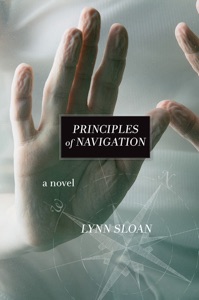
‘Principles of Navigation’ by Lynn Sloan

Principles of Navigation by Lynn SloanA story of love, hatred, selfishness, faith and most importantly, the dualities bound up in being human, Lynn Sloan’s captivating first novel Principles of Navigation is a psychologically tormenting exploration of the human condition. Alice Becotte wants a child more than, and at the cost of, anything else in her life or anyone else’s. Her husband, Rolly, an artist and university professor at a local Indiana college, is much more concerned with creating art and living by the ways of passion than he is with having children or settling into a traditional idea of family life.

At first, the novel focuses primarily on the struggles of Alice and Rolly’s marriage as well as the difficulties bound up in their seemingly incompatible relationship and tumultuous love for one another. However, as it progresses, Sloan veers readers off their perceived course toward plot bumps of infidelity, loss and more internal struggles.

At fundamental odds with one another, Alice and Rolly vacillate between affection, annoyance, and adoration for one another – as will you, the reader. Throughout the book, you will both love and hate each character a hundred times over and more. Sloan threatens to break readers to pity, to disdain and to compassion as each character showcases the spectrum of his or her duality. Nobody is a reliable narrator, and (or perhaps because) nobody is a static character. This is what makes Sloan’s novel so fascinating and gripping. Just as in life, no one person is the protagonist or antagonist – each character becomes another’s antagonist, or their own, as they navigate the waters of life’s imperfections and unfairness, as well as the consequences of their own actions.

There is nothing about Principles of Navigation that segregates it to one particular genre, nor does it target one group of readers. The book raises questions that are essential to every reader’s life: questions of humanity, love and growing older. Questions that will propel you from page one to the end of the novel without a backward glance as you are ripped through the pages of Alice and Rolly’s tumultuous lives.

Sloan, already a success in the field of short story writing and photography has broken into the novel industry with a strength and vivacity that will be sure to propel her into the ranks of great American novelists. Published by Fomite Press, Principles of Navigation is scheduled to be released February 15, 2015.

Read more fiction book reviews at Centered on Books.

Disclaimer: I received an advanced copy of this book for a fair and honest review of the text.
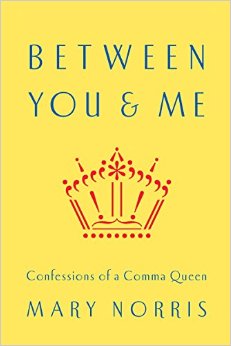
‘Between You & Me: Confessions of a Comma Queen’ by Mary Norris

Cover of April 2015 release Between You & MeBetween You & Me: Confessions of a Comma Queen is copy editor Mary Norris’ autobiographical style manual of sorts detailing her own voyage to The New Yorker’s copy desk and her encounters with the god- awful grammar she’s had to face at her job and in her everyday life. Not in any way diminutive or overbearing, Norris’ stern but open-minded perspective offers rules more as suggestions based on context rather than mandates required by grammatical law. Constantly throwing out expletives (not to mention an entire chapter on the inclusion of obscenities in print) and always roping in an air of comedy, Norris’ book is much more than just a style guide or grammar book: it’s a fun and inspirational glimpse into the success of a hardworking, resilient, language-loving woman.

Between You & Me features lessons on who vs whom, the correct usage of colons and dashes, as well as issues concerning apostrophes in our contemporary, digital, sales-driven age. Aside from these, though, are chapters delving into the history of the pencil, Norris’ relationship with her transgender sister (which she uses to illustrate the issues surrounding pronouns), and snippets of linguistic history. The author never fails to tie her personal life back to the didactic center of the book in a way that both enhances the lesson being taught and provides a tether of empathy to Norris so that the reader cares about her as the book’s author and not just the narrative voice.

For any English major who has doubted her choices in education, Norris’s story is divinely motivating as she details her early years working in a cheese factory and her journey  to The New Yorker offices. For any writer, editor, or human being who has ever felt an ounce of doubt concerning the work that she creates, Norris stands as an archetypal model for making mistakes and moving past them. She constantly refers to grammatical blunders she’s made herself or missed in editing, and she often questions her own grammatical judgment. But wait, she’s a copy editor at The New Yorker! Shouldn’t she know everything? Shouldn’t she be perfect? Norris makes very clear that she’s human, just like every other person in the world who experiences self-doubt. She not only admits her mistakes, but she embraces them and explains to the reader what she’s learned from them.

Aside from purely grammatical insights, Norris also breaks into the philosophy and ethics of grammar with the advent of feminism and other cultural shifts related to gender, technology, social media and more. She brings to light issues and conversations that are very much alive in the cannon today, and offers insight, perspective and opinion, though she often admits that there is no easy answer to the grammatical wonders of our world. As she states, particularly in relation to the comma, but as a metaphor for grammar and the book as a whole: “…follow some rules, sure, but in the end what you’re after is clarity of meaning.”

Norris may be adamant about certain grammatical rules, like pronouns matching their antecedents, but there are others that, as she points out, are subject to the particular style manual of the publication a person is writing for – and then of course there is the issue of personal preference, and then there’s also the necessity for clarity. She drives home that making yourself crazy over a single misplaced apostrophe is not worth extreme anxiety: recognize it, pick up, and move on.

Overall, Norris provides goddess-like insight into common yet difficult grammatical issues with clarity and ease of understanding while keeping readers engaged with humor, history and a sense of humanity.

Scheduled for release from W.W Norton & Company in April 2015, Between You & Me Adventures of a Comma Queen is the perfect book for any literary lover and a superb choice for any reader interested in language. Pre-order the book from your local bookstore today!

Read more nonfiction book reviews at Centered on Books.

Disclaimer: I received an advanced copy of this book for a fair and honest review of the text.
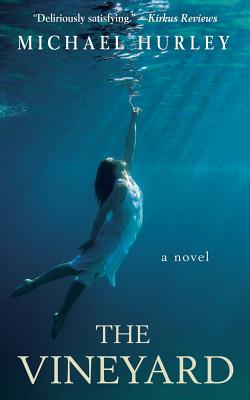
‘The Vineyard’ by Michael Hurley

Chicklet novel, The Vineyard, by Michael Hurley

Michael Hurley’s The Vineyard stakes its plot in three friends, Dory, Charlotte and Turner, coming together for a summer at Martha’s Vineyard. Each woman is plagued by a weight of despair hanging from her past which independently drives her to seek out the comfort of companionship and escape.

Charlotte has recently lost a daughter to cancer and a husband to the indifference caused by their daughter’s death. Dory is fending off the unwanted attention of longtime admirer Tripp Wallace, her mother, and her waning health. Turner is battling the internal demons of self-doubt and fundamental discontent with her failed relationships and lackluster career. Throw Enoch, the mysteriously ephemeral  fisherman who illegally sells the most delectable shrimp in town during off-shrimp season, into the mix, and you’ve got a narrative full of comedy, mystery, shock, and scandal.

Each woman struggles to the edges of physical death and moral doubting in order to come to terms with her own sense of self and to divine her purpose in the world at large. Hurley spins his novel from a somewhat dismal chicklet tale into a reeling mystery and crime novel as he aptly navigates questions regarding faith, the meaning of love, and the power of friendship.

The novel is propelled forward by a constant shift in plot as numerous threads are picked up and woven together throughout the progression of the story. At times this constant shifting, though, can be distracting and can halt the momentum of the novel. The shock value of each turn of events, however, picks up the often frenetic storyline, putting it back on track and providing a rather rousing impetus to keep trekking through.

Despite being a plot driven book, The Vineyard does justice to its underlying themes through Hurley’s strength in character development. The characters, if nothing else, are worth the entire journey. Each is so fully flushed out, so entirely herself, that you could blot out the names from the page and still comprehend each moment in the novel. Hurley does a fantastic job of creating characters that readers will fall in love with, despise and identify with on levels both desirable and unattractive.

Published by Ragbagger Press in November 2014, you can find this book at your local bookstore.

Read more fiction book reviews at Centered on Books.

FTC Disclaimer: I received this book from Netgalley for a fair and honest review of the text.