 War is a terrible and terrifying experience no matter the situation, but take crime, drugs, manipulation and scandal and you have a whole new world of terrible and terrifying. That is the exact picture of the war in Afghanistan that John Renehan paints in his novel The Valley. Renehan, a former field officer in Iraq, writes The Valley from an intimate vantage point, though he is clear in stating that he has never visited the places he mentions in the novel and that he depended more on research than on personal experience when it came to the setting.
Though Renehan jumps a bit between characters, the main protagonist in The Valley is Lieutenant Black, a desk officer who is assigned a 15-6, or an investigation. This particular investigation involves a troop that is stationed in the Valley, a mysterious and notoriously dangerous place between the border of Afghanistan and Pakistan. Black arrives to investigate a stray bullet that was shot in the village by one of the soldiers stationed there. Immediately upon arrival though, things seem a bit out of sorts, and Black slowly begins to unravel the pieces of a well-weaved story.
In a way, Renehan writes The Valley as a mystery novel, dropping clues for the reader to try to figure out the mystery for herself. The mystery, though, is so convoluted and twisted up in other mysteries that it is at times hard to follow who is manipulating who, who is lying, who is the good guy and the bad. But really, these are the lessons of war, the uncertainty bound up in fighting violently with other cultures, with one another, and with ourselves. Renehan is sure to wrap everything up in the end, and in the final pages, the reader is able to sigh a breath of relief: everything makes sense.
Beautifully written, Renehan weaves not only literal poetry into his work, but his writing style in itself is poetic. The mysterious aura of the Valley and of particular characters in The Valley makes the novel an almost ethereal and majestic read at times.
The Valley is Renehan’s first novel, and was nominated for Indie Next List in 2015. The Valley was published in 2015 by Dutton, a Penguin Group publisher.
Read more fiction book reviews at Centered on Books.
FTC Disclaimer: This book was given to me in return for a fair and honest review of the text.
 The history of autism is a winding road of pain, love and inspiration that is told beautifully in John Donvan and Caren Zucker’s In A Different Key. Tracing the history of autism from the first diagnoses to the most recent form of advocacy, the neurodiversity movement, Donvan and Zucker capture perfectly the spectrum of autism as a biological factor in a person’s life as well as an historical arc.
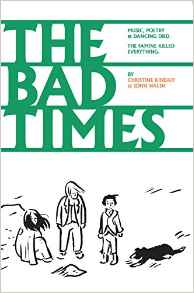 The Bad Times by Christine Kinealy and John Walsh is a graphic novel that tells the story of how “music, poetry and dancing died,” during The Great Famine in Ireland. Despite this statement though, through its very existence, The Bad Times stands as a testament to the resilience and revival of Irish culture after such devastation.
 What is the difference between living and enduring? What is life when it is controlled by someone external to yourself? What is reality and how do we know that the place our physical being resides in is it? Among many other esoteric questions, Han Kang tackles these in her novel The Vegetarian. Addressing issues of abuse and the effects of trauma on the human psyche, Kang provides a unique glimpse into the convergence between sanity and insanity.
 Lost Birds by Birute Putrius is very much a story of loss, change and the ability to adapt to both. Following a slew of displaced persons from Lithuania, Lost Birds tells the tale of what it means to feel an outsider in your home, your country and your overall life.
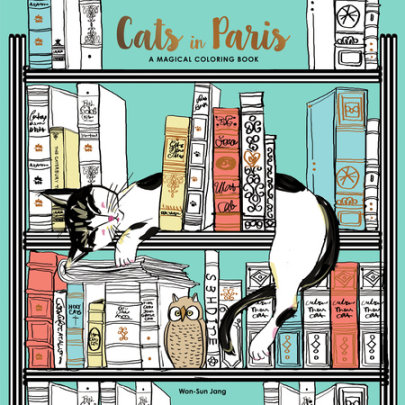 Take a step through the threshold of human reality into a magical world filled with Cats in Paris. The coloring book Cats in Paris, designed and illustrated by Won-Sun Jang, is a delightful and endearing collection of drawings that are fit together as a sort of fragmented narrative.
 NeuroTribes by Steve Silberman is the pinnacle of understanding of autism as it’s developed from its initial coining, to autism in the current age. Silberman goes not only into historical depth concerning autism and its development over the course of its clinical existence, but he also incorporates anecdotal and first hand experiences of both parents of autistic children and autistic people themselves.
 2 A.M. at The Cat’s Pajamas by Marie-Helene Bertino is the tragi-comedy of 2015. With pages full of characters that not only pull on the core of your heart, but annoy and baffle you to no end, Bertino does an excellent job of capturing what it is to be human: imperfect, beautiful, ugly and loved.

 Centered on Books