‘Surreptitiously Yours’ by Kristen Fouquet

OLYMPUS DIGITAL CAMERA

OLYMPUS DIGITAL CAMERA

Where are the bounds of privacy, and what does it mean to respect privacy in the face of art making? A young film student asks just this question in Kristen Fouquet’s novella Surreptitiously Yours.  In a book where noir meets literary, meets poetry, Surreptitiously Yours also delves into deeper themes of truth, love and the limits of art.

Claudette’s thesis for her film degree revolves around the idea of surreptitiously filming people in public so that they are in their most authentic state of being. Her argument is that her subjects are a greater representation of truth because they don’t know that they are being filmed and are thereby not moved to act, speak, or behave in any one certain way. Claudette’s thesis, already controversial in itself, spirals to encompass a whirlwind of murder, subjugation, and the absolute perversion of privacy. But is it all in the name of truth?

At what point does the very validity of truth come into question because of the means by which it was obtained? In tandem, at what point does truth become subverted and manipulated by the person filming because of his or her own biases, beliefs, or desires? Claudette is forced to ask herself these questions about her own work once she becomes the victim of a classmate’s perverse film project herself based on a twisted version of her own idea.

Fouquet does an amazing job of keeping her readers on the edge of their seats as she winds through scene after scene of action while also developing her characters into rich, believable people in just under 125 pages. Every time the reader thinks she knows what is coming next, Fouquet flips the story on its head and sends it reeling in another direction.

A book so artfully composed and beautifully constructed, Surreptitiously Yours is as vivid as any film could ever hope to be.

Surreptitiously Yours was published in March of 2016 by Le Salon Press and can be purchased from Fouquet’s website. Watch the trailer for Surreptitiously Yours if you want to catch a glimpse of what is in store for you as a reader.

Read more fiction book reviews at Centered on Books.

FTC Disclaimer: This book was given to me in return for a fair and honest review of the text.

‘The Little Paris Bookshop’ by Nina George

the-little-paris-bookshop-georgeThe Little Paris Bookshop by Nina George is an enchanting tale of love, loss and living through them both. Much more than just a sappy love story though, The Little Paris Bookshop looks into the very soul beneath human action and into the internal passions that drive us all.
Set in Paris and in the south of France, The Little Paris Bookshop follows the story of Monsieur Perdu, a just past middle aged bookshop owner who is still pining for his unrequited love twenty one years after the dissolution of their relationship. M. Perdu spends his days prescribing books to people from his Literary Apothecary which is housed aboard a boat named Lulu, and his nights alone and mourning the absence of his lover.

Perdu’s self-contained world, though, is shattered when a new tenant moves into 27 Rue Montagnard and finds the unopened letter that Perdu’s lover wrote to him twenty one years ago when she left. Finally, moved to open the letter Perdu embarks on a journey to unravel the mysteries concerning both his lover and himself.

Along the way, Perdu encounters many characters who do for him what he has done for countless others with his Literary Apothecary: they prescribe to him just the right action for leaving sorrow, embracing grief, finding joy and releasing himself. From tango dancing to eating succulent foods, Perdu slowly begins to loosen the hold he has on himself, his past, and his willingness to love again.

A magically charged tale of enchanting depth and beautiful coincidence (or fate), The Little Paris Bookshop delves into themes that touch every human being. George explores what it means to live fully, to love fully, and to be fully human all while telling a story that will make readers tear up at the turn of every other page. A brilliant, funny, terrifying, and inspiring novel, The Little Paris Bookshop is an absolute must read.

Published by Broadway Books in 2016 and translated from the original German into English, you can purchase The Little Paris Bookshop at your local bookstore today.

Read more fiction book reviews at Centered on Books.

FTC Disclaimer: This book was given to me in return for a fair and honest review of the text.

‘The Valley’ by John Renehan

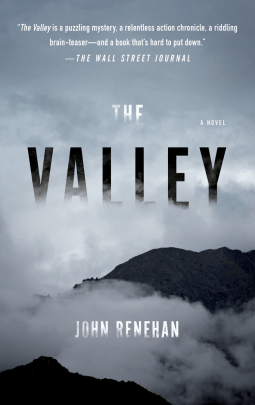
the-valley-renehanWar is a terrible and terrifying experience no matter the situation, but take crime, drugs, manipulation and scandal and you have a whole new world of terrible and terrifying. That is the exact picture of the war in Afghanistan that John Renehan paints in his novel The Valley. Renehan, a former field officer in Iraq, writes The Valley from an intimate vantage point, though he is clear in stating that he has never visited the places he mentions in the novel and that he depended more on research than on personal experience when it came to the setting.

Though Renehan jumps a bit between characters, the main protagonist in The Valley is Lieutenant Black, a desk officer who is assigned a 15-6, or an investigation. This particular investigation involves a troop that is stationed in the Valley, a mysterious and notoriously dangerous place between the border of Afghanistan and Pakistan. Black arrives to investigate a stray bullet that was shot in the village by one of the soldiers stationed there. Immediately upon arrival though, things seem a bit out of sorts, and Black slowly begins to unravel the pieces of a well-weaved story.

In a way, Renehan writes The Valley as a mystery novel, dropping clues for the reader to try to figure out the mystery for herself. The mystery, though, is so convoluted and twisted up in other mysteries that it is at times hard to follow who is manipulating who, who is lying, who is the good guy and the bad. But really, these are the lessons of war, the uncertainty bound up in fighting violently with other cultures, with one another, and with ourselves. Renehan is sure to wrap everything up in the end, and in the final pages, the reader is able to sigh a breath of relief: everything makes sense.

Beautifully written, Renehan weaves not only literal poetry into his work, but his writing style in itself is poetic. The mysterious aura of the Valley and of particular characters in The Valley makes the novel an almost ethereal and majestic read at times.

The Valley is Renehan’s first novel, and was nominated for Indie Next List in 2015. The Valley was published in 2015 by Dutton, a Penguin Group publisher.

Read more fiction book reviews at Centered on Books.

FTC Disclaimer: This book was given to me in return for a fair and honest review of the text.

‘In A Different Key’ by John Donvan and Caren Zucker

in-a-different-keyThe history of autism is a winding road of pain, love and inspiration that is told beautifully in John Donvan and Caren Zucker’s In A Different Key. Tracing the history of autism from the first diagnoses to the most recent form of advocacy, the neurodiversity movement, Donvan and Zucker capture perfectly the spectrum of autism as a biological factor in a person’s life as well as an historical arc.
Donvan and Zucker provide hard facts in an appealing and approachable manner, writing In A Different Key as if it were a novel. The doctors, parents and children profiled in the book take on the personas of characters as the reader sits on the edge of her seat eager to find out just how good or bad things will turn out. The authors take a tough topic with a dark history and turn it into a compelling work of informative and insightful literature.

The objectivity that In A Different Key puts forth is refreshing for a conversation that is usually weighted heavily toward one argument or another. Among the many controversies in the autism community that Donvan and Zucker bring up is the vaccine scare. Instead of attacking one side or the other, the authors present the case as hard facts and let the reader draw from the available evidence to make his own decision on the matter.

The book ends with a spin toward the positive by bringing attention to the most recent movement in the autism community. Neurodiversity is an idea headed by autistic individuals who claim that autism is a part of their biological makeup and they are happy to be autistic: they don’t want to be cured, they don’t want sympathy, they simply want acceptance. While Donvan and Zucker bring attention to the issues even within this movement in regards to more severely handicapped autistic people, In A Different Key still closes its pages with an inspiring and hopeful message.

Published by Crown Publishers in 2016 you can purchase In A Different Key at your local bookstore.

Read more nonfiction book reviews at Centered on Books.

FTC Disclaimer: This book was given to me in return for a fair and honest review of the text.

Wreck and Order by Hannah Tennant-Moore

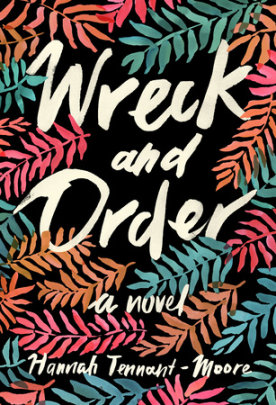
wreck-and-order-mooreWreck and Order is the story of a self-proclaimed damaged woman piecing her life together in what ways she finds she can. The main character Elsie is a depressive thirty-something with a dead-end job writing obituaries for a newspaper. She lives off of her father’s generosity and thrives off of her abusive relationships with both herself and her significant others.
Throughout the novel, Elsie claims time and again to come from a broken family and a disturbing past, and the reader catches glimpses of these moments, but we get the feeling that Elsie is not the most reliable narrator. Her fantasies of being raped along with her lack of awareness of others in a world she thinks is all her own are only two examples of the delusion Elsie is experiencing. While an unreliable narrator can at times be a rather useful tool, Elsie proves only to be self-effacing and entirely self-indulgent.

Wreck and Order is structured as a self-help, self-realization novel, but author Hannah Tennant-Moore doesn’t quite let it go that far. Elsie seems to learn nothing over the course of her travels or experiences, and she continues to make poor choices that are fueled only by her self-pity. As the reader, it’s hard to empathize with her because of her lack of values and the lack of reasoning behind her selfish and moral-less state.

Elsie’s stagnancy and ignorance are perhaps the most frustrating aspects of the novel, and these character traits make it hard to actually get through the novel because of that frustration. While Wreck and Order does have areas where momentum is high and the reader is invested in the stakes, for the most part it is simply a diary of a deluded woman.

Wreck and Order was published by Hogarth in 2016.

Read more fiction book reviews at Centered on Books.

FTC Disclaimer: This book was given to me in return for a fair and honest review of the text.

‘The Bad Times’ by Christine Kinealy and John Walsh

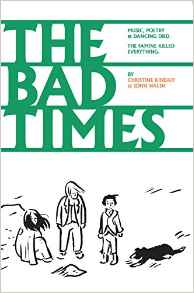
the-bad-times-walsh-kinealyThe Bad Times by Christine Kinealy and John Walsh is a graphic novel that tells the story of how “music, poetry and dancing died,” during The Great Famine in Ireland. Despite this statement though, through its very existence, The Bad Times stands as a testament to the resilience and revival of Irish culture after such devastation.
The story takes place in Kilkee, County Clare between the years of 1846-1849. Kinealy and Walsh follow three young friends and a dog (Brigit, Dan, Liam and Cu) from the beginning of the famine until its devastating conclusion. Brigit and Dan come from lower class farming families, while Liam’s father owns a shop and ends up profiting from the famine. Yet, despite these differences, their friendship never wavers. In fact, its very durability offers moments of clarity where the reader sees that despite starvation and death there is still a sense of humanity, of understanding and of love that supersedes greed and the need for survival.

Among other themes, Kinealy and Walsh also explore faith and the role of religion in a young person’s life when faced with adversity. The young trio is also confronted with loss, young love, the folly of pride and more throughout their three year journey together. Though the graphic novel doesn’t end quite happily, there is at the very end a grand gesture of generosity, a proclamation of love, and the hope for renewal.

When it comes to the art, Walsh does a fantastic job of fitting the style with the storyline and themes of The Bad Times. The colors are often dark and overcast, with pops of pigment that remind the reader of the possibility that lies beyond the obscurity and gloom. The stylistic choices for depicting the characters also scream “famine” with bagged eyes and a certain feeling of agedness that pervades the young characters.

As for the dialogue, Kinealy intersperses Gaelic phrases along with the colloquial Irish dialect. Though the authors never explain the exact meaning of the utterances woven in, the Gaelic doesn’t detract from the intelligibility of the piece and instead imbues it with a certain resonance, a reminder of what was lost with the death of so many.

The Bad Times is a riveting and momentous graphic novel that teaches readers about the actual historical event of The Great Famine, while also weaving in important elements pertinent to adolescence and humanity at large.

Published by Quinnupiac University Press in 2015, The Bad Times is available for purchase here.

Read more fiction book reviews at Centered on Books.

FTC Disclaimer: This book was given to me in return for a fair and honest review of the text.

‘The Vegetarian’ by Han Kang

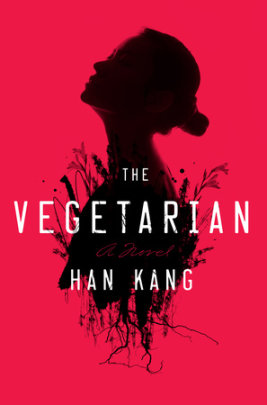
the-vegetarian-han-kangWhat is the difference between living and enduring? What is life when it is controlled by someone external to yourself? What is reality and how do we know that the place our physical being resides in is it? Among many other esoteric questions, Han Kang tackles these in her novel The Vegetarian. Addressing issues of abuse and the effects of trauma on the human psyche, Kang provides a unique glimpse into the convergence between sanity and insanity.

At the beginning of the novel, Yeong-hye has just become a vegetarian. Living in a very patriarchal Korea, Yeong-hye is berated by her husband for not eating meat herself or cooking it for him. The most interesting aspect of the first section of Kang’s novel is the fact that it is not told from Yeong-hye’s perspective, but from her abusive and oblivious husband Cheong. The reader feels even more intensely for Yeong-hye’s plight in hearing the misogynistic remarks that come from Cheong’s mouth. The skewed lens through which he views his wife as an object only serves to fuel the rampant anger we build for Yeong-hye.

The next section is told from the perspective of Yeong-hye’s brother-in-law, a washed up artist who when we first meet him is imbued with the passion to pursue a new artistic project: that of painting his sister-in-law in flowers and filming erotic visions of her. The reader is once again privy to the working of the patriarchal mind. In viewing the objectification of both Yeong-hye and her sister In-hye, the horror only continues.

Throughout the course of the novel Yeong-hye struggles with anorexia and eventually appears to be losing her sanity. The men around her can’t fathom why she is going to such great lengths to reclaim her body and herself: it is only her sister who can relate in some distant sense to the horrors that Yeong-hye has experienced. The final portion of the novel is told from In-hye’s perspective, and in accessing the female mind, we are also granted better access to Yeong-hye herself. In seeing herself in Yeong-hye, In-hye begins to question the very fabric of reality and the lines between lucidity and insanity.

The Vegetarian is a tragic and beautiful tale of the terror that abuse brings, and the lengths to which the abused will go to assert their power

The Vegetarian was original published in 2007, but was recently translated to English and published by Hogarth Press in 2015. You can purchase a copy of The Vegetarian at your local bookstore.

Read more fiction book reviews at Centered on Books.

FTC Disclaimer: This book was given to me in return for a fair and honest review of the text.

‘The Fugue’ by Gint Aras

the-fugue-gint-arasWhat is truth? What is love? What is living, and what does it mean to truly live your life? These questions only brush the surface of inquires that Gint Aras makes in his latest novel The Fugue. A book about family, about belief, about the deepest, darkest corners of the human condition, The Fugue is an exploration of humanity on the highest level.
A fugue is defined either as “a polyphonic composition based upon one, two or more themes,” or “a period during which a person suffers from loss of memory, often begins a new life, and, upon recovery, remembers nothing of the amnesic phase.” Aras draws on these definitions both literally and figuratively throughout the whole of The Fugue.  The novel weaves together multiple characters’ storylines and arcs so that they all intersect at various points throughout the novel. Coming together at the highest points of climax, jumping out of the woodwork to incite complete surprise, and slowly building to be easily foreseen, Aras does a fantastic job of intertwining each individual plot together into a cohesive, riveting and complete novel.

If you were to name a main character it would have to be Yuri Dilienko, who we meet just as he is being released from prison for the murder of his parents. Though Yuri might be considered the nexus around which the story revolves, Aras grants us access to many other characters’ minds; including, both of Yuri’s parents’, his lovers’, the great composer Lars Jorgensen, a local priest, and more. Each chapter focuses on a different character and each section dials in a specific point in time. Ranging from February 1940 to the summer of 2001, Aras forces us to grow, change and mourn with his characters as they do the same.

At any point in the novel you can hate, love, pity, and be terrified by any character who only a chapter ago you felt the exact opposite feeling for. Aras’ characters are dynamic in a way that only human beings are, with flaws so tragic readers can’t help but be reminded of their own tragic flaws and find sympathy for even the most damnable character.

The Fugue is a masterpiece of literary fiction that echoes novels like A Tree Grows in Brooklyn, Les Miserable and To the Lighthouse with its cross generational plotline and deep-seated narrative about the struggles, sadness and often futile nature of life. Glimpses of hope shine through at the rarest instances, and shreds of light are shined on certain characters who rise above the slog for moments in time, but overall The Fugue is a tale of trauma and the dark power of hatred.

Beautifully composed and entirely unforgettable, Gint Aras’ The Fugue is a must read for the year.

Available for purchase at your local bookstore, The Fugue was published in December of 2015 by Chicago Center for Literature and Photography.

Read more fiction book reviews at Centered on Books.

FTC Disclaimer: This book was given to me in return for a fair and honest review of the text.

‘Beware of Napkins’ Written by Jack Murphy and Illustrated by Melanie Jeanne Plank

bewareofnapkins_murphy_plankIn a hybrid form of poetical artistry, author Jack Murphy and illustrator Melanie Jeanne Plank have created the ultimate literary tribute to one of the greatest rock and roll bands of all time, The Beatles. The title of their book of illustrated poetry, Beware of Napkins, plays on George Harrison’s 1970 song “Beware of Darkness.” This misheard song title features as the main narrative thread for the collection as the signing off of an unnamed father to his daughter Jessica in a series of letters that spans from Jessica’s childhood to motherhood.
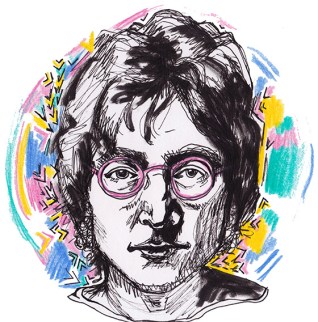
Aside from the letters between Jessica and her father, of which we are only privy to Dad’s side, there are also a series of portrait poems about each of the members of The Beatles, as well as shout outs to particular songs, and highlights of their individual and collective careers. Covering topics of hypocrisy, the price of fame, selling out, and the whole Yoko controversy, Murphy and Plank do a splendid job of providing not only an overview of the band’s career, but also imagined snippets into their souls.

While Murphy’s poetry wraps the reader in sentiment, nostalgia and comedic relief, Plank’s illustrations are the perfect aesthetic and emotional accompaniment. From her realistic portraits from John, Paul, George and Ringo, to her cartoon-like drawings of beach chairs and her handwritten letters, each piece is the exact physical manifestation of the more ethereal emotion that Murphy attempts to convey.

There may be inside jokes and obscure hints that the lay reader won’t necessarily understand, but these do not detract at all from the overall piece if you don’t have the knowledge needed to understand them. Beware of Napkins is hilarious, heart breaking and intimate whether you are a hardcore Beatles fan or just one of the everyone who at least knows who The Beatles are.

Beware of Napkins is available for purchase at JackMurphyChicago.com

‘Meditations on Intention and Being’ by Rolf Gates

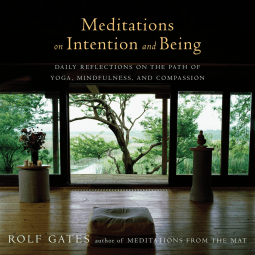
meditations-on-intention-and-being-gatesMeditations on Intention and Being by Rolf Gates is a sort of seven step how-to that guides its reader toward the process of “starting over.” Gates’ hope in writing the book is to “provide readers with an ancient set of instructions for how to live and love well” which the author claims requires and understanding of many principles that are inherent to the practice of yoga. In each chapter Gates provides one more way of reaching the above goals based on yogic, Buddhist, and Christian precepts.

Gates, a recovered addict, retired military personnel, and former addictions counselor is now a yoga teacher trainer who aims to inspire and encourage his students to access the deeper aspects of the yoga practice that often get lost in the more contemporary and mainstream styles of practicing. Gates though does not discriminate against any one type of yoga despite that fact that he himself has developed and teaches a particular style of 90 minute classes. He admits that most people come to yoga for its physical benefits and challenges, but that this can be the gateway to accessing the more personal and spiritual elements of the practice.

Themes of effortlessness, nonviolence, spirit, mindfulness, compassion, equanimity, and intention are the primary focuses for Gates. He delves into each in great detail providing not only an outline and introduction to what each of these concepts means to him, but also giving in-depth autobiographical background concerning his own experiences with these ideas. Though in some ways this autobiographical content lends legitimacy and weight to Gates’ arguments, it can at times become overbearing and tiresome. There are points where the actual intention in writing about a topic seems lost in a sea of narrative that, though related, isn’t always entirely relevant to a reader who is not intending to read an autobiography.

Above all presence and awareness are most prized by Gates and touted to be the most important elements if one wants to live life well. An essential and integral part of yoga, presence is what allows humans to actually live their lives rather than experience them from a distance, and this seems to be what Gates is getting at through his long and intricate examinations of each step toward presence. Though some of the chapters can be long and difficult to push through, the overall message of the book is one that is important for our current culture, and makes Meditations on Intention and Being a very relevant book for our times.

Published by Anchor in December 2015, Meditations on Intention and Being can be purchased at your local bookstore.

Read more nonfiction book reviews at Centered on Books.

FTC Disclaimer: This book was given to me in return for a fair and honest review of the text.