 What is it that determines definitions: defines something as one thing instead of another? What delimits fiction from reality, sanity from insanity? Borders: the lines that stand between; the lines that distinguish “different” from “same.” Borders that are rarely clear and often obfuscated by our own perceptions, by what we bring to the table, the baggage we carry.
Borders are what Jean Guerrero investigates in her narrative nonfiction release Crux: A Cross-Border Memoir. Guerrero sets out not only to tell her story, but to tell that of her father through both her memories and the investigative work it requires to unravel her family’s troubled, and often curricular, past.
Guerrero begins by setting the scene, by introducing the reader to her parents, to what life was like growing up as the child of her parents. Her mother, an acclaimed doctor with expectations that reach no lower that straight-A grades and flawless chastity, holds one end of the parenting tight rope. Her father, a potential schizophrenic who sees every action as sabotage or a symptom of being spoiled, holds the other. Guerrero finds herself trying to walk between them, seeking desperately to both please and thwart their expectations, wishes, and demands of her.
Most of Guerrero’s life is spent without her father, wondering where he is, thinking he’s dead. The other part of the time, Guerrero spends (at least her childhood) terrified of her father. Terrified of his mania, of his accusations, of feeling like a failure in his eyes. Her mother spends most of Guerrero’s childhood trying to forget her husband, arguing that he’s schizophrenic and telling Guerrero, whenever she acts out of line in her mother’s eyes, that she suffers from the same mental illness. Her father meanwhile, claims he is being targeted by the CIA for mind control experiments, and Guerrero experiences moments that make her question the dubiousness of his statements.
Guerrero finds her way through her troubled childhood to come out an investigative journalist constantly seeking for the truth that alluded her as a child. But the biggest mystery, the biggest truth she hopes to hold is that of her father’s life. Travelling through Mexico to piece together the mystery of her family and her father’s past, Guerrero uncovers a cycle of abuse that has perpetuated her family’s suffering. She learns of the terrors that the women who came before her suffered to give her father life and her. She learns of the terrors her own father suffered and that potentially led him to the depths of his current despair.
A beautifully moving and terrifying memoir, Crux is a book that attempts not to teach, but to learn and keep on learning beyond the pages of its covers. Guerrero brings to the table systemic issues that cannot be eradicated by a single story, but she suggests that maybe through constant inquiry, searching, and an attempt to do better we can break free of the demons of our past.
Slated for release by One World Press on July 17, 2018, you can preorder a copy of Crux: A Cross-Border at your local bookstore.
Read more nonfiction book reviews at Centered on Books.
FTC Disclaimer: This book was given to me in return for a fair and honest review of the text.
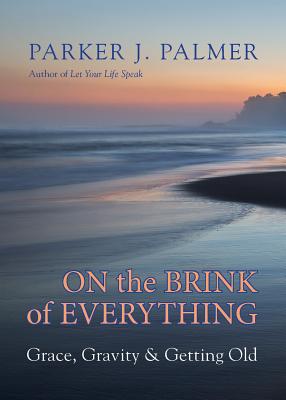 On the Brink of Everything: Grace, Gravity, & Getting Old by Parker J. Palmer, is a collection of essays, poems, and stories that tell of Palmer’s coming into old age. Palmer’s main themes surround issues such as: living a full life, finding your vocation, being grateful, understanding life’s lessons, and making the choice to be happy despite your circumstances.
 Like watching Planet Earth in your mind’s eye, American Wolf, is an adventure that lets you experience moments on Earth that most people haven’t even dreamed exist. Author Nate Blakeslee tells the story of O-Six, one of the most famous Yellowstone wolves. O-Six was shot by a hunter during a brief period in which wolves were removed from the endangered species list. Blakeslee tells O-Six’s story through a variety of lenses covering issues of politics, environmentalism, and humanity.
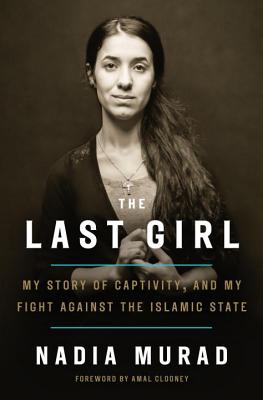 It could’ve been me. It could’ve been you, your mother, your wife, your daughter. It could’ve been any woman living in the “wrong” time, the “wrong” place, believing the “wrong” thing. Nadia Murad’s story is the story of every woman who could have been her and wasn’t. Her story is the story of every woman in her tribe who had been her to someone else: a slave, an object, a sabayya.
 No Apparent Distress: A Doctor’s Coming-of-Age on the Front Lines of American Medicine is inspiring, dispiriting, and profoundly informative all at the same time. Author and MD Rachel Pearson tells the story of medicine in America and how it has developed into a skewed system that favors the rich and the white.
 The Moth is an ongoing, live performance where people, often famous or well established people, get on stage and tell a true story that is relevant to a given theme. Launched in 1997,
  Rigor Mortis: How Sloppy Science Creates Worthless Cures, Crushes Hope, and Wastes Billions is NPR correspondent Richard Harris’ attempt to bring awareness to the very poor science that he sees as dominating the biomedical field today.
 History has always been predominantly about “his” story, not hers. Sam Maggs attempts to change all of that with her latest novel Wonder Women: 25 Innovators, Inventors, and Trailblazers Who Changed History. Wonder Women is just what it sounds like, a history book about women. Maggs, though, does not fill Wonder Women with dull facts, a myriad of dates, or a droning tone that could put any reader to sleep. Instead, she provides short snippets of each featured woman that are fun, conversational in tone, and accessible to any age group.
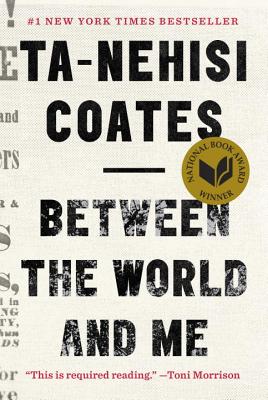 Black lives do matter because black lives are human lives. All humans are simply that: human. No matter the color of their skin, their sexual preference, or the amount of money they make in a year, we are all human. In Between the World and Me, Ta-Nehisi Coates says just this and so much more in a 152-page letter to his fifteen-year-old son.
 The Phone Rang by Mary Reid Gaudio is the story of three sisters as they stand together to fight the battle against their sister Ann’s Leukemia. Autobiographical, historical and full of moral insight, The Phone Rang touches on multiple aspects of both the sisters’ lives and Leukemia as a destructive disease.
 Centered on Books