‘The Pleasure You Suffer: A Saudade Anthology’

the-pleasure-you-sufferWhy is it that the greatest suffering always involves someone or something that we love? Perhaps because the loss of, the imperfection of, the mere existence of pleasure invites pain. In The Pleasure You Suffer, authors inquire into this phenomenon of pleasure’s linkage to pain through short stories and poetry.

From bad relationships to unrequited love, from parental issues to dissatisfaction with employment, the authors of The Pleasure You Suffer explore the pain in pleasure through a variety of lenses. There are some pieces, like The Good Tombstone by Joseph G. Peterson, that are so heartbreaking and visceral that it’s hard to remember they’re fiction. A story about a widower who plays the lottery in hopes of buying his dead wife a more appropriate tombstone, Peterson hits at the essence of pain in love and loss.

Then there are poems like Rachel Slotnick’s The Perfume that is so profoundly introspective despite it’s sad content, that Slotnick is able to remove the reader from despondency and put her in a place of love and warmth. Slotnick essentially argues that we are nothing without the one’s we love, even if it is painful to lose them.

Overall, The Pleasure You Suffer is an absolutely beautiful and courageous set of works that is well worth its pages. Every piece is unique and says something slightly different about the same running theme.

Published by Tortoise Books, in June of 2016 The Pleasure You Suffer is available for purchase at your local bookstore.

Read more fiction book reviews at Centered on Books.

FTC Disclaimer: This book was given to me in return for a fair and honest review of the text.
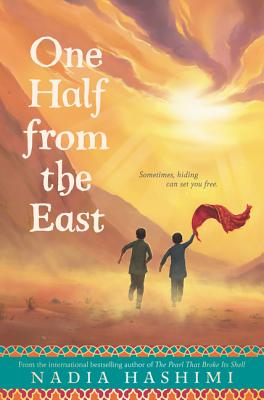
‘One Half from the East’ by Nadia Hashimi

one-half-from-the-east-hashimiA book so compelling you could read it in a single sitting, One Half from the East tells a story much larger than the characters involved. Nadia Hashimi’s second novel follows Obayda, a ten-year-old bacha posh, or a girl dressed as a boy, living in Afghanistan. Obayda’s family turns her into Obayd to bring the family honor and with the magical hope that in doing so, their next child will be a boy.
Obayd must navigate school, people, and the world around her without her dresses, her long hair or sisters, and most of all without the confidence she had in being who she was. Along the way though, Obayd learns how to survive as a boy, how to live as a boy, doing the things she was never allowed to do as a girl. She meets another bacha posh who shows her how to fit into her new skin, and soon enough, Obayd does not want to be Obayda again. But that is the tradition of bacha posh – a young girl is turned into a boy only to bring luck and fortune to the family, not to be a boy forever.

Obayd and her friend know that the time is coming for each of them to return to their old ways of life, but now they are stuck in the middle. They are not quite girls and not quite boys, and they fear the return to a life with less freedoms, one that they don’t identify with any more: the life of a girl.

In One Half from the East, Nadia Hashimi not only exposes readers to what life in Afghanistan is like for women especially, but she also brings to light larger, worldwide questions of gender and identity. At one point in the novel, Obayda wonders what makes a girl, a girl. Her and her sisters muse whether it has to do with the length of a person’s hair, the clothes the person wears, or with how the person acts.

Obayda simply wants to be a boy, but Hashimi also questions this desire. Does Obayda want to be a boy to bring honor to her family, is it to have the freedoms she would otherwise not have? In the end, Hashimi starkly points out that learned behavior can easily become associated with “boy” and “girl,” and yet the society surrounding that culture takes those behaviors as inherent. Boys play soccer. Girls sew dresses. But a girl can just as easily learn to play soccer, and a boy can just as easily learn to sew. So what is the “boy” thing to do, and what is the “girl” thing to do?

Hashimi wrote One Half from the East as a middle grade novel for grades three to seven, but the novel is by no means strictly a children’s novel. The book is a culturally eye opening work of art that is just as moving and heartbreaking for any aged reader.

One Half from the East will be released by HarperCollins on September 6, 2016. Preorder a copy from your local bookstore.

Read more fiction book reviews at Centered on Books.

FTC Disclaimer: This book was given to me in return for a fair and honest review of the text.

‘The House of Secrets’ by Brad Meltzer and Todd Goldberg

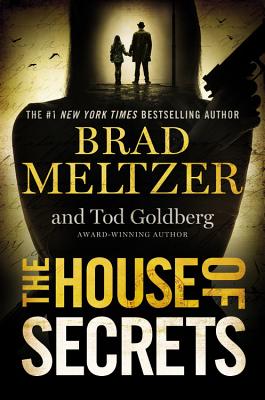
the-house-of-secrets-meltzerEvery mystery needs to be solved. That’s what Jack Nash told his daughter Hazel when she was a child, and that’s what sticks in Hazel’s head after she wakes up in a hospital with nearly no memory of her former life. Through Hazel, Jack and other characters, Brad Meltzer and Todd Goldberg take readers on a wild ride through a myriad of conspiracies and mysteries in their latest novel The House of Secrets.
Jack Nash was a reality TV superhero: the host of a conspiracy television show called House of Secrets. Now, Jack Nash is dead after the car accident that Hazel and her brother Skip were involved in too. But, not only is Jack dead, two other mysterious men, potentially involved with Hazel, Jack, and Skip are also dead, or so Agent Rabkin says. Strangest of all, the other two men were found with bibles in their chests…odd that Jack told Hazel a similar story in her youth: a story of a deceased man found with Benedict Arnold’s bible buried in his chest.

Hazel is compelled to live by her father’s rules and solve the many mysteries surrounding not only the death of her father, but of who she is, and if she had anything to do with the murders that have been committed. Who can Hazel trust? Who does she really know? Who was she? As Hazel delves further into her father’s past and her own, she begins to uncover things about her father and herself that she wishes she had never found, yet she can’t stop herself. She needs to solve the mysteries.

Meltzer and Goldberg create a fantastic and terrifying mystery that is driven not only by plot, but by the intimate characters woven within that plot as well. From The Bear, a terrifying (we think) bad guy, to Butchie, Hazel’s only friend and a sometimes criminal, the reader can’t help but become enthralled in each storyline, waiting for the moment when they all converge.

Meltzer and Goldberg also bring in deeper themes and questions revolving around ideas of being able to change oneself, the importance of family, and forgiveness.

An exhilarating and chilling read, Meltzer and Goldberg’s The House of Secrets is worth the 352 pages of reading, or 10 hours of listening.

The House of Secrets audio book was released by Hachette Book Group on June 7, 2016. You can find the hardcopy or audio version at your local bookstore.

Read more fiction book reviews at Centered on Books.

FTC Disclaimer: This audiobook was given to me in return for a fair and honest review of the text.

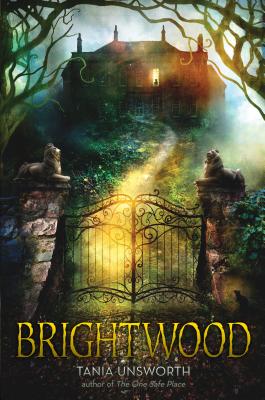
‘Brightwood’ by Tania Unsworth

9781616203306What does it mean to live fully? What does it mean to be crazy? Where do freewill, imagination, and the idea of taking chances come into play with each of these questions? Tania Unsworth probes into these inquires in her latest young adult fiction novel Brightwood.

Brightwood tells the story of Daisy Fitzjohn, a young girl living alone in a mansion with her mother. Daisy is not allowed to leave the mansion, and has never met any other human being besides her mother. Not that she doesn’t have friends like a rat named Tar and some animal and plant friends on the grounds of the property. But, Daisy still longs to know what life outside Brightwood Hall is like, despite the fact that she is most definitely scared of it.

Daisy’s yearning to go out into the world is put on hold though when her mother mysteriously disappears after heading out to the grocery store one Monday morning. Daisy is almost immediately suspicious because of the day of the week that her mother left: her mother is a rigid woman when it comes to schedules, and she only goes shopping on Wednesdays. But either way, Daisy is willing to give her mother the benefit of the doubt, at least at first. At least until a strange man shows up at the gates and lets himself in to Brightwood Hall. Now Daisy is really scared. But what is she more scared of: living on the grounds with a strange man wandering around who claims to want to help her, or leaving the only world she’s ever known to seek help?

Daisy is faced with these and many more hard questions as Brightwood progresses. All along the way, she confronts challenges of bravery and character. Daisy meets Frank, a (maybe) imaginary friend who appears in black and white and who helps guide Daisy with very strange and fantastical metaphors. Frank, a bit of a coward at times herself, helps Daisy to see that bravery isn’t easy and it doesn’t come naturally. Frank pushes Daisy to her limits, or perhaps Daisy pushes herself to her limits, depending on how you understand the story.

In the end Daisy must not only confront tasks that force her to show her courage, but she also comes up against challenges of morality. She must ask herself what the right thing to do is, and how she can “keep her shape,” as Tar demands she should.

Brightwood is a fast-paced, exhilarating novel that keeps readers on their toes: terrified, entranced, angered and in love with the characters Unsworth creates. As a Y.A. novel, Brightwood addresses important values for children ages 10 and up, and teaches these values in ways that are both subtle yet graspable.

Brightwood will be released by Algonquin Young Readers on September 27, 2016. You can preorder a copy at your local bookstore.

Read more young adult fiction book reviews at Centered on Books.

FTC Disclaimer: This book was given to me in return for a fair and honest review of the text.

‘The Nocturnals: The Ominous Eye’ by Tracey Hecht

the-nocturnals-the-ominous-eye-hechtThe Nocturnals: The Ominous Eye is the second in Tracey Hecht’s The Nocturnals middle grade series illustrated by Kate Liebman. The book follows three nocturnal friends: Dawn the fox, Bismark the sugar glider, and Tobin the pangolin, as they attempt to save their forest home from a threatening, yet seen beast.
Dawn, Bismark, and Tobin have formed a team called The Night Brigade, which is devoted to protecting the animals of the night from any terrors that might arise. So when a great earthquake of sorts is felt, and the forest animals feels threatened, the friends embark on a quest to solve the mystery of the mysterious quake and its source. Along the way they meet a new friend Polyphema, a tuatara who seems to know a bit about the beast, not to mention she has a third eye with which she claims she can see the future, past, and present. As they go, the friends incur the help of other animals in the forest in an attempt to trap the beast and end its horrors once and for all, but the mysteries keep mounting.

Not necessarily contiguous with the first book, The Nocturnals: The Mysterious Abductions, Hecht writes a novel that can stand on its own and allows readers to jump right into the series and backtrack later. The characters are each unique, loveable and sometimes annoying in a way that the reader can’t help but be invested in them. Even the so called “bad guys” have an element of sympathy and understanding about them that teaches young readers to think critically about how they treat the people around them and what might be going on in those “bad guys” lives. Ideas of disability and difference also arise in the novel in a way that teaches acceptance. The Night Brigade accepts everyone for who they are, the Brigade is compassionate, forgiving, and brave, but they can also be scared too. Hecht does a great job of tying together themes and morals centering around acceptance, understanding, and friendship.

Published by Fabled Films Press, The Nocturnals: The Ominous Eye will be released on September 20, 2016. You can preorder a copy at your local bookstore.

Read more fiction book reviews at Centered on Books.

FTC Disclaimer: This book was given to me in return for a fair and honest review of the text.

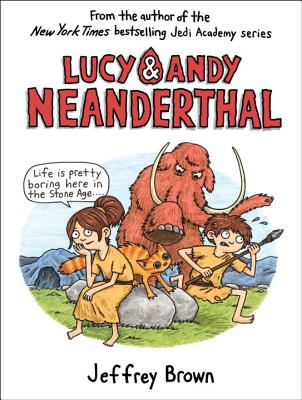
‘Lucy & Andy Neanderthal’ by Jeffrey Brown

lucy-and-andy-neanderthal-brownMeet Lucy and Andy Neanderthal, the main characters of Jeffrey Brown’s most recent episodic graphic novel Lucy & Andy Neanderthal. The book is a series of adventures that Lucy and Andy embark upon together from hunting mammoth to sewing clothing. Lucy is a misunderstood artistic genius, while Andy is your typical annoying little brother.

The novel is both hilarious and informative. While Lucy, Andy and other members of tribe undergo some wacky experiences, Brown is always quick to point out when the fictional tale clearly strays from known facts about Neanderthals. Interspersed between the slides are commentary and notes on the current scientific information we have about whatever the main topic of the episode is. Whether it is communication, weaponry or socialization, Brown lays out all the facts while also taking the liberty to give Lucy and Andy well-developed personalities, and his story an imaginative edge.

At the end of Lucy & Andy Neanderthal, Brown also gives the reader a full synopsis of where science is in terms of what is known about Neanderthals. He points out that science is always changing, and that what information he has provided in Lucy & Andy Neanderthal in 2016 is not necessarily what will be true 20 years from now when we have even more information to work with.

A fun, educational and fast-paced read, Lucy & Andy Neanderthal is a worthwhile read for both children and adults.

Crown Books for Young Readers will release Lucy & Andy Neanderthal on August 30, 2016. You can preorder a copy at your local bookstore.

Read more fiction book reviews at Centered on Books.

FTC Disclaimer: This book was given to me in return for a fair and honest review of the text.


‘Vinegar Girl’ by Anne Tyler

vinegar-girl-anne-tylerShakespeare never gets old, but when someone makes him new again (and in the most engaging, hilarious, and Shakespearean way), it is somehow exhilarating. That is exactly what Anne Tyler does with her latest novel Vinegar Girl. Rewriting The Taming of the Shrew in a contemporary context, Tyler takes what is one of Shakespeare’s most sexists plays and turns it into a dialogue about feminism and equality.

Kate Battista is a twenty-nine-year-old house-daughter who packs her scientist father’s lunch, makes dinner for the family, and keeps on eye on her younger sister Bunny. This very classical female role does not mean that Kate is an obedient or boring character; rather, she is an acerbic, assertive woman who speaks her mind no matter the occasion. She was even kicked out of college for pointing out an error in a science teacher’s lecture. Now she works at a preschool, not that she likes kids or anything.

Kate’s humdrum life is thrown off kilter when her father, Louis, suggests one day that she marry his lab assistant Pyotr. He doesn’t propose the idea because he thinks Kate and Pyotr will be great together, or because they are even dating, but because Pyotr’s Visa is about to expire. Pyotr has no other way to stay in the country and help Louis Battista with his twenty-year-long experiment. At first Kate is appalled by the idea of being married off to someone, especially someone that she finds as repulsive as Pyotr. But finally, Kate relents, and a courting game ensues with a level of caustic hilarity that mounts as the novel continues.

In the same vein of Shakespearean humor, language is a main means by which Tyler brings comedy into Vinegar Girl. Her characters use words with wit, stupidity, and ferocity. Tyler has a unique way of playing with language in the most simplistic of ways. Nothing is too fancy, and yet everything is calculated and perfectly arranged so that the text reads smoothly and the subtleties of the characters’ often nuanced words are not lost.

Vinegar Girl ends in a much more optimistic place than Shakespeare’s The Taming of the Shrew. Instead of ending in submission and a hierarchical understanding of marriage, Vinegar Girl ends with a firm understanding of equality. Kate is not tamed; instead she comes to a place of understanding about her own position in her father’s household, as well as an understanding about what it means to be accepted and loved. Kate transforms into an empathetic character without losing any of her quirk or pizazz.

A fun, funny, and fast-paced love story, Vinegar Girl is a great read whether you are a Shakespeare fan or not. Released by Hogarth Publishing in June of 2016, you can find Vinegar Girl at your local bookstore.

Read more fiction book reviews at Centered on Books.

FTC Disclaimer: This book was given to me in return for a fair and honest review of the text.

‘Chronicle of a Last Summer’

chronicle-of-a-last-summer-rashidiYasmine El Rashidi’s first novel, Chronicle of a Last Summer, tells a story of power, loss, and survival in Egypt during times of deep political unrest. The main character, an unnamed narrator, speaks to the reader from three different summers of her life: 1984, 1998, and 2014.
Chronicle of a Last Summer begins when the narrator is a young girl. The reader can sense this not only because of her more naïve thought processes, but also because of her short, terse sentences, and overall ignorance of larger issues going on around her. There is mention of divisiveness among Egypt and Israel, as well as a pervasive feeling that the government is not the most positive entity. However, these ideas never quite become fully teased out. We know that her activist father, Baba, has recently disappeared, and the narrator is left with her depressed and dejected mother who spends the majority of her time on the phone or in front of the television.

We come back into the narrator’s life while she is a film major at a local university. In 1998 the narrator begins to explore ideas around what it is to be human, what happiness means, and the activism rampant in Egypt at the time. There is significant maturity that happens over the first fourteen-year gap in the narrator’s life. Her thoughts become more fully developed, and Rashidi’s sentences go from being short, poetic bursts of thought to longer, more lyrical strands of philosophical musing.

During the narrator’s last summer, unexpected events pull the reader into a whirlwind of action previously missing from the novel. Though still a very intellectual and philosophical section, the last portion of Chronicle of a Last Summer is where we see the bulk of action take place. This section is also filled with the greatest sense of hopelessness and despair. Though these feelings pervade the story in the earlier sections, they are offset by the narrator’s youthful and, at least somewhat more, optimistic outlook which becomes diluted with time and experience.

Activism and politics play a large role in Chronicle of a Last Summer: particularly the idea of observation rather than direct participation in relation to activism. The narrator brings up this idea multiple times, questioning whether mere observation should be equated with complicity. Hand in hand with the political upheaval that sets the background of Rashidi’s novel comes the censorship, discrimination, and criminalization of activists standing for a just cause. Throughout all of the hardship though, comes the pervasive sense of place that ties the narrator, her family, and the activists of Egypt to their homeland.

Chronicle of a Last Summer is a beautiful and interrogative book that delves into the deeper subjects surrounding politics, activism, and a person’s roles and duties in society. A masterfully composed and artfully vetted novel, Chronicle of a Last Summer is one of the most relevant books of our time, not only for Egypt, but for every person wrapped up in their own country’s politics.

Published by Tim Duggan Books in June of 2016, Chronicle of a Last Summer is available for purchase at your local bookstore.

Read more fiction book reviews at Centered on Books.

FTC Disclaimer: This book was given to me in return for a fair and honest review of the text.

‘The Gap of Time’ by Jeanette Winterson

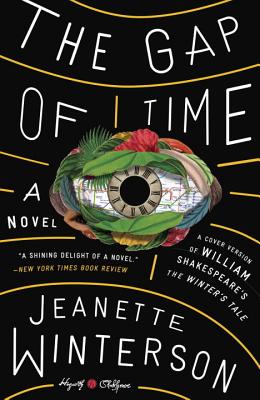
the-gap-of-time-wintersonShakespeare is arguably one of the greatest literary figures of all time. In saying this, who could ever retell his stories with, at the very least, an equal caliber? Jeanette Winterson does just this in her latest novel The Gap of Time.
Based on William Shakespeare’s The Winter’s Tale, The Gap of Time picks up all of the characters in the play and sets them down in the modern day to explore both the themes presented in the original and more. Winterson takes the gap of time that occurs in the original play of some sixteen years, and extrapolates on the significance, terror, and beauty of time and its passage.

The story is one of an abandoned child lost and found. It is a story of a power-hungry and jealous father who must come to terms with the limits of his ego in order to find happiness. It is a story of two children grown to adolescence: young lovers connected in a way that they could never dream of. It is a story of old and new love, of the importance of understanding your own self-worth and fighting for the truth, even when it’s hard to hear. Most of all, it is a story of redemption, forgiveness, and renewal.

The poetical appeal of Shakespeare’s language is retained and modernized in The Gap of Time, and most especially through Winterson’s lush descriptions of time itself. Time is something that “holds the world still” that follows “you like a shadow,” and sometimes “[t]his is time. You are here. This caught moment opening into a lifetime.” What is perhaps the most magical and insightful aspect of The Gap of Time is Winterson’s treatment of time as a dynamic and fluid player in all our lives. Instead of viewing time from a single perspective, Winterson drives at it from all possible vantage points, and forces the reader to inquire into the many significances that time brings to life.

Though nearly all of the characters in The Gap of Time are much more accessible than Shakespeare’s in The Winter’s Tale, Winterson stays trues to the motivation behind most while also intermixing even more threads of love, lust, gender, sexuality, and humanity.

The Gap of Time is an absolute must read whether you are familiar with The Winter’s Tale or not. While coming to the novel with The Winter’s Tale as a background proves for a more thorough and insightful read, Winterson gives a full recap of the play in the book’s beginning, and the novel itself can stand alone just as strongly.

Published by Hogarth in June of 2016, The Gap of Time is available for purchase at your local bookstore.

Read more fiction book reviews at Centered on Books.

FTC Disclaimer: This book was given to me in return for a fair and honest review of the text.

‘I Take You’ by Eliza Kennedy

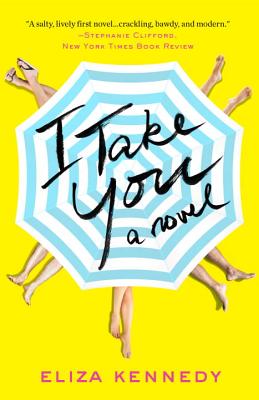
i-take-you-kennedyWhat does it mean to be an adult? What does it take to be a parent, a husband, a wife? Where is the line between being flawed and being a bad person? Above all of the questions, though, hovers the central tension in author Eliza Kennedy’s debut novel I Take You: what is the value of marriage and monogamy?

I Take You is a novel about a woman in her twenties, Lily Wilder, who is about to marry Will, a man she has known for six months and who proposed to Lily after only weeks of knowing her. Not only that, but Lily is a pathological liar, cheater, drug abuser, and borderline alcoholic – none of which her fiancé Will knows about.

Throughout I Take You, Lily is at constant war with herself as to whether she should marry Will or not. Should she quit her gallivanting and devote herself to a single man? Is that what she wants? Is she even capable of being faithful?

Surrounded by a hoard of divorced mothers and a libertine father, Lily has a hard time discerning what is right and wrong in the world of love and marriage. How much can you ever know a person before marrying them anyway? How can you ever truly know it’s the “right” person or that the relationship will last forever? What if that person is the right person for that moment in time, but you change and evolve in different ways that make you incompatible later?

While these are valid questions to raise, they become slightly less valuable in the face of Will and Lily’s rather overzealous engagement: there’s no way they can know each other by the point of their marriage. Nonetheless, they are important questions to be asked, because in the end, what does it mean to be in love? How does love then become qualified for marriage? Is a strong feeling the same as love; is it just passion, or something else entirely?

In Lily’s particular case, she is chronically unfaithful to her fiancé, and the reader wonders what this has to say about Lily. She is fully aware of her actions, of the pain she’s sure her actions will cause, and yet she doesn’t change. Is she incapable of change? Does she simply choose not to change, and does this selfishness make her a bad person?

The book spirals into wild developments that change the entire nature of the arguments presented and delve into deeper, harder, and more terrifying questions about love, marriage, and monogamy. Kennedy does a great job of tying up her ends without a total “happily ever after” or doomsday ending.

I Take You, is a book about so many different things, but when it comes down to it, it’s really about being human, about experiencing the human condition of loving and being loved, and about both living in the present moment and being aware that a future exists where your present actions will have an impact.

Published by Broadway Books in 016, I Take You is available for purchase at your local bookstore.

Read more fiction book reviews at Centered on Books.

FTC Disclaimer: This book was given to me in return for a fair and honest review of the text.