‘Jillian’ by Halle Butler

Jillian by Halle ButlerTeacher and author William Haywood Henderson once said that if writers avoid uncomfortable situations and issues in their writing, their work “will suffer from a lack of intensity and edge…The deeper [the author goes], the more distinct, striking, and moving [the] novel will become.”

In her debut novel, Jillian, author Halle Butler charges into the territory of the perverse, the grotesque, and the downright ugly side of human nature that Henderson claims is essential to the verve and passion of great literary artworks. Butler’s characters are awful, hate-able, and sometimes sickeningly relatable, and this relatability is the true mark of intrigue for the novel.

Jillian is told from the perspectives of Megan, Jillian, and once and while an oddball character like Crispy the dog. Megan and Jillian work together in a colonoscopy office – which is about the only thing they think they have in common. Megan is a 24-year-old sulking, borderline alcoholic who finds – not joy, but perhaps meaning (?), fulfillment, (?) necessity (?)  in criticizing and belittling others in her own mind. Jillian is her arch nemesis for no other reason than Jillian’s ignorance, annoyance to Megan, and her vastly different worldview. Jillian is a 35-year-old single mother who is the poster woman for self-help, mantra repeating, positivity in the most obnoxious way imaginable.

At first the characters seem harmlessly broken, maybe slightly macabre; but, within a few pages, the true grotesqueness of their respective personalities is revealed. You gain insight into Megan’s intense jealousy – which is relatable in and of itself, but Megan’s approach to dealing with that jealousy is cringe worthy. She not only hates everyone who has anything that she doesn’t, but she goes out of her way to confirm her hatred by making fun of them and picking them apart to her boyfriend Randy. Unsurprisingly, Megan is also so terrified of herself and her own potential for failure, that she makes no attempt to better herself in anyway. Wallowing in the drudges of her own sea of self-pity, Megan’s stagnancy is poignant and if nothing else, motivating for readers to actively seek to be otherwise.

Jillian, on the other hand, is constantly trailing off into fantasies of new dream jobs and illusory relationships, aptly able to irrationalize herself out of every serious situation in which she is put. Ignorance doesn’t even come close to summing up Jillian’s complete removal from, and disregard, for the real world. Her idiocy, lack of perspective, and overall hideously optimistic unrealism is enough to want to make the reader puke; and yet, there are moments of relatability with Jillian too. We’ve all tried to talk ourselves into feeling one way when we really feel another, we’ve all had experiences that we wish we could change, and we all know what it is to ignore the signs of catastrophe; though hopefully, we more tactfully deal with these issues.

As we engage with these two women, we begin to see the similarities among their apparently vast differences. We see the common elements of human struggle, of human selfishness, of removal from and lack of acceptance of reality, of complacency and the different methods of dealing with the sometimes static condition of life.

Raw, cutting, primeval and engaging in a terrifying way, Butler’s 150 page book will take you a few flicks of your wrist to get through. For however powerful it is though, thank god it’s so short, because it makes you feel like you’re locked in a damp cage, naked and caked with dirt, while everyone is looking at you as you struggle to breathe.

Yes, exactly like that: a little bit the way life feels sometimes.

Slated for release in February of 2015, you can pre-order Jillian at Curbside Splendor.

Read more book reviews of small press published work at Centered on Books.

Disclaimer: I received this book from Curbside Splendor for a fair and honest review of the text.
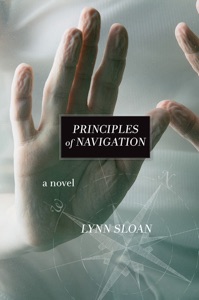
‘Principles of Navigation’ by Lynn Sloan

Principles of Navigation by Lynn SloanA story of love, hatred, selfishness, faith and most importantly, the dualities bound up in being human, Lynn Sloan’s captivating first novel Principles of Navigation is a psychologically tormenting exploration of the human condition. Alice Becotte wants a child more than, and at the cost of, anything else in her life or anyone else’s. Her husband, Rolly, an artist and university professor at a local Indiana college, is much more concerned with creating art and living by the ways of passion than he is with having children or settling into a traditional idea of family life.

At first, the novel focuses primarily on the struggles of Alice and Rolly’s marriage as well as the difficulties bound up in their seemingly incompatible relationship and tumultuous love for one another. However, as it progresses, Sloan veers readers off their perceived course toward plot bumps of infidelity, loss and more internal struggles.

At fundamental odds with one another, Alice and Rolly vacillate between affection, annoyance, and adoration for one another – as will you, the reader. Throughout the book, you will both love and hate each character a hundred times over and more. Sloan threatens to break readers to pity, to disdain and to compassion as each character showcases the spectrum of his or her duality. Nobody is a reliable narrator, and (or perhaps because) nobody is a static character. This is what makes Sloan’s novel so fascinating and gripping. Just as in life, no one person is the protagonist or antagonist – each character becomes another’s antagonist, or their own, as they navigate the waters of life’s imperfections and unfairness, as well as the consequences of their own actions.

There is nothing about Principles of Navigation that segregates it to one particular genre, nor does it target one group of readers. The book raises questions that are essential to every reader’s life: questions of humanity, love and growing older. Questions that will propel you from page one to the end of the novel without a backward glance as you are ripped through the pages of Alice and Rolly’s tumultuous lives.

Sloan, already a success in the field of short story writing and photography has broken into the novel industry with a strength and vivacity that will be sure to propel her into the ranks of great American novelists. Published by Fomite Press, Principles of Navigation is scheduled to be released February 15, 2015.

Read more fiction book reviews at Centered on Books.

Disclaimer: I received an advanced copy of this book for a fair and honest review of the text.

‘The Vineyard’ by Michael Hurley

Chicklet novel, The Vineyard, by Michael Hurley

Michael Hurley’s The Vineyard stakes its plot in three friends, Dory, Charlotte and Turner, coming together for a summer at Martha’s Vineyard. Each woman is plagued by a weight of despair hanging from her past which independently drives her to seek out the comfort of companionship and escape.

Charlotte has recently lost a daughter to cancer and a husband to the indifference caused by their daughter’s death. Dory is fending off the unwanted attention of longtime admirer Tripp Wallace, her mother, and her waning health. Turner is battling the internal demons of self-doubt and fundamental discontent with her failed relationships and lackluster career. Throw Enoch, the mysteriously ephemeral  fisherman who illegally sells the most delectable shrimp in town during off-shrimp season, into the mix, and you’ve got a narrative full of comedy, mystery, shock, and scandal.

Each woman struggles to the edges of physical death and moral doubting in order to come to terms with her own sense of self and to divine her purpose in the world at large. Hurley spins his novel from a somewhat dismal chicklet tale into a reeling mystery and crime novel as he aptly navigates questions regarding faith, the meaning of love, and the power of friendship.

The novel is propelled forward by a constant shift in plot as numerous threads are picked up and woven together throughout the progression of the story. At times this constant shifting, though, can be distracting and can halt the momentum of the novel. The shock value of each turn of events, however, picks up the often frenetic storyline, putting it back on track and providing a rather rousing impetus to keep trekking through.

Despite being a plot driven book, The Vineyard does justice to its underlying themes through Hurley’s strength in character development. The characters, if nothing else, are worth the entire journey. Each is so fully flushed out, so entirely herself, that you could blot out the names from the page and still comprehend each moment in the novel. Hurley does a fantastic job of creating characters that readers will fall in love with, despise and identify with on levels both desirable and unattractive.

Published by Ragbagger Press in November 2014, you can find this book at your local bookstore.

Read more fiction book reviews at Centered on Books.

FTC Disclaimer: I received this book from Netgalley for a fair and honest review of the text.

‘The Amazing Adventures of Kavalier and Clay’ by Michael Chabon

Pulitzer Prize Winning One Book One Chicago Michael Chabon novel is reviewed by Centered On Books.

The Amazing Adventures of Kavalier and Clay by Michael Chabon.

While Michael Chabon’s The Amazing Adventures of Kavalier & Clay is the story of two comic book writers living in New York City in the early 1930s, it is, at the same time, an exploration of the universal condition of being human, of the unique condition of being Jewish during World War II, and of the incessant quest for self- discovery that traverses all and every plane of human existence.

At the beginning of the novel we meet Josef Kavalier, a young Jewish boy who has just escaped, rather epically, from Prague. With the help of a golem and at the expense of what small means his family could gather, Josef has made it out of Nazi-occupied Europe to New York to live with his cousin Sammy Klayman and his aunt Ethel. Sammy, a nineteen-year-old aspiring artist working as an illustrator for Empire Novelty, discovers within the first few hours of meeting Josef that his cousin is a superb artist far beyond Sammy’s own talents, and he immediately dreams up the possibility of starting a comic book series with Josef. The cousins pitch the idea to Sammy’s boss and in the Golden Age of comic books, the money-hungry mongrel Sheldon Anapol can do anything but turn the boys down.

Joe, having left behind his family in Prague, feels a looming sense of guilt in the wake of his freedom and seemingly unmerited job. In order to offset this agony, Joe centers all of his art on anti-Nazi themes and supplements his war efforts by fighting, or attempting to fight, any German he can find in New York City – and he happens to find quite a few. A reticent and stubbornly introverted young man, Joe cannot seem to express his own self-torment, his love or any part of his emotional self.

While Joe is fighting the internal battles of guilt and shame over his external situation, Sammy is fighting a battle with similar sentiments but in terms of his art, and most especially his sexuality. He is lonely, fatherless, and oddly uninterested in forming romantic relationships with any woman he meets. Constantly questioning his own feelings towards others, in particular his jealousy toward Josef’s girlfriend (but not Josef himself), Sammy is at odds with his sexual orientation in a time and place when such thoughts were so taboo, Sammy can’t even identify that this is his struggle.

The young men negotiate the difficulties that accompany success, love, failure and loss; they confront the harsh realities of imperfection, of ageing and of the restrictions and expanse of their own morality as they grow in their artistry, their familial ties and their humanity.

The novel holds the space between literary, historical and surrealistic fiction at times spotlighting on Joe and Sammy’s comic book characters and at other times featuring historical figures such as Salvador Dali. Chabon’s artistry with words (just sample this: “The cold jerked his chest like a wire snare. It fell on him like a safe. It lapped eagerly at his unprotected feet and licked at his kneecaps.” [430]) is equally matched by the novel’s moral direction and inherently philosophical bend. Themes emerge throughout the novel, are picked up, threaded through other themes and woven together in a seamless tale that never quite goes where you are expecting it to. Themes of self-expression, self-discovery, escapism (in all positive and negative senses of the word) and most thoroughly self-liberation, are only a few of the threads Chabon draws upon.

If you’re in any way shy or reserved, don’t read this book in a café or any other public place: expect multiple jaw dropping moments, laugh-out-loud scenes and characters you will fall so in love with that you will forget you are reading anything but the story of your own life in the guise of previously unfamiliar names, places and expressions you’ll soon forget you didn’t know before.

Though, as with any great novel (and this is sure to join the ranks of the American classics), the first 130 or so pages aren’t as fast paced as the rest, the benefit of patience (if you happen to be impatient) is well worth the wait: once you hit page 145 the book will haunt you every moment it’s not in your hands with its covers spread.

Published by Random House in 2012, you can find Michael Chabon’s The Amazing Adventures of Kavalier & Clay at your local bookstore.

Read more fiction book reviews at Centered on Books.