Ruby by Cynthia Bond

Ruby by Cynthia BondRuby by Cynthia Bond is a novel of love, liberty, and the maintaining of dignity in the face of hardship, exploitation and layers of distrust.

The story takes place in Liberty, Texas, a town blanketed in despair and shrouded in an evil that is perpetuated and reinvigorated with each new generation.  At the beginning of the novel, Ruby Bell has returned from New York where she went in search of the mother who abandoned her as a child. She has come back to Liberty to find the same dank, horror-filled must that she left behind; only now the tenebrous spirit of Liberty has ensnared her with new vigor.

Though the residents of Liberty reject Ruby and think of here as merely crazy, Ephram Jennings still remembers Ruby as the young, innocent child from his own past, and he takes it upon himself to show kindness and unconditional love to the now broken woman. In the midst of this process, Ephram undergoes his own transformation toward self-assertion, self-love and self-healing.

A novel about breaking free from bondage and finding liberty in love, each of the character’s stories are a haunting reminder of just how cruel the world can be. When we first meet Ruby and Ephram we know that something is off in the way that each of them acts and interacts within their world, but we aren’t given immediate access to the why of their situations. Why is Ruby lying naked in the forest? Why does Ephram, a middle-aged man, live with his sister Celia and call her mother? As the narrative unfolds, unimaginable horrors are revealed as well as character intersections and relationships that are entirely unforeseen.

There is a highly spiritual element to the novel both at the level of institutionalized religion as well as more nature based spirituality. Evoking Roman myths like that of Daphne and Apollo as well as spirit imbued animals, tarrens (ghost children) and the Judeo-Christian God, Bond weaves together these spiritual elements to create a world fraught with contradiction, terror, and oddly enough, inspiration.

Further, questions of sanity pervade the pages of the book. What does it mean to be sane? Who has the right to deem another person insane? To what lengths can a person be physically and emotionally driven before teetering over the edge of what is typically thought of as sane? These physical and emotional experiences are what serve to propel the novel backward and forward through time as the past horrors of Ruby, Ephram, Celia and nearly every other inhabitant of Liberty are revealed throughout the course of the novel. Ruby forces the refiguring and conceptualizing of what trauma, of what sanity and of what dignity really means.

Though at times Ruby is so graphic that it is difficult to want to turn the page and find out what happens next, Bond’s prose is so poetic and fluid that the rhythmic experience of words envelopes the reader in a mystical telling of the very real and imperfect world that we all live in.

Published by Hogarth Press in February 2015, Ruby is already a New York Times Bestseller and Oprah Book Club selection.

FTC Disclaimer: This book was given to me in return for a fair and honest review of the text.

Read more fiction book reviews at Centered on Books. 

“Stella Rose” by Tammy Flanders Hetrick

Stella Rose by Tammy Flanders HetrickStella Rose by Tammy Flanders Hetrick is a dark entanglement of reeling emotionality that throws the reader from the verge of tears to absolute hatred in the matter of mere paragraphs. Stella Rose is the mother of Olivia Weller and the best friend of narrator Abigail Solace St. Claire, and she has just died of Leukemia, leaving Olivia in the care of Abby for Olivia’s last year of high school.

Both Abby and Olivia are left to struggle not only with the death of someone they loved so much, but with the pressures of romantic love, friendship, betrayal and everything else that comes with being human. A large part of what keeps the momentum of the book going and what sets it apart from other books of a similar plot is the fact that it’s not simply a sob story about death or the loss of a loved one. Rather, Stella Rose is an exploration of living fully, not in the wake of death, but for the sake of living. There is no glossing over of difficulties, but there is also not a hanging on to the darkness that envelopes the book.

Stella is a presence in the book no doubt, but she is not an unfathomably depressing presence. Stella makes her way into the novel through the people who loved her in life and who still love her in death, as well as through the letters that she leaves for Abby and Stella. By the end of the novel, the reader has built as much empathy for Stella as for Olivia, Abby or any of the other characters in the novel in a way that makes the reader miss her all the more.

Through all of the ups and downs that Olivia and Abby experience together in their new relationship, nothing could prepare either of them, or the reader, for what Hetrick has in store for them. From insightful to terrifying and every emotion in between, Stella Rose deals with themes of abuse, privacy, passion and the power of friendship while providing strong messages on these topics for readers to take away with them. Hetrick pulls together these themes and weaves them into a story that leaves the reader feeling both stronger and more vulnerable by its completion.

There is something about Stella Rose, and it’s not the death of the eponymous character, that lifts the reader from the mundane of daily living to see the beauty in that provinciality, and that is a rare and exciting moment for any reader.

Stella Rose by Tammy Flanders Hetrick is scheduled to be released by She Writes Press on April 21, 2015. You can preorder the book at your local book store.

FTC Disclaimer:This book was given to me in return for a fair and honest review of the text.

“Twelve Thousand Mornings” by Mary Driver-Thiel

Twelve-Thousand-Mornings-Mary-Driver-ThielTwelve Thousand Mornings make up just enough days to round out about 32 years, which happens to be the amount of time that Anne Bennett has left to live, or so her dead lover tells her in a (maybe) dream.  Meant to be a sort of carpe diem, this is a much needed message for Anne since she has recently lost her husband, her fortune, and her dignity in the aftermath of a company scandal. Anne is forced to seek refuge at the home of the daughter whom she has not only neglected but almost entirely alienated from her life.

When we first meet Anne she is a nothing more than a contemptible, judgmental and entirely crude human being whose value system is scaled by fashion, weight, and beauty. Told in first person, the reader is privy to the criticisms Anne passes on everyone around her without ignominy. After seeing her sister for the first time in years, Anne can’t divert herself from thinking about how much weight her sister has gained and noticing it at times when it’s not even relevant in the context of their interaction. Nearly everything that goes on both inside of Anne’s mind and comes out of her mouth within the first 200 pages aids to accumulate in the sum of Anne’s despicability.

The most frustrating attribute that Anne possesses though is her acute awareness of her own behavior and the reasons behind why she acts the way that she does. Piece by piece Anne reveals the traumas of her past, but there are times where it feels as if the reader is being beaten over the head by Anne about her trauma. She mentions it again and again, to the point that its repetition almost detracts from its weight in the story. I often wanted to shout out: “I get it! You suffered! Stop being a horrible person!” But perhaps, such character construction is an example of author Mary Driver-Thiel is at her best.

I had to constantly question myself as to whether it was Anne, the text, or myself that I should be criticizing. I was annoyed with Anne for recognizing her issues and not acting on them. I was annoyed at Driver-Thiel for making Anne a character who recognized her issues and didn’t act on them, and I was annoyed at myself when I thought about issues in my own life that I’m aware of and don’t act on. At first I hated Anne, then I thought her self-knowledge was a character flaw, then I realized it was the self I saw in Anne that annoyed me. Driver-Thiel made Anne such a human character, such a flawed and thereby relatable human character that by the end of the book it’s hard to not love her and be happy for her despite her many detestable attributes.

Anne is a character who grows, develops and fully changes over the course of the novel, which is what the book is truly about. There is redemption, pain and reparations to be made, but really Driver-Thiel is making a statement about the life that stand before you. Whether it’s Twelve Thousand Mornings or thirty days, through Anne, Driver-Thiel begs readers to take their lives into their own hands and live as fully as possible. The idea of hope, the hope of change and the change that comes with self-asserted power culminate in an almost fairytale ending that somehow fits perfectly in the twisted, frustrating, and enraging novel.

Written as a sequel to Driver-Thiel’s first novel The World Undone, by personal experience, Twelve Thousand Mornings can easily be read as a standalone novel. However, after reading Twelve Thousand Mornings,  I am fully intrigued as to the point of view and character development that inhabits her first work.

Published by Pine Lake Press March 15, 2015, you can purchase Twelve Thousand Mornings at your local bookstore.

FTC Disclaimer: This book was given to me in return for a fair and honest review of the text.

Read more fiction book reviews at Centered on Books. 

“The Buried Giant” by Kazuo Ishiguro

The Buried Giant by Kazuo IshiguroThe Buried Giant (Knopf )by Kazuo Ishiguro is the author’s most recent success in breaking literary boundaries while creating a story that is entirely enthralling. On the most mundane of levels The Buried Giant topples normative conceptions of genre as it spans the worlds of fantasy despite being very clearly a book of literary fiction. In a recent conversation with Erica Krouse hosted by the Lighthouse Writer’s Workshop in Denver, Colorado, Ishiguro addressed this topic by noting that a shift is underway in the literary community, and authors, especially of the younger Harry Potter generation, are becoming less and less tied to traditional conceptions of genre. Ishiguro sees this as a positive shift and noted in the interview with Krouse that he was happy to be contributing to such a movement. He openly admitted, though, that 15 years ago or less he might not have had the gall to choose the setting that he did for The Buried Giant.

The Buried Giant takes place in a post Arthurian Briton that is riddled with ogres, pixies and dragons. The novel follows the adventure of an older married couple Axl and Beatrice as they set out from their home to discover the mysteries of their forgotten past. The couple, though later in their years, is not suffering from Alzheimer’s or some other such disease; rather, there is a collective sense of forgetting that has fallen upon the whole of Briton. This fog, in sense, is what prevents nearly all of Ishiguro’s characters from keeping a hold on even near distant memories.

This shared sense of remembering, Ishiguro noted to Krouse, is at the heart of his latest exploration on the topic of memory. A good portion of Ishiguro’s books relate to memory and how memory affects a person’s understanding of her current situation and serves as the” lens for [her] relationships.” Ishiguro’s previous literary examinations of memory though have always been about the singular recollections of the narrator or main character. As a central theme to his writing, Ishiguro wanted to explore collective memory, especially as it relates to a whole nation, to love, and to the union of marriage. One of the most central themes of the book, one that Beatrice raises again and again, is the question of whether in forgetting the shared memories of two people’s pasts they can still claim to be in love.

Aside from the issues of love and memory, Ishiguro weaves through tales of battle and introduces other rather frightening characters, many of whom remain nameless. The most interesting aspect of these settings and characters is that they could essentially be left behind if Ishiguro had decided to set the book in any other place or time. If the reader were to lift out the themes, threads and issues that the book delves into, it is easy to see that the fantastical setting of The Buried Giant is secondary to the story being told beneath that surface.

This seems to make perfect sense when one considers that the most difficult aspect of writing for Ishiguro is setting, as he stated at the Lighthouse Writer’s Workshop event. He often conceives of an idea for a novel and struggles with where to place that idea in space and time. The flexibility he allows himself and the difficulty he has in coming to a conclusion is perhaps how and why Ishiguro is able to span so many genres with his writing. His previous book Never Let Me Go is a speculative literary fiction novel, while Remains of the Day is a rather romantic tragedy and a comedy of manners. Now, with a fantasy book under his belt, Ishiguro has most definitely traversed a wide range of the literary plain.

The Buried Giant, is by far one of the most engaging and fast paced of Ishiguro’s novels, and despite its 317 page girth, the book is, by experience, readable in a single day.

Purchase The Buried Giant at your local bookstore.

Read more fiction book reviews at Centered on Books.

“At The Water’s Edge” by Sara Gruen

At the Water's Edge by Sara GruenAt the Water’s Edge by bestselling author of Water For Elephants Sara Gruen is a novel of romance, adventure, and history. The book takes place in the midst of World War Two in Philadelphia and then in Scotland as a high society love triangle comprised of the narrator Maddie, her husband Ellis, and their mutual best friend Hank head on in search of the Loch Ness monster.

Ellis and Hank both have purported ailments that have kept them from enlisting in the war: Ellis is color blind and Hank is flat footed. The two men are so shamed by their inability to enlist that they decide to head to Scotland to find and film the Loch Ness monster and prove themselves heroic. Maddie is forced to come along since she has nothing in Philadelphia but a mother-in-law who wants to dissolve her son’s marriage and a father who wants nothing to do with her.

So, the three head to Scotland and check into a local inn where we meet more of the novel’s characters including Anna, Meg, and Angus. From here the story spins into tangents of monster hunting, Maddie’s slow acclamation to life outside of her china walls, and a love affair that develops only very late in the novel. Ellis and Hank, though most especially Ellis, turn out to be entirely dreadful human beings who are not only careless, but conniving, evil, and abusive. Much of the novel is spent describing the ways in which Ellis talks down to Maddie, tries to physically abuse her and emotionally berates her for what he sees as her imperfections. Frustratingly, Maddie does nothing to stand up for herself, and though this is a period piece set in a time when men did have the power to commit their wives to mental institutions, it is entirely maddening to watch Ellis dominate his wife and for Maddie to fall into patterns that reassure Ellis’ behavior.

There is definitely an air of melodrama in the book as well with Maddie constantly fainting, becoming woozy, or needing a man to save her from distress. There are few strong female characters at all in fact. Meg still pines over her boyfriend after he beats her nearly dead for wearing a pair of silk stockings that he assumes Meg slept with someone to obtain, while all of the women passively wait to be married and disappear into their respective husbands. Once again, the time period of the piece must be taken into account when trying to understand Gruen’s intention drawing such characters, but it is no less defeating for readers.

It is difficult to be surrounded by a hoard of characters for which the reader develops little sympathy because of their obnoxious behavior. The plot and all of the tangential subplots, however, are arresting and intriguing in a way that allows the reader to overlook potential frustrations in the novel’s characters. Being primarily plot driven, At the Water’s Edge will most definitely prove to be another blockbuster once a film is made.

At the Water’s Edge is slated for release from Random House Publishing on March 31, 2015. You can preorder a copy of the book here.

Read more fiction book reviews at Centered on Books.

FTC Disclaimer: This book was given to me in return for a fair and honest review of the text.

“Hausfrau” by Jill Alexander Essbaum

Hausfrau by Jill Alexander EssbaumHausfrau by Jill Alexander Essbaum at first appears to be the somewhat typical story of an unsatisfied housewife searching for meaning in her life and filling the void that has become her world with copious amounts of sex. Quite rapidly, though, the novel reveals itself as something much more discerning and intuitive.

Anna is the wife of Bruno: a woman with no driver’s license and no bank account, a self-proclaimed outcast American living in Switzerland. She has three children, one of whom she loves more than the rest, and another who holds for her the most painful part of her past.

Anna is constantly trying to convince herself of her own happiness and to make sense of her past decisions, as if granting herself pardon from her mistakes will erase them or make them easier to bear. It is obvious, though, that all of Anna’s internal warmongering, is nothing but a distraction from the fact that she cannot forgive herself or understand how and why her life has turned out the way that it has.

When we first meet Anna she has begun to see a therapist, Doktor Messerli a devout psychoanalyst, who serves no better purpose than to further reinforce Anna’s own submissive and subsumed nature. Ironically, Anna is not even truthful to her doctor, and we are compelled to stand in Anna’s lies as Messerli, often in a macabrely ironic way, tries to interpret Anna’s life with only half the details. Meanwhile, Anna goes about her life trying to divine significance, find the ability to feel, and understand her purpose in a world that has gone utterly gray.

Essbaum’s simplistic and yet deeply nuanced language lays the basis for the multitudinous layers running through the novel. Sentences are often short and terse, matter of fact and bitingly honest, while the metaphors of Hausfrau run in effulgence. Not only does the language surrounding Anna and her relationships directly correlate to those very relationships, but things as simple as the fact that Anna lives on a dead end speak volumes to the physical events in the book.

While the most potent drama of Hausfrau lies within Anna, there is an equally balanced physical component to the novel as Essbaum perfectly marries both internal and external conflict. We travel through Anna’s past, as well as her day to day life as she rides the train to her German language classes, has steamy sex with men in sheds, and confronts her husband and mother and law on a day to day basis.

Essbaum develops characters so tangible and situations so terrible it’s hard to accept that they are fiction. Even the worst of characters is so distinct and despicable that you want to know more about them. We move through the novel with Anna and feel her anguish, her pain, her annoyance with herself and we though we recognize that she is a woman utterly depressed and entirely lost we feel the sanity in all of her seemingly insane actions. A novel that at certain points will make you scream “no” and while at others it will burrow you deeper into your couch with “yes,” Hausfrau hits on every emotion in the human spectrum with a sheer brilliant aptitude.

Hausfrau by Jill Alexander Essbaum was released by Random House today and is available for purchase at your local bookstore.

Read more fiction book reviews at Centered on Books.

FTC Disclaimer: This book was given to be my NetGalley in return for a fair and honest review of the text.

“Queen Sugar” by Natalie Baszile

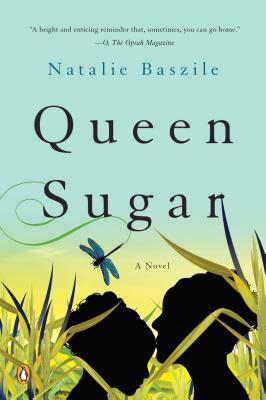
Queen Sugar by Natalie BaszileQueen Sugar by Natalie Baszile may tell a story of familiar themes, but the upfront way that Baszile addresses issues of family, race, social class, faith and more makes for a vital and moving novel that works on levels so much deeper than plot.

Speaking of plot: when we meet Charley Bordelon, the primary narrator of Queen Sugar, we learn that she has recently inherited an 800 acre sugarcane farm that she had no idea even existed until her father’s will named her its owner. Now Charley and her daughter Micah are travelling from the home they’ve always known in Los Angeles to the farmlands of Louisiana to harvest sugarcane. Charley and eleven-year-old Micah getting to Louisiana without strangling each other by way of typical mother-daughter effrontery is only the beginning of a long struggle that both women will endure throughout the course of the novel.

Not only is Charley a city girl trying to take up a farmer’s role, but she is also a woman in a man’s world and perhaps most at the forefront of Charley’s mind and the novel, she is an African American in a still racist state. This is a place where black and white, male and female, poor and rich are major distinctions for the Californian mother and daughter. Hence, recurring themes of incessant and seemingly inherent masochism, racism and social class issues play deep seeded roles in the novel as Charley navigates her way through the very new territory of Louisiana’s Deep South.

Throw into the mix Ralph Angel, Charley’s drug abusing half-brother who seems to be good at only one thing: messing up every opportunity given to him, and you’ve got the perfect fixings for a catastrophe. Ralph Angel though is one of the most intriguing and tragic characters of the novel. His story, that of a struggling African American who never makes it out of the drudgery he’s born into, is one of the most important Baszile intends to tell.

Queen Sugar is a stark and often affronting novel that cuts no corners and leaves no silences when it comes to taking a stand. That’s not to say that ambiguities aren’t recognized in the systems and norms that Bazsile confronts; rather, the issues themselves are brought to light in ways that complicate and force those who stand on either side to think differently about the matters at hand. Baszile challenges issues of race, gender and class that still plague us today with characters so alive and endearing it’s easy to think about what they would do or say in situations outside the pages of the text.

A richly complex novel burgeoning with social import and so beautifully composed you’ll feel you are walking in the Louisiana cane field with Charley, Queen Sugar is both tragic and uplifting in just the same way life itself can often be.

Published by Penguin Books in January 2015, you can find Queen Sugar at your local bookstore.

Read more fiction book reviews at Centered on Books.

FTC Disclaimer: I received this book from NetGalley for a fair and honest review of the text.
“The Dream Lover: A Novel of George Sand” by Elizabeth Berg

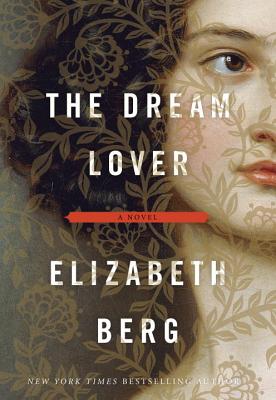
The Dream Lover: A Novel of George SandThe Dream Lover by bestselling author Elizabeth Berg is the fictionalized historical account of George Sand: one of the most influential and subversive female writers in France during the 19th century. Sand, born Amantine-Lucile-Aurore Dupin, not only published novels and articles at a time when women were primarily confined to household living, but she did so in plain view of the public, often cross dressing as a man, smoking cigars and engaging in open love affairs with some of the most prominent artists of her time. In her own novel, Berg  both draws from historical records and adds some of her own flair as she traces Sand’s life from early childhood until past her own death.

Sand traverses the years of her own life as the book’s narrator offering us only her single perspective. In this way, Berg often leaves conspicuously gaping holes in the thoughts and actions of Sand’s friends, family and lovers. As readers, all we have is Sand’s word that the events she recounts have happened in the way that she claims they have happened, but there are always parts of the story that seem missing. There are always things that we as readers are compelled to fill in, imagine, and understand, things that the character Sand perhaps does not want to fully admit to herself more than anyone else.

In this way, Berg points directly to an issue that she encountered during her research of Sand’s life. In Sand’s own autobiography, as well as in the historical records detailing the writer’s life, Berg notes there are major discrepancies in terms of dates, names and places associated with the famed writer. Berg took these discrepancies and did what she could with them: told them from a point of view. A point of view that Berg explains in the afterward of The Dream Lover, is not rooted in pure fact; rather, it is a mix of the real and imagined truths that she unearthed while steeped in her research.  This marriage of fact and fiction as form is echoed in Sand’s narration, as we often wonder how much of what she is telling us in imagined in a certain ways and stretched from the hard facts to suit her wildly imaginative and romantic mindset.

These discrepancies also mirror the ambivalences inherent in Sand’s own persona. Though Sand’s activities and lifestyle were controversial to say the least, there was evidence in her own writing, as well as testaments from her friends, that credited her with having a love for domesticity and for her children. Further, Sand, despite her fun-loving nature and energetic attitude, was known to suffer from depression and a pervasive sense of restlessness, which Berg translates seamlessly into her text. Berg aptly captures all of the contradictory elements of Sand’s nature and portrays her as a woman with ambition, doubt and talent, as a woman of love, hatred and anger.

Through and through, The Dream Lover reads at a fast-paced gallop, leaping through time and space to tell the most apt parts of this heroine’s life, all while mixing love, passion and longing in just the right amounts.

Set to be published by Random House in April 2015, The Dream Lover: A Novel of George Sand is available for pre-order from your local bookstore.

Read more fiction book reviews at Centered on Books.

FTC Disclaimer: I received this book from NetGalley for a fair and honest review of the text.
“Khirbet Khizeh” by S. Yizhar

Khirbet Khizeh Book ReviewKhirbet Khizeh is S. Yizhar’s fictionalized account of life as a soldier in the Israeli army during the 1948-49 war, and was published shortly after the war’s end. In this new translation by Nicholas de Lange and Yaacob Dweck, Khirbet Khizeh takes on a renewed poetic significance, instilling the novellas enduring relevance for contemporary culture.

The narrator starts his account by noting that the event he is about to describe “happened a long time ago, but it has haunted [him] ever since.” He talks of the passage of time and his once hopeful idea that such a passage might have healed his sorrow and despair. However, it appears that nothing of the sort has come to pass. He takes readers back to the beginning, back to his own mindset before he was deeply disturbed by his and his cavalry’s actions.

It is a “splendid winter morning” the day that the troop “cheerfully making [its] way” across the countryside. As they are travelling, they come across the village of Khirbet Khizeh which they are told, by radio, that they must attack in order to dispossess the Arab’s who live there of their land. The infantry must, however, wait for the command do so. And so they wait. They grow restless, sleepy, and confrontational with one another as time seems to interminably pass for them. The narrator feels the pressure of wanting to act, for as he notes, in idleness “thoughts would stealthy creep in.” And “when the thoughts came, troubles began;” nobody want thinking soldiers, so “better not to start thinking” he resolves.

The indifference, lack of concern and general passivity of the soldiers continues as they talk and laugh of slaughtering a donkey for the fun of seeing just how long it would keep munching on grass after being shot three times. “What incredible vitality” the wireless operator observes. This scene foreshadows the stance of observance that the soldiers, and most especially Yizhar’s protagonist, takes on as the novella progresses.

Finally the group is “rescued from [their] distress” and given the green light to open fire on Khirbet Khizeh. The attack begins, and the rest of the piece details the narrator’s indecisions, frustrations and doubts concerning the rights of the Jews and the rationality of their actions. He develops a sudden sense of compassion for his enemy: mostly graying men, steadfast women and crying children – none of whom retaliate as they are herded from their homes. The narrator recognizes this change of heart in himself, but notes that at the time he “didn’t want to stand out from the others in anyway,” and so he tries his best to keep quiet.

He is, however, eventually compelled to speak out to his commander Moishe, that “it’s not right” for the Jews to displace the Arabs when they are so defenseless and passive. Moishe though is entirely indifferent and points out that if the Jews were in the Arab’s position right now, the Jews would be dead. He warns Yizhar’s narrator that if they don’t take care of the Arabs now, the group will present bigger issues for the Jews in the future. The narrator continues to argue with himself, but ultimately decides “this is war!” Though he does not by any means fully convince himself that his actions are just, he has at least subsumed his outward expression of guilt and questioning beneath the guise of wartime allowances.

As David Shulman notes in the afterword though, Yizhar’s expression of “all is well in war” gains greater irony in the fact that not much has changed in Israel now that the war is over. People are still being displaced, people are still hating and killing one another, and yet the excuse of war can no longer be used.  Though it might appear that the novel bends on a moralistic theme, Shulman notes that Yizhar’s narrative hinges more on choice than on morality. Perhaps these choices are necessarily tethered to morality as they are intimately bound to the notion of peer pressure both in the form of people and ideologies.

The text spans a mere 144 pages, and Yizhar propels readers directly into both the internal and external action of the novella, keeping them there throughout. Usually with translated text, there is a profound sense of loss and sadness surrounding the physical words on the page because they are merely representations of the original words used in the native language. De Lange and Dweck, however, capture with verve the poetic essence of the text beautifully and aptly. Yizhar’s very Dickens-like sentences build into paragraphs that wind around your heart, pulling you forward into the action, the distress, and the ambivalence that characterizes his work.

This new translation by Nicholas de Lange and Yaacob Dweck was re-released by Farrar, Straus and Giroux in December of 2014 and can be found at your local bookstore.

Read more fiction book reviews at Centered on Books.

FTC Disclaimer: I received this book from NetGalley for a fair and honest review of the text.

“Etta and Otto and Russell and James” by Emma Hooper

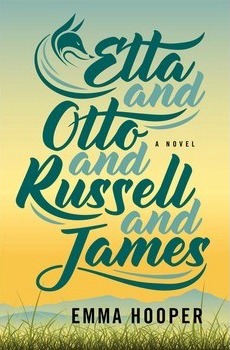
Etta and Otto and Russell and James Book Review.Etta and Otto and Russell and James is an adventure into heartache and love, into loss and fulfillment, and into the inevitability of time’s passing. Written by Emma Hooper, the novel spans a wide range of human experience to encapsulate the profound joys and sadness that are found in simply living.

Etta has decided to leave the farm where she lives with her husband Otto in order to see the ocean, an element of nature that in all of her 83 years she has never experienced. She leaves Otto a letter detailing where she has gone, and asks him not to worry, as she will do her best to remember to return.

Within pages, the reader experiences the gyration between past and present that serves as the textual framework for Hooper’s novel. The author develops her characters in a backward, inside twisted arch that allows for greater understanding and empathy on the part of the reader. Hooper guides us through the intricacies of each character’s past, so that we can become acquainted with the patterns and traumas that have shaped the elderly trio we meet in the novel’s beginning. This trio is completed by Russell, the Vogel’s neighbor and childhood friend.

Though the novel at first seems straightforward and thoroughly candid, we soon find that there is a magical realism that permeates the pages of Etta and Otto and Russell and James. This magic presents itself at different points in the novel as talking coyotes and flying children among other things. These elements perfectly capture the arch of aging as they are transformed from childhood imaginings to the beginning stages of dementia. At times these magical elements can become confusing or distracting, especially when it’s not entirely clear what purpose they are serving. However, as mentioned above, the allusions that these fantastical elements make lie perfectly with the novels themes and threads. To thoroughly enjoy the novel, readers must recognize that not every moment will be methodically fleshed out or explained.

After all, the fissures that Hooper creates in the narrative are what give the text its richness and depth. Her minimalistic style mirrors the letters Etta received from Otto during the war: full of holes. Holes that characters attempt to fill ceaselessly, holes that Etta feels she must go to the ocean to fill, literal holes in memory, and metaphorical holes in hearts. The book is littered with these voids that call to be filled, some of which can never be filled, and some of which characters are too afraid to even attempt filling.

Etta and Otto and Russell and James is a story about letting go; a story about cutting ties with all of the things that don’t serve you (including feelings of guilt), about living each moment fully, and about embracing everything around you with love. Though at times heart wrenching, the novel encourages readers to treasure and recognize the meaningful experiences that make up a life, even if those memories and experiences might be slightly, or profoundly, tragic.

Published by Simon and Schuster, Etta and Otto and Russell and James was released January 2015 and can be found at your local bookstore.

Read more fiction book reviews by Centered on Books.

FTC Disclaimer: I received this book from NetGalley for a fair and honest review of the text.